

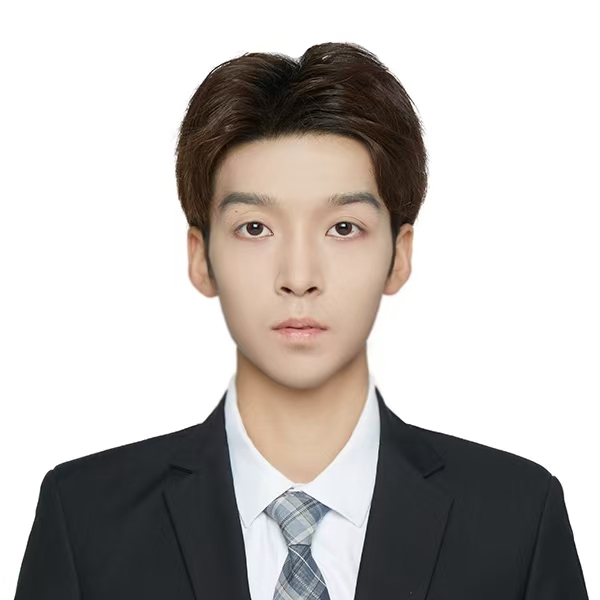
 YiFan Zhang
· 1 previous affiliation
- Institute of AutomationSince 2021
- PhD student · Since 2021
19 other authors named YiFan Zhang: Yifan Zhang (City University of Hong Kong (Dongguan) · 100 papers), Yifan Zhang (Institute of Automation · 97 papers), Yifan Zhang (Miromind · Apodex · 94 papers), Yifan Zhang (Princeton University · 26 papers), Yifan Zhang (22 papers), and 14 more
Research Overview
YiFan Zhang focuses on multimodal large language models, domain generalization, and alignment through reinforcement learning. His early work addressed out-of-distribution generalization and test-time adaptation across diverse data streams. More recently, he investigates the alignment of vision-language and audio models, developing robust reward models and evaluation frameworks to improve reasoning, safety, and human preference optimization.
Research Trajectory
In his early work, Zhang addressed the fragility of machine learning models when deployed in shifting environments, focusing heavily on domain generalization and adaptation. He introduced AdaNPC: Exploring Non-Parametric Classifier for Test-Time Adaptation, a method utilizing a dynamic memory bank and K-Nearest Neighbors to adapt to new domains on the fly without updating model weights, thereby avoiding catastrophic forgetting. To further stabilize out-of-distribution generalization, he developed Free Lunch for Domain Adversarial Training: Environment Label Smoothing, which mitigates the impact of noisy environment labels by encouraging soft probability outputs from domain discriminators. Extending these principles to privacy-sensitive applications, he proposed Generalizable Person Re-identification Without Demographics, enabling cross-domain evaluation without relying on demographic or camera labels. During this period, he also explored structural causal models, presenting Exploring Transformer Backbones for Heterogeneous Treatment Effect Estimation to move beyond traditional multilayer perceptrons and better capture interactions among treatments and covariates. Additionally, he tackled concept drift in real-time data streams with OneNet: Enhancing Time Series Forecasting Models under Concept Drift by Online Ensembling, an online ensembling network that dynamically weights specialized models using reinforcement learning.
Zhang subsequently turned his focus toward the reliability and alignment of Multimodal Large Language Models (MLLMs), particularly addressing how these models process conflicting or complex inputs. He investigated the tendency of MLLMs to ignore visual evidence in favor of internal text priors in Debiasing Multimodal Large Language Models, proposing training-free decoding methods to improve visual grounding. This work contributed to the broader research direction of Linguistic Prior Dominance in Multimodal Large Language Models. Applying MLLMs to specialized domains, he developed From Correctness to Comprehension: AI Agents for Personalized Error Diagnosis in Education, a multi-agent framework designed to diagnose the underlying causes of student mathematical errors rather than merely verifying correctness.
To rigorously evaluate multimodal capabilities, Zhang introduced MME-RealWorld: Could Your Multimodal LLM Challenge High-Resolution Real-World Scenarios that are Difficult for Humans?, a massive benchmark demonstrating that even advanced proprietary models struggle with fine-grained visual perception. This benchmark aligns with his ongoing work in the area of The Visual Resolution Bottleneck in Multimodal Models. Concurrently, he advanced the methodology of human alignment by developing MM-RLHF: The Next Step Forward in Multimodal LLM Alignment. By curating a large-scale preference dataset and implementing a dynamic reward scaling algorithm, this work significantly reduced unsafe behaviors and improved conversational abilities, advancing the research direction of Adaptive Reward Margins for Preference Optimization. He also collaborated on VITA-1.5: Towards GPT-4o Level Real-Time Vision and Speech Interaction, participating in the design of an end-to-end model that processes vision, text, and speech natively without separate transcription or synthesis modules.
Building on these alignment frameworks, Zhang's most recent work emphasizes advanced reasoning, robust reward modeling, and comprehensive trustworthiness. He developed Thyme: Think Beyond Images, an open-source framework that allows MLLMs to autonomously generate and execute Python code for complex image manipulation and mathematical reasoning. Recognizing the critical role of reward models in reinforcement learning, he established BaseReward: A Strong Baseline for Multimodal Reward Model, providing a systematic recipe for mixing multimodal and text-only data to outperform proprietary alignment models. He further refined this approach in R1-Reward: Training Multimodal Reward Model Through Stable Reinforcement Learning, introducing a stabilization algorithm that enforces reasoning-output consistency and enables emergent self-correction. These contributions heavily influence the research direction of Generative Reward Models for Interpretable Alignment.
Expanding his focus to data quality and safety across modalities, Zhang oversaw the creation of OpenGPT-4o-Image: A Comprehensive Dataset for Advanced Image Generation and Editing, serving as senior author on a project that bridges the gap between aesthetic image generation and professional-grade spatial reasoning. Finally, he collaborated on AudioTrust: Benchmarking The Multifaceted Trustworthiness of Audio Large Language Models, the first comprehensive framework to evaluate audio models against non-semantic manipulations like emotion and accent. This evaluation framework highlights critical vulnerabilities in emerging audio models, contributing to research areas such as Paralinguistic Privacy for Speech Processing and Paralinguistic Bias in Large Audio Language Models.
Zhang has also investigated architectural efficiency and agent-based grounding in generative multimodal models. In PACE: Pareto-Adaptive Compression for Efficient Native MLLMs, they contributed to a compression framework tailored for native, ViT-free MLLMs that exploits spatial redundancy via decoupled position encodings and Pareto-optimal token allocation. Additionally, Zhang participated in developing Unify-Agent: A Unified Multimodal Agent for World-Grounded Image Synthesis, which couples external multimodal evidence retrieval with agentic synthesis to generate images of long-tail, knowledge-intensive concepts.
Current Directions
Zhang's most recent research investigates the intersection of multimodal reasoning and reinforcement learning, with a specific focus on developing robust reward models for vision-language alignment. Recent work addresses the instability of traditional reinforcement learning in multimodal contexts, proposing stable algorithms that enforce step-by-step reasoning and enable self-correction in large models. Additionally, his current trajectory emphasizes the comprehensive evaluation of foundation models, moving beyond standard accuracy metrics to benchmark high-resolution spatial intelligence, complex image editing capabilities, and the multifaceted trustworthiness of audio-native language models against paralinguistic manipulation.
Profile updated
Loading new papers…
Other researchers whose papers cluster into the same research directions — a proxy for overlapping technical interests and shared intellectual neighborhoods.
See something wrong? Report a mistake