

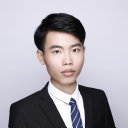
 Yifan Yang
· 8 previous affiliations
- Microsoft (United States)Since 2019
- Senior Researcher · Since 2021
- Research Intern · 2019–2020
- Senior Research SDECurrent
- Current
- Shanghai Jiao Tong UniversitySince 2026
- PhD student · Since 2026
- Jingdong (China)2020–2021
- Research Intern · 2020–2021
- Peking University2018–2021
- MS student · 2018–2021
- Master of Engineering - MEng, Computer Science
- Research Intern · 2020
- Research Intern · 2019
- Tongji University2014–2018
- Undergrad student · 2014–2018
- Bachelor of Engineering - BE, Computer Science
19 other authors named Yifan Yang: Yifan Yang (Beihang University · 98 papers), Yifan Yang (China Southern Power Grid (China) · 97 papers), Yifan Yang (Shanghai Jiao Tong University · 97 papers), Yifan Yang (Hong Kong Polytechnic University · 31 papers), Yifan Yang (Amazon (United States) · 10 papers), and 14 more
Research Overview
Yifan Yang focuses on visual content generation, multimodal foundation models, and efficient spatiotemporal reasoning. His trajectory spans from foundational improvements in vision-language representation and diffusion models to the development of highly capable, compact language models. Currently, he investigates adaptive perception and reasoning techniques to enable real-time, long-form video understanding and robust synthetic media detection.
Research Trajectory
Yang’s early work established foundational improvements in vision-language alignment and generative image manipulation. In 2023, he developed Attentive Mask CLIP, which addressed the degradation of CLIP models during image token removal by dynamically retaining tokens with strong semantic correlations to text descriptions. Concurrently, he contributed to visual in-context learning through ImageBrush: Learning Visual In-Context Instructions for Exemplar-Based Image Manipulation. This framework bypassed the ambiguity of natural language prompts by framing image manipulation as a diffusion-based inpainting task on spatial grids, advancing research directions such as structural preservation and precise image manipulation beyond natural language.
In 2024, his focus expanded to the efficient scaling and deployment of foundation models. He led the research detailed in the Phi-3 Technical Report: A Highly Capable Language Model Locally on Your Phone, demonstrating that rigorous data curation could enable small language models to achieve reasoning capabilities comparable to significantly larger counterparts. This work advanced the broader area of overcoming the reasoning ceiling in small language models. He also participated in enhancing cross-modal feature extraction in LLM2CLIP: Powerful Language Model Unlock Richer Visual Representation, which leveraged large language models to overcome the limitations of traditional contrastive learning paradigms.
Within the domain of generative modeling, he contributed to the research direction of Adaptive Guidance Scheduling for Generative Models through Understanding and Improving Training-free Loss-based Diffusion Guidance. This work provided a theoretical optimization framework, introducing random augmentation and Polyak step sizes to stabilize zero-shot guidance. Additionally, he addressed real-time video processing in Online Video Quality Enhancement with Spatial-Temporal Look-Up Tables, replacing expensive convolutions with spatial-temporal look-up tables to achieve high-quality restoration at high frame rates. This approach contributed directly to the area of Causal Video Modeling for Real-Time Inference.
Yang’s 2025 trajectory emphasizes long-form video generation, streaming intelligence, and adaptive perception. He introduced HiTVideo: Hierarchical Tokenizers for Enhancing Text-to-Video Generation with Autoregressive Large Language Models, which structured video data into multi-layer codebooks to bridge the semantic gap between text and visual tokens, enabling coherent long-video generation. To address the computational bottlenecks of continuous video streams, he co-developed StreamMind: Unlocking Full Frame Rate Streaming Video Dialogue through Event-Gated Cognition. This framework introduced an event-gated invocation paradigm, advancing the research area of Sparse Temporal Representations for Efficient Video Understanding.
His work on adaptive visual processing continued with participation in Zoomer: Adaptive Image Focus Optimization for Black-box MLLM, which intelligently allocated visual tokens to preserve fine details, contributing to the broader field of The Visual Resolution Bottleneck in Multimodal Models. He also applied adaptive strategies to generative architectures in Region-Adaptive Sampling for Diffusion Transformers, a training-free method that dynamically assigns sampling ratios to different spatial regions. Expanding the application of diffusion models to physical environments, he developed Diffusion^2: Turning 3D Environments into Radio Frequency Heatmaps, a generative framework that predicts signal strength for Wi-Fi and mmWave frequencies from 3D spatial data.
The most recent papers in the evidence highlight a focus on robust reasoning and system adaptability. He co-developed VidGuard-R1: AI-Generated Video Detection and Explanation via Reasoning MLLMs and RL, which fine-tuned multimodal models to detect synthetic media while providing interpretable chain-of-thought reasoning. In the domain of long-video question answering, he participated in Video-in-the-Loop: Span-Grounded Long Video QA with Interleaved Reasoning, which moved beyond uniform sampling to target specific temporal evidence, advancing the research direction of Grounding Video Reasoning in Temporal Evidence. Finally, he contributed to Learning System Expansion with Efficient Heterogeneity-aware Knowledge Transfer, addressing the challenges of domain shifts and label sparsity in expanding AI services through adaptive knowledge distillation.
In 2026, Yang expanded into agentic systems and long-document reasoning. They introduced SkillOpt: Executive Strategy for Self-Evolving Agent Skills, formulating text-space skill optimization as bounded, validation-gated edits on external agent artifacts to reliably improve agent performance across models and execution environments. In related work on agent skill lifecycles, Yang participated in From Raw Experience to Skill Consumption: A Systematic Study of Model-Generated Agent Skills, dissecting the extraction, consumption, and transfer of procedural skills to mitigate negative transfer. Additionally, they co-developed DocAtlas: Long-Document Understanding as Mutable-State Interaction, which models long-document comprehension through a mutable interaction harness supporting dynamic retrieval, active note-taking, and policy training in connection with Group Relative Policy Optimization for Large Reasoning Models.
Current Directions
The most recent papers in the evidence address the intersection of multimodal reasoning, long-form video understanding, and the robustness of generative systems. Recent work investigates how to ground multimodal large language models in specific temporal evidence to solve complex retrieval problems in long videos, moving away from inefficient uniform sampling strategies. Additionally, there is a strong focus on the interpretability and security of generative media, demonstrated by the development of reinforcement learning techniques that enable models to detect and explicitly explain the presence of temporal artifacts in AI-generated videos. Broader themes include optimizing the computational efficiency of continuous video streams through event-gated perception, expanding the adaptability of AI systems across heterogeneous domains, and developing systematic optimization and mutable-state environments for autonomous agent skills and long-document reasoning.
Profile updated
Loading new papers…
Other researchers whose papers cluster into the same research directions — a proxy for overlapping technical interests and shared intellectual neighborhoods.
See something wrong? Report a mistake