

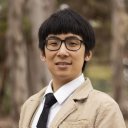
 Yi-Zhuang You
· 5 previous affiliations
- University of California San DiegoSince 2018
- Associate Professor · Since 2024
- Assistant Professor · 2018–2024
- Harvard University2016–2018
- Postdoc · 2016–2018
- Postdoc · 2013–2016
- Tsinghua University2008–2013
- PhD student · 2008–2013
- Nanjing University2004–2008
- Undergrad student · 2004–2008
Research Overview
Yi-Zhuang You focuses on theoretical condensed matter physics, quantum many-body systems, and the intersection of artificial intelligence with quantum mechanics. His trajectory spans foundational work on symmetric mass generation and topological phases to recent innovations in quantum state preparation and shadow tomography. Currently, he investigates how machine learning techniques can be adapted to design efficient quantum measurement protocols and model complex physical systems.
Research Trajectory
His early research investigated the area of Interaction Induced Collapse of Topological Phases. In 2014, he provided a unified framework in Symmetry-protected topological states of interacting fermions and bosons, mapping fermionic systems to bosonic non-linear sigma models to demonstrate how strong interactions can collapse infinite classifications of free-fermion states into finite groups across all spatial dimensions.
He subsequently made foundational contributions to the research direction of Mass Generation Without Spontaneous Symmetry Breaking. In Exotic quantum phase transitions of strongly interacting topological insulators, he utilized large-scale quantum simulations of a bilayer honeycomb lattice to show that strong interactions can gap out fermions without breaking underlying symmetries. Working with collaborators, he further established this phenomenon in Quantum critical point of Dirac fermion mass generation without spontaneous symmetry breaking, numerically identifying a continuous quantum phase transition for (2+1)D Dirac fermions. He later proposed a comprehensive theoretical mechanism for this process in Symmetric Fermion Mass Generation as Deconfined Quantum Criticality, framing the transition through emergent non-Abelian gauge fields.
Expanding this work into the broader area of Symmetric Mass Generation for Lattice Chiral Fermions, his group demonstrated a method to place chiral fermions on a discrete lattice in Symmetric Mass Generation in the 1+1 Dimensional Chiral Fermion 3-4-5-0 Model. By utilizing a specific 3-4-5-0 model, they showed that unwanted mirror particles could be removed via strong interactions while preserving fundamental symmetries, addressing a longstanding challenge in theoretical particle physics.
In parallel, he investigated complex symmetries and topological responses in quantum matter. He participated in research exploring unconventional superconductors in High-order time-reversal symmetry breaking normal state, which revealed a time-reversal symmetry breaking normal state that precedes superconductivity. He also introduced a novel twisted gauging technique for 1D quantum spin systems in Realizing triality and $p$-ality by lattice twisted gauging in (1+1)d quantum spin systems to realize non-local symmetries like triality. Shifting toward particle physics frameworks, his lab explored the global structure of the Standard Model in Topological Responses of the Standard Model Gauge Group, proposing that its hidden global identity could be revealed through measurable topological responses to background fields. Continuing to probe exotic phase transitions, he contributed to the analysis of a 1D fermion ladder model in Deconfined criticality as intrinsically gapless topological state in one dimension, demonstrating that deconfined quantum criticality hosts topologically robust edge modes unique to the gapless system.
More recently, his trajectory has heavily integrated quantum information theory and machine learning. He advanced the efficiency of quantum state estimation by introducing holographic shadows in Holographic classical shadow tomography, utilizing hierarchical quantum circuits to achieve optimal sample complexity across different length scales. He further expanded these techniques in Dual-unitary shadow tomography, leveraging the chiral excitations of dual-unitary circuits to predict properties of quantum states with broad operator support. To automate the design of these protocols, his team applied natural language processing to quantum circuits in Designing Shadow Tomography Protocols by Natural Language Processing, training a recurrent neural network via reinforcement learning to generate highly efficient measurement schemes.
His recent work also explores dynamic quantum control and generative modeling. In Machine Learning for Ground State Preparation via Measurement and Feedback, he co-developed a recurrent neural network framework that steers arbitrary initial states toward a target ground state by reacting to mid-circuit measurements in real time. Finally, he adapted quantum-inspired models for classical tasks in Sequential learning on a tensor network Born machine with trainable token embedding, replacing static encodings with trainable positive operator-valued measurements to better capture complex correlations in sequential data.
Current Directions
Recent work investigates the intersection of machine learning and quantum measurement, with a particular focus on optimizing quantum state estimation and preparation. The most recent papers in the evidence address the development of advanced shadow tomography protocols—leveraging techniques ranging from holographic quantum circuits and dual-unitary dynamics to natural language processing—to efficiently learn properties of complex quantum states. Additionally, current research explores dynamic ground state preparation using real-time feedback from mid-circuit measurements and the application of quantum-inspired generative models, such as tensor network Born machines, for sequential data learning.
Profile updated
| Paper | Venue | Year |
|---|---|---|
| Demonstration of robust and efficient quantum property learning with shallow shadowsGitHubhongyehu/ | Nature Communications | 2025 |
| RG-Flow: a hierarchical and explainable flow model based on renormalization group and sparse priorGitHubhongyehu/ | Mach. Learn. Sci. Technol | 2022 |
Loading new papers…
Other researchers whose papers cluster into the same research directions — a proxy for overlapping technical interests and shared intellectual neighborhoods.
See something wrong? Report a mistake