

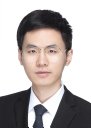
 Ye Shi
· 1 previous affiliation
- ShanghaiTech UniversitySince 2021
- Assistant Professor · 2021–2027
- Current
1 other author named Ye Shi: Ye Shi (3 papers)
Research Overview
Ye Shi focuses on generative modeling, reinforcement learning, and human-object interaction. His trajectory spans from 3D spatial reconstruction and federated learning to the mathematical foundations of diffusion bridges via stochastic optimal control. Currently, his work addresses sample-efficient diffusion policies for robotics and real-time, physically plausible motion synthesis.
Research Trajectory
In 2024, Ye Shi's research advanced across computer vision, distributed learning, and decision-making frameworks. Investigating 3D spatial arrangements for template-free reconstruction, he introduced StackFLOW: Monocular Human-Object Reconstruction by Stacked Normalizing Flow with Offset. This work utilized human-object offsets and stacked normalizing flows to capture highly detailed spatial correlations from monocular images, offering an efficient alternative to contact maps and implicit distance fields. Concurrently, he contributed to the area of Personalized Federated Learning for Heterogeneous Data with Harmonizing Generalization and Personalization in Federated Prompt Learning. This research proposed the FedPGP framework, which combines low-rank adaptation with a contrastive loss to balance user-specific personalization against broader generalization on unseen data.
During this period, a major theme emerged in his work: integrating expressive generative models with reinforcement learning (RL). In Diffusion-based Reinforcement Learning via Q-weighted Variational Policy Optimization, his group presented QVPO, a framework that successfully brought diffusion models into online reinforcement learning through a novel Q-weighted variational loss. This advanced the broader area of Overcoming the Unimodal Constraint in Reinforcement Learning by improving sample efficiency in continuous control tasks.
The theoretical foundation of these generative processes became a central focus in 2025. Viewing generative modeling through the lens of stochastic optimal control (SOC), he formalized diffusion bridges to address the complex transitions between arbitrary distributions. This theoretical unification was detailed across two closely related works: A Unified Diffusion Bridge Framework via Stochastic Optimal Control and UniDB: A Unified Diffusion Bridge Framework via Stochastic Optimal Control. These papers demonstrated how treating diffusion bridges as an SOC problem improves image detail preservation in restoration tasks while offering a flexible mechanism to balance control costs and terminal penalties. Building on the prior year's RL research, he also extended diffusion models to on-policy settings in GenPO: Generative Diffusion Models Meet On-Policy Reinforcement Learning, further solidifying the utility of generative diffusion in complex action distributions.
Simultaneously in 2025, his research in spatial perception evolved into dynamic, physics-based synthesis, contributing significantly to the area of Multi-Person Coordination in Generative Human Motion. In Towards Immersive Human-X Interaction: A Real-Time Framework for Physically Plausible Motion Synthesis, he combined an auto-regressive diffusion planner with an RL-based physics tracker to generate responsive motions that avoid artifacts like foot sliding during live scenarios. He also addressed the scalability of motion synthesis in Human-Object Interaction with Vision-Language Model Guided Relative Movement Dynamics. This unified physics-based framework leveraged Vision-Language Models to automatically construct goal states and reward functions, enabling long-horizon interactions with static, dynamic, and articulated objects without relying on expensive motion capture data or manual reward engineering.
In 2026, his work synthesized these theoretical and applied tracks, deploying mathematically rigorous generative models for physical control and optimization. He continued to probe the underpinnings of generative models in Diffusion Bridge or Flow Matching? A Unifying Framework and Comparative Analysis. By recasting both methods through stochastic optimal control, this analysis proved that diffusion bridges offer greater mathematical robustness to large distribution gaps, whereas flow matching provides faster training but struggles with perceptual stability when data is scarce.
This theoretical rigor translated directly into highly sample-efficient methods for robotics. In Sample-Efficient Diffusion-based Reinforcement Learning with Critic Guidance, he introduced CGPO, which uses a critic network to steer the diffusion action-generation process, enabling the training of diffusion policies from scratch on real-world robotic hardware. He further refined visuomotor policy learning in Sample from What You See: Visuomotor Policy Learning via Diffusion Bridge with Observation-Embedded Stochastic Differential Equation. By mathematically embedding visual observations directly into the stochastic differential equation trajectory, this framework replaced standard noise-to-action processes with a perception-to-action bridge, significantly increasing precision in contact-rich manipulation tasks. Finally, he expanded the utility of diffusion models into mathematical programming with Diffusion-based learning framework for Constrained Nonconvex Optimization with Weighted Bootstrapped Refinement. This work introduced DiOpt, a two-phase training process that allows diffusion models to overcome distributional misalignment and generate feasible, near-optimal solutions for complex constrained optimization problems.
Expanding their robotic manipulation research, Shi also contributed to ViTacWorld: Scaling Visuo-Tactile World Models for Contact-Rich Robot Manipulation, which scales multimodal world models combining visual and tactile feedback for contact-rich tasks. In parallel, Shi supervised work on energy-aware operations in A Predict-then-Schedule framework for Power Distribution Networks with AI Data Centers, proposing a predict-then-schedule scheme to coordinate power distribution networks with AI data centers.
Current Directions
The most recent papers in the evidence, published in 2026, indicate a strong focus on deploying theoretically grounded generative models for complex decision-making, physical control, and mathematical optimization. A primary current direction involves utilizing stochastic optimal control to unify and stabilize generative frameworks, specifically comparing and refining diffusion bridges and flow matching. Concurrently, this mathematical foundation is being applied to real-world robotics, where observation-embedded stochastic differential equations and critic-guided diffusion processes are used to train highly sample-efficient visuomotor policies for contact-rich manipulation. Additionally, recent work investigates the use of diffusion models as solvers for constrained nonconvex optimization, expanding generative techniques beyond data synthesis and into rigorous algorithmic problem-solving.
Profile updated
Loading new papers…
Other researchers whose papers cluster into the same research directions — a proxy for overlapping technical interests and shared intellectual neighborhoods.
See something wrong? Report a mistake