

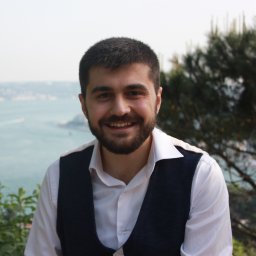
 Yasin Almalioglu
· 6 previous affiliations
- HelsingSince 2022
- AI Research Engineer · Since 2022
- University of Oxford2018–2022
- Doctor of Philosophy - PhD, Computer Science · 2018–2022
- Research Intern · 2020
- Istanbul Medeniyet University2016–2018
- Teaching Assistant · 2016–2018
- Boğaziçi University2015–2017
- Master's degree, Computer Science · 2015–2017
- Intern · 2013
Research Overview
Yasin Almalioglu focuses on robotic localization, multi-sensor fusion, and deep learning-based spatial perception. Initially concentrating on simultaneous localization and mapping for minimally invasive endoscopic capsule robots, this work has evolved to address robust egomotion and positioning in visually degraded environments. The most recent research applies these geometry-aware sensor fusion techniques to all-weather autonomous driving.
Research Trajectory
Almalioglu’s early research primarily addressed the navigational and perceptual challenges of actively controlled endoscopic capsule robots. A central problem in this domain is the precise, real-time 3D localization of devices within the deformable, feature-poor environment of the gastrointestinal tract. In 2017, collaborative work yielded A Deep Learning Based 6 Degree-of-Freedom Localization Method for Endoscopic Capsule Robots, which introduced a convolutional neural network architecture capable of estimating the robot's pose using only monocular visual information.
To improve the reliability of localization beyond what vision alone could provide, subsequent work explored multi-sensor integration. Almalioglu was a key contributor to EndoSensorFusion: Particle Filtering-Based Multi-Sensory Data Fusion with Switching State-Space Model for Endoscopic Capsule Robots. This research proposed a particle filter-based approach that fused noisy absolute pose measurements from a magnetic sensor with relative visual odometry, incorporating a recurrent neural network to learn the non-linear kinematic model of the capsule.
Alongside localization, Almalioglu investigated methods to enhance the visual quality of capsule endoscopy for diagnostic purposes. Leading this effort as first author, he developed EndoL2H: Deep Super-Resolution for Capsule Endoscopy. This framework utilized conditional adversarial networks combined with a spatial attention block to map low-resolution endoscopic images to high-resolution outputs, addressing the hardware limitations of ingestible cameras.
Around 2019, Almalioglu’s focus expanded from medical robotics to broader challenges in spatial perception and odometry, particularly in visually denied or degraded scenarios. He participated as a co-author in the development of DeepTIO: A Deep Thermal-Inertial Odometry with Visual Hallucination, a deep neural network model designed to maintain accurate pose estimation in environments with heavy smoke or darkness by hallucinating visual features from thermal and inertial data.
This trajectory of fusing disparate sensor modalities to overcome environmental limitations culminated in first-author research on autonomous vehicles. In 2022, Almalioglu published Deep learning-based robust positioning for all-weather autonomous driving, which introduced a geometry-aware learning technique to fuse visual, lidar, and radar information, ensuring reliable vehicle positioning across changing weather conditions.
Current Directions
The most recent papers in the evidence indicate a shift toward macroscopic autonomous systems, specifically focusing on robust positioning for autonomous driving. This work addresses the vulnerability of individual sensor modalities—such as cameras and lidar—to adverse weather conditions. Recent research investigates geometry-aware deep learning architectures that dynamically fuse visual, lidar, and radar data, leveraging the complementary strengths of each sensor to maintain accurate localization regardless of environmental visibility.
Profile updated
Loading new papers…
Other researchers whose papers cluster into the same research directions — a proxy for overlapping technical interests and shared intellectual neighborhoods.
See something wrong? Report a mistake