

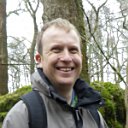
 Andrew Markham
· 1 previous affiliation
- University of OxfordSince 2012
- Associate Professor · Since 2012
Research Overview
Andrew Markham focuses on spatial intelligence, multimodal sensor fusion, and large-scale 3D point cloud processing for autonomous systems. His trajectory spans early work in unconventional localization methods to foundational deep learning architectures for visual-inertial odometry and urban-scale scene understanding. Currently, his research investigates advanced cross-modal perception, audio-visual integration, and hyperspectral machine learning for environmental monitoring.
Research Trajectory
Markham's early research explored novel localization techniques in challenging environments where traditional signals fail. He developed a magneto-inductive tracking system to monitor the subterranean behavior of burrowing animals, overcoming the severe attenuation of electromagnetic waves in soil and moisture in Revealing the hidden lives of underground animals using magneto-inductive tracking.
In the late 2010s, his focus shifted toward deep learning approaches for motion estimation and sensor fusion. He collaborated on foundational models that treated visual-inertial odometry (VIO) as a sequence-to-sequence learning problem. This included participation in the development of VINet: Visual-Inertial Odometry as a Sequence-to-Sequence Learning Problem, an end-to-end trainable framework that fused camera images and IMU data at the deep feature level to eliminate the need for manual calibration. Addressing the rapid error accumulation inherent in low-cost inertial sensors, he also contributed to IONet: Learning to Cure the Curse of Drift in Inertial Odometry, which segmented inertial data into independent windows to estimate latent states like velocity and orientation. This emphasis on robust perception continued with Selective Sensor Fusion for Neural Visual-Inertial Odometry, where he participated in designing deterministic and stochastic masking strategies to handle missing or corrupted sensory data.
Leading his own research group into the 2020s, Markham made significant advances in 3D scene understanding and alternative sensing modalities. A major contribution was RandLA-Net: Efficient Semantic Segmentation of Large-Scale Point Clouds, a lightweight neural architecture that replaced computationally heavy point-sampling with simple random sampling and local feature aggregation. This highly efficient approach advanced several research areas, including Random Sampling for Efficient Point Cloud Analysis, Efficient Sampling for Large-Scale Point Clouds, Attentive Pooling for 3D Point Cloud Processing, and the related direction of Feature Preserving Point Cloud Simplification. To further catalyze research in urban-scale environments, his team released Towards Semantic Segmentation of Urban-Scale 3D Point Clouds: A Dataset, Benchmarks and Challenges, highlighting the extreme class imbalances and generalization gaps present in city-scale data. Concurrently, his group explored millimeter-wave radar for spatial awareness, proposing milliEgo: single-chip mmWave radar aided egomotion estimation via deep sensor fusion to overcome the illumination and texture dependencies of optical techniques.
Between 2022 and 2024, the integration of diverse sensors for robust autonomy became a central theme of his work. His group introduced the GRAMME framework in Deep learning-based robust positioning for all-weather autonomous driving, fusing camera, lidar, and radar data to maintain accurate ego-motion estimation in rain, fog, and snow. This work aligns with his broader contributions to the research area of Adaptive Reliability Weighting for Multi Modal Perception. He also synthesized the field's progress in Deep Learning for Visual Localization and Mapping: A Survey, mapping the transition from hand-crafted geometric rules to data-driven models and contributing to the direction of Hybrid Neural and Geometric Architectures for Spatial Intelligence. In the robotics domain, his team investigated skill generalization across different kinematic constraints using a disembodied virtual manipulator in Learning Generalizable Manipulation Policy with Adapter-Based Parameter Fine-Tuning.
More recently, Markham's research has expanded into enhancing the spatial reasoning of foundation models. His group developed the SpatialPIN framework, detailed in SpatialPIN: Enhancing Spatial Reasoning Capabilities of Vision-Language Models through Prompting and Interacting 3D Priors and the related preprint See, Imagine, Plan: Discovering and Hallucinating Tasks from a Single Image. This zero-shot approach reconstructs explicit 3D representations from 2D images to feed structured priors back into Vision-Language Models (VLMs), enabling complex tasks like robotic trajectory planning. Continuing his work on multimodal state estimation, his group formalized end-to-end selective fusion strategies to handle noisy observations in Learning Selective Sensor Fusion for State Estimation. They also pushed the boundaries of mmWave radar applications by framing sequential signal processing as a 3D point cloud denoising task in mmDiffusion: mmWave Diffusion for Sequential 3D Human Dense Point Cloud Generation.
Current Directions
The most recent papers in the evidence indicate a strong focus on cross-modal perception and environmental monitoring using specialized sensor arrays. Recent work investigates audio-visual integration for spatial awareness, such as localizing and classifying invisible 3D sound sources using coplanar microphone arrays and RGB-D cameras in SoundLoc3D: Invisible 3D Sound Source Localization and Classification Using a Multimodal RGB-D Acoustic Camera. This extends to isolating specific voices in noisy environments by contrasting positive and negative audio enrollments in Target Speaker Extraction through Comparing Noisy Positive and Negative Audio Enrollments. Additionally, his group is applying machine learning to critical climate challenges, utilizing hyperspectral remote sensing data to automate the detection of greenhouse gases in Semantic segmentation of methane plumes with hyperspectral machine learning models.
Profile updated
Loading new papers…
Other researchers whose papers cluster into the same research directions — a proxy for overlapping technical interests and shared intellectual neighborhoods.
See something wrong? Report a mistake