

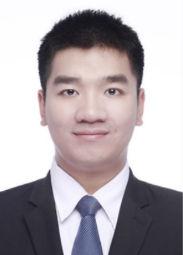
 yang zhang
· 1 previous affiliation
- Renmin University of ChinaCurrent
- Current
- PhD student · 2021–2025
33 other authors named yang zhang: Yang Zhang (Helmholtz Center for Information Security · 184 papers), Yang Zhang (National University of Singapore · 136 papers), Yang Zhang (National University of Singapore · 126 papers), Yang Zhang (Miami University · 104 papers), Yang Zhang (IBM Research - Thomas J. Watson Research Center · 98 papers), and 28 more
Research Overview
Yang Zhang focuses on geometric graph neural networks and their application to computational biology and chemistry. His trajectory spans from modeling protein-ligand binding affinity and molecular interactions to developing equivariant representations for structural biology. Recently, his work has expanded to include multimodal foundation models for single-cell transcriptomics and advanced molecular force field modeling.
Research Trajectory
Zhang’s early published work addresses the computational challenges of drug discovery, specifically the prediction of how small molecules interact with target proteins. In 2022, he introduced Predicting Protein-Ligand Binding Affinity via Joint Global-Local Interaction Modeling. Recognizing that existing methods often relied exclusively on local interactions or basic spatial structures, he developed a global-local interaction framework designed to capture multi-level inter-molecular dynamics, including both high-energy short-range contacts and broader structural contexts.
Building on this foundation, his research shifted toward the precise identification of ligand binding sites, a critical preliminary step in structure-based drug design. In 2024, he explored transformer-based architectures for this task with TransPocket: Structural and Geometric Transformer for Ligand Binding Site Detection. That same year, he further advanced this domain by addressing the geometric constraints of protein structures in EquiPocket: an E(3)-Equivariant Geometric Graph Neural Network for Ligand Binding Site Prediction. By integrating E(3)-equivariance and a specialized dense attention mechanism, EquiPocket was designed to overcome the rotation sensitivity and scaling limitations of traditional 3D convolutional networks when processing large, irregularly shaped proteins. This work represents a significant contribution to the research direction of Surface Centric Geometric Learning for Molecular Interactions.
In 2025, Zhang’s collaborative efforts expanded to encompass broader biological networks, fundamental molecular dynamics, and genomics. He participated in the development of PRING: Rethinking Protein-Protein Interaction Prediction from Pairs to Graphs, a benchmark that shifts the evaluation of protein-protein interactions away from isolated pairwise predictions. The project demonstrated that models achieving high accuracy on simple binary tasks often fail to reconstruct the topological and functional properties of complete biological interactomes.
Parallel to his work on biological networks, Zhang contributed to the area of Anisotropic Denoising for 3D Molecular Representation Learning through Learning 3D Anisotropic Noise Distributions Improves Molecular Force Field Modeling. This research addresses the limitations of standard coordinate denoising methods, which typically assume atomic motions are isotropic and homoscedastic. With collaborators, he developed the AniDS framework, an anisotropic variational autoencoder that generates atom-specific, full covariance matrices to better capture the directional and structural variability inherent in real molecular systems.
Most recently, his research has incorporated large-scale language modeling techniques into single-cell analysis. He co-developed Multimodal Language Modeling for High-Accuracy Single Cell Transcriptomics Analysis and Generation, introducing the scMMGPT framework. By pre-training on millions of cells and aligning raw gene expression data with high-level textual biological descriptions, the model improves cell annotation accuracy and generalization to unseen cell types. This work bridges several emerging fields, contributing to broader areas such as Multimodal Foundation Models for Single Cell Biology, Overcoming Data Sparsity in Single Cell Sequencing, and Overcoming Spatial Context Loss in Tissue Architecture.
Current Directions
The most recent papers in the evidence indicate a dual focus on scaling biological representation learning and refining 3D molecular dynamics. In the genomic domain, Zhang is investigating multimodal architectures that ground sparse, high-dimensional single-cell transcriptomic data in established biological knowledge using large language models. This approach aims to improve downstream tasks like cell type annotation and data generation by treating gene expression and textual metadata as aligned modalities.
Simultaneously, in the realm of computational chemistry, his recent work addresses the theoretical and practical bottlenecks of molecular pretraining. By moving beyond simplified, isotropic assumptions in coordinate denoising, he is exploring how structure-aware, anisotropic noise generation can yield more accurate and physically grounded molecular force fields. Together, these directions reflect a broader effort to build more robust, geometrically and biologically informed machine learning models for the life sciences.
Profile updated
Loading new papers…
Other researchers whose papers cluster into the same research directions — a proxy for overlapping technical interests and shared intellectual neighborhoods.
See something wrong? Report a mistake