

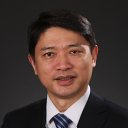
 Yang Liu
· 3 previous affiliations
- Tsinghua UniversityCurrent
- Current
- Professor · 2019–2026
- Associate Professor · 2011–2019
- Chinese Academy of Sciences2002–2011
- Associate Professor · 2009–2011
- Assistant Professor · 2007–2009
- PhD student · 2002–2007
- Wuhan University1998–2002
- Undergrad student · 1998–2002
78 other authors named Yang Liu: Yang Liu (Nanyang Technological University · 2,333 papers), Yang Liu (Microsoft (United States) · Microsoft Research Asia (China) · 247 papers), Yang Liu (University of California, Santa Cruz · 216 papers), Yang Liu (Peking University · 183 papers), Yang Liu (Amazon, AGI · 182 papers), and 73 more
Research Overview
Yang Liu focuses on natural language processing, generative modeling, and artificial intelligence for scientific discovery. His early work advanced statistical and neural machine translation, particularly for low-resource languages and sequence generation. More recently, his research investigates large language model reasoning and the application of geometric deep learning to biomolecular dynamics and materials design.
Research Trajectory
He began his research in statistical natural language processing, initially focusing on alignment and syntactic translation models. In Log-Linear Models for Word Alignment (2005), he introduced a framework that integrated syntactic information, part-of-speech correspondence, and bilingual dictionaries as features, outperforming standard IBM translation models. Continuing in the area of Packed Forest Representations for Syntactic Ambiguity, he developed a forest-based tree-to-tree translation model in Improving Tree-to-Tree Translation with Packed Forests (2009). By utilizing probabilistic synchronous tree substitution grammars learned from aligned forest pairs, this approach mitigated parsing errors inherent in traditional 1-best parses.
As the field transitioned toward deep learning, his focus shifted to neural machine translation (NMT), particularly addressing optimization and data scarcity. Contributing to the research direction of Minimum Risk Training for Sequence Generation, his group proposed Minimum Risk Training for Neural Machine Translation (2016), which optimized model parameters directly against non-differentiable evaluation metrics rather than relying solely on maximum likelihood estimation. To tackle data limitations, he explored the area of Machine Translation Without Parallel Corpora and the broader field of Neural Machine Translation for Low-Resource Languages. In A Teacher-Student Framework for Zero-Resource Neural Machine Translation (2017), he and his collaborators designed a pivot-based distillation method where a pre-trained teacher model guides a student model, enabling direct translation between languages with zero parallel data.
In recent years, beginning around 2023, his research has expanded significantly into generative AI for scientific discovery, particularly materials science and computational chemistry. Work in the area of Diffusion Models on Periodic Manifolds led to Crystal Structure Prediction by Joint Equivariant Diffusion (2023), a framework that generates stable 3D crystal structures by jointly modeling lattice shapes and fractional atom positions. This interest in structural generation extended to the broader direction of Scaling Generative Models for 3D Molecular Structures. His lab developed MOF-BFN: Metal-Organic Frameworks Structure Prediction via Bayesian Flow Networks (2025), which treats complex frameworks as assemblies of rigid building blocks to predict hierarchical structures. Similarly, UniMoMo: Unified Generative Modeling of 3D Molecules for De Novo Binder Design (2025) introduced a geometric latent diffusion process capable of designing small molecules, peptides, and antibodies within a single unified model. Alongside structural generation, he has investigated physical dynamics. UniSim: A Unified Simulator for Time-Coarsened Dynamics of Biomolecules (2025) addresses the simulation of biomolecular movements over time, while Learning spatiotemporal dynamics from sparse data via a high-order physics-encoded network (2025) proposed a framework for reconstructing high-resolution dynamics by embedding known physical laws directly into the network architecture.
Parallel to his scientific AI work in 2025, he has maintained a strong focus on the reasoning capabilities and alignment of large language models (LLMs). In Enhancing Large Language Model Reasoning via Selective Critical Token Fine-Tuning, his team demonstrated that training models exclusively on the indispensable "load-bearing" tokens of a reasoning chain preserves output diversity and improves generalization. Exploring subjective reasoning, Perspective Transition of Large Language Models for Solving Subjective Tasks investigated how shifting an LLM's persona—such as adopting an expert or third-person perspective—affects its ability to interpret context. Addressing deployment challenges, Privacy-Preserving Parameter-Efficient Fine-Tuning for Large Language Model Services introduced a framework that allows users to locally privatize data before cloud-based fine-tuning, utilizing a token reconstruction task to maintain utility. He has also explored multimodal structured generation; Bridging Vision, Language, and Mathematics: Pictographic Character Reconstruction with Bézier Curves framed visual recognition as a program synthesis task, training vision-language models to decompile raster images of pictographic characters into executable geometric primitives.
His most recent work in 2026 continues to push the boundaries of both LLM reasoning and molecular modeling. In the domain of mathematical reasoning, Pessimistic Verification for Open-Ended Math Questions introduced a recursive decomposition paradigm where a solution is rejected if any parallel verifier identifies a flaw, improving accuracy and token efficiency. Applying agentic reinforcement learning to healthcare, Doctor-R1: Mastering Clinical Inquiry with Experiential Agentic Reinforcement Learning developed a framework for dynamic clinical inquiry, enabling compact models to ask strategic diagnostic questions. Returning to computational chemistry, Unified Biomolecular Trajectory Generation via Pretrained Variational Bridge accelerated molecular dynamics by predicting transitions at coarsened timesteps. Finally, CARD: Coarse-to-fine Autoregressive Modeling with Radix-based Decomposition for Transferable Free Energy Estimation framed 3D molecular structures as a language modeling problem, accelerating free energy estimation while preserving chemical accuracy.
Current Directions
Based on the most recent papers in the evidence, current research directions span two primary themes:
Agentic Reasoning and Verification in LLMs: Recent work investigates methods to make large language models more reliable and capable of complex, multi-step reasoning. This includes developing rigorous, multi-verifier approaches for open-ended mathematical problem-solving and applying reinforcement learning to create specialized agents capable of dynamic, multi-turn inquiry, such as clinical diagnostics.
Generative Frameworks for Molecular Dynamics and Thermodynamics: Moving beyond static 3D structure prediction, current efforts focus on modeling complex physical processes over time. This involves accelerating molecular dynamics simulations through coarsened timestep generation and treating thermodynamic properties—like free energy estimation—as autoregressive modeling tasks to bypass computationally expensive traditional simulations.
Profile updated
Loading new papers…
Other researchers whose papers cluster into the same research directions — a proxy for overlapping technical interests and shared intellectual neighborhoods.
See something wrong? Report a mistake