

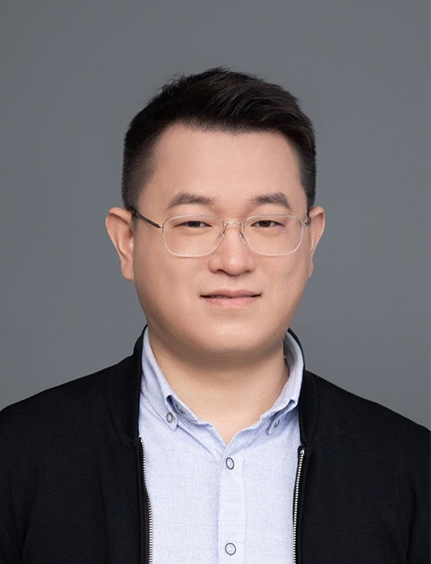
 Peng Li
· 3 previous affiliations
- Tsinghua UniversitySince 2022
- Associate Professor · Since 2022
- PhD student · 2009–2015
- Tencent (China)2018–2022
- Researcher · 2018–2022
- Baidu (China)2015–2017
- Researcher · 2015–2017
12 other authors named Peng Li: Peng Li (Texas A&M University · University of California, Santa Barbara · 275 papers), Peng Li (Nanjing University of Aeronautics and Astronautics · 11 papers), Peng Li (Hong Kong University of Science and Technology · 11 papers), Peng Li (5 papers), Peng Li (Institute of Software · 4 papers), and 7 more
Research Overview
Peng Li focuses on the development and evaluation of large language models, multimodal reasoning systems, and artificial intelligence for mathematics. His trajectory spans early work in statistical machine translation and semantic parsing to recent architectures that enhance the reasoning capabilities of foundation models. Currently, his research emphasizes reinforcement learning for long-form generation, efficient multimodal models for edge devices, and automated formal verification for mathematical discovery.
Research Trajectory
Throughout his career, which includes his current role as a Research Associate Professor at Tsinghua University, Peng Li's early research addressed foundational challenges in natural language processing, beginning with unsupervised methods for text summarization and representation. He introduced an approach in Clustering to Find Exemplar Terms for Keyphrase Extraction that shifted the focus from identifying isolated important words to ensuring comprehensive coverage of a document's themes. By leveraging semantic centroids, this method extracted keyphrases that represented diverse topics, contributing to broader research areas such as diversity-driven data selection via semantic clustering and syntactic filtering for candidate phrase extraction.
In the early 2010s, his focus expanded to statistical machine translation and semantic parsing. To address ordering shifts between languages, he developed Recursive Autoencoders for ITG-Based Translation, which utilized recursive autoencoders to generate vector space representations for variable-sized phrases, improving the prediction of syntactic and semantic reordering. Concurrently, he tackled structural divergence in semantic parsing with An Extended GHKM Algorithm for Inducing Lambda-SCFG, extending synchronous grammar induction techniques to learn rules augmented with lambda calculus. He continued to refine translation architectures with A Neural Reordering Model for Phrase-based Translation.
Transitioning toward large-scale information extraction, his subsequent work addressed the noise inherent in distantly supervised data. He guided the development of Hierarchical Relation Extraction with Coarse-to-Fine Grained Attention, which incorporated the hierarchical structure of relations into a multi-layer attention scheme to better identify valid instances from noisy corpora. This interest in robust learning under weak supervision also informed Adversarial Training for Weakly Supervised Event Detection.
As the field shifted toward foundation models, his research adapted to address knowledge transfer, controllability, and reasoning in large language models. He explored methods for sequential knowledge transfer in Continually Learning from Existing Models: Knowledge Accumulation for Neural Machine Translation, advancing the area of selective knowledge distillation via performance gating. To improve the reliability of generative models, he collaborated on An Extensible Plug-and-Play Method for Multi-Aspect Controllable Text Generation, contributing to the broader direction of The Fluency Control Tradeoff in Language Model Steering. Addressing the challenge of models repeating mistakes after deployment, he introduced the TRAN framework in Failures Pave the Way: Enhancing Large Language Models through Tuning-free Rule Accumulation. This tuning-free approach allowed models to autonomously generate and store "if-then" rules based on their own errors, intersecting with research in identifying and localizing logical failures in reasoning chains and reasoning as a domain-agnostic meta-skill. Concurrently, he investigated the stability of memory-efficient architectures, proposing novel regulations to minimize prediction entropy in Improving Adversarial Robustness of DEQs with Explicit Regulations Along the Neural Dynamics, which advanced efficient methods for robust neural network optimization.
In recent years, his work has heavily emphasized multimodal reasoning and the rigorous evaluation of foundation models. He developed the RELIT framework in Weakly Supervised Vision-and-Language Pre-training with Relative Representations, which bridged the modality gap by representing images and text through their relative similarities to anchor pairs, contributing to the area of relative representations for latent space alignment. He also participated in the creation of EgoThink: Evaluating First-Person Perspective Thinking Capability of Vision-Language Models, a visual question-answering benchmark designed to assess how well models process information from an egocentric viewpoint, advancing the research direction of Perspective Taking in Multimodal Large Language Models.
His most recent trajectory explores advanced training paradigms and specialized applications for large language models. He contributed to Writing-RL: Advancing Long-form Writing via Adaptive Curriculum Reinforcement Learning, which demonstrated that training models to write long articles via reinforcement learning also improves their ability to read and reason over massive contexts, aligning with efforts in reinforcement learning for reasoning in large language models. Addressing hardware constraints, he was part of the team that developed HyperVL: An Efficient and Dynamic Multimodal Large Language Model for Edge Devices, utilizing an adaptive visual resolution compressor to optimize performance for mobile environments, a key development in the area of sample adaptive resolution for efficient visual inference. Finally, his work on mathematical reasoning culminated in Pessimistic Verification for Open-Ended Math Questions. This paper introduced a paradigm where solutions are rejected if any parallel verifier identifies a flaw, recursively decomposing proofs to achieve high accuracy and token efficiency, thereby advancing the field of recursive subgoal decomposition for automated formal verification.
Current Directions
The most recent papers in the evidence indicate a strong focus on enhancing the complex reasoning capabilities and practical deployment of large language and multimodal models. Current work investigates the intersection of reinforcement learning and long-context reasoning, exploring how adaptive curricula can push models beyond the limitations of supervised fine-tuning. Additionally, there is a significant emphasis on AI for mathematics, specifically through rigorous, automated verification paradigms that decompose mathematical proofs to identify logical flaws. Parallel to these reasoning advancements, recent efforts address the efficiency of multimodal models, focusing on adaptive resolution techniques and architectural optimizations that enable high-performance vision-language inference on edge devices.
Profile updated
Loading new papers…
Other researchers whose papers cluster into the same research directions — a proxy for overlapping technical interests and shared intellectual neighborhoods.
See something wrong? Report a mistake