

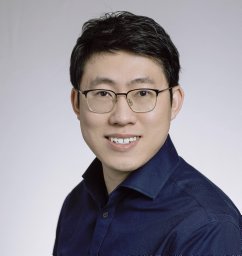
 Yang Liu
· 6 previous affiliations
- Meta (United States)Since 2022
- Audio AI Research Scientist · Since 2022
- Researcher · 2022–2025
- Zoom Video2020–2022
- Engineer · 2020–2022
- zoom2020–2022
- Senior Audio Algorithm Engineer · 2020–2022
- Microsoft (United States)2019–2020
- Researcher · 2019–2020
- University of Surrey2015–2019
- Invigilator · 2016–2019
- PhD student · 2015–2019
- Demonstrator · 2017–2018
- Chinese Dadame Studio2014–2015
- iOS Developer · 2014–2015
78 other authors named Yang Liu: Yang Liu (Nanyang Technological University · 2,333 papers), Yang Liu (Microsoft (United States) · Microsoft Research Asia (China) · 247 papers), Yang Liu (Tsinghua University · 218 papers), Yang Liu (University of California, Santa Cruz · 216 papers), Yang Liu (Peking University · 183 papers), and 73 more
Research Overview
Yang Liu focuses on multi-target tracking, audio-visual signal processing, and generative modeling for speech enhancement. Early work concentrated on improving sequential Monte Carlo probability hypothesis density (SMC-PHD) filters using particle flow for robust speaker tracking. More recently, this trajectory has expanded into cross-modal representation learning and the application of diffusion models to acoustic echo cancellation.
Research Trajectory
Initial research by Liu concentrated on the mathematical and computational challenges of multi-target tracking, particularly in complex environments where analytical solutions are intractable. To address these limitations, Liu focused on probability hypothesis density (PHD) filters, which propagate the density of targets rather than calculating the full multi-target posterior. As the first author of Particle flow for sequential Monte Carlo implementation of probability hypothesis density (2017), Liu proposed a novel sequential Monte Carlo (SMC) implementation assisted by particle flow. This approach provided a new mechanism for state estimation that demonstrated higher accuracy than standard SMC-PHD filters while remaining computationally efficient.
This foundational work in statistical filtering naturally extended into the domain of audio-visual multi-speaker tracking. A recurring challenge in this area is the weight degeneracy problem inherent to SMC-PHD filters, where the posterior distribution is poorly represented if only a few particles align with the peak of the likelihood density function. To mitigate this, Liu explored various particle flow techniques to smoothly migrate particles from prior to posterior distributions. In Non-Zero Diffusion Particle Flow SMC-PHD Filter for Audio-Visual Multi-Speaker Tracking (2018), Liu introduced an alternative method utilizing non-zero diffusion particle flow to adjust particle states, effectively fitting the particle distribution to the posterior probability density without the prohibitive computational costs associated with zero-diffusion models.
This line of inquiry culminated in a comprehensive tracking framework detailed in Audio-Visual Particle Flow SMC-PHD Filtering for Multi-Speaker Tracking (2020). Serving again as first author, Liu formalized algorithms for both zero and non-zero diffusion particle flows, demonstrating how audio data (such as direction-of-arrival angles) and visual data could be fused to detect newborn particles and accurately track multiple moving speakers in physical spaces.
By 2020, Liu’s methodological focus broadened to include self-supervised deep learning and cross-modal feature extraction. Moving beyond traditional signal processing, Liu investigated how neural architectures could disentangle complex environmental variables. In Relighting Images in the Wild with a Self-Supervised Siamese Auto-Encoder (2021), Liu developed a self-supervised method to deconstruct single-view images into separate encodings for scene illumination and content. By introducing a novel spherical harmonic loss function, the model learned to manipulate lighting directions without requiring manually annotated ground-truth data.
Liu subsequently connected this expertise in visual representation learning back to the audio domain. In Cross-Modal Spectrum Transformation Network for Acoustic Scene Classification (2021), Liu addressed the poor generalization of standard convolutional neural networks operating on log-mel spectrums in unknown acoustic environments. The proposed solution involved an auto-encoder that transformed traditional audio spectrums into "imagined visual features," exploiting the natural, latent relationships between audio and visual signals found in video recordings to improve classification robustness.
Current Directions
The most recent papers in the evidence indicate a strategic shift toward generative AI, specifically the application of diffusion models to complex speech enhancement tasks. While diffusion models have shown broad capabilities in audio generation, their high computational overhead has historically limited their viability for real-time applications like Acoustic Echo Cancellation (AEC).
Recent work investigates how to optimize these generative architectures for practical deployment. In FSD: Acoustic Echo Cancellation with Fewer Step Diffusion (2024), Liu introduces a framework explicitly designed to address the computational efficiency concerns of AEC on edge devices. By developing a novel score model and a unique noise generation technique that leverages both far-end and near-end signals, this research direction focuses on maintaining the high fidelity of diffusion-based speech enhancement while drastically reducing the required processing steps.
Profile updated
Loading new papers…
Other researchers whose papers cluster into the same research directions — a proxy for overlapping technical interests and shared intellectual neighborhoods.
See something wrong? Report a mistake