

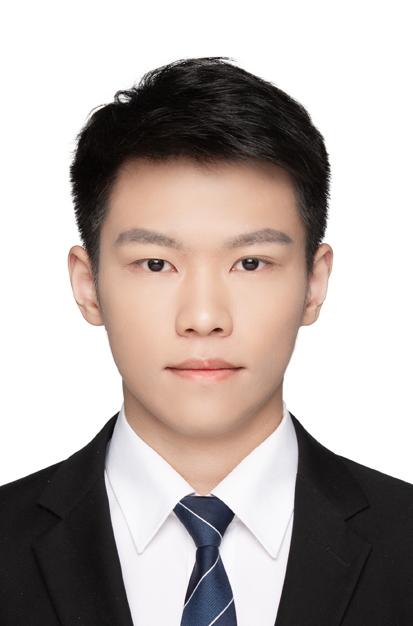
 Yang Liu
· 2 previous affiliations
- PhD student · Since 2023
- Current
- Harbin Institute of Technology2019–2023
- Undergrad student · 2019–2023
78 other authors named Yang Liu: Yang Liu (Nanyang Technological University · 2,333 papers), Yang Liu (Microsoft (United States) · Microsoft Research Asia (China) · 247 papers), Yang Liu (Tsinghua University · 218 papers), Yang Liu (University of California, Santa Cruz · 216 papers), Yang Liu (Peking University · 183 papers), and 73 more
Research Overview
Yang Liu focuses on self-supervised learning, video understanding, and computer vision. Initial work addressed optimization challenges in video retrieval by aligning training objectives with evaluation metrics. More recently, the focus has shifted toward improving self-supervised representation learning for dense video tasks and mitigating structural degradation in visual models.
Research Trajectory
Yang Liu’s research trajectory demonstrates a consistent focus on improving the representation and retrieval of visual data, evolving from supervised video retrieval optimization to advanced self-supervised learning frameworks.
In 2024, Liu’s work primarily addressed the structural misalignment between training objectives and evaluation metrics in video retrieval systems. As first author of Not All Pairs are Equal: Hierarchical Learning for Average-Precision-Oriented Video Retrieval, Liu investigated the limitations of standard pair-wise losses, which traditionally treat all sample pairs equally. Because video retrieval is typically evaluated using Average Precision (AP)—a metric that heavily weights the top of a ranking list—standard training methods often yield suboptimal results. To bridge this gap, Liu proposed a hierarchical learning approach designed to directly optimize for AP, effectively managing noise and improving the reliability of similarity measures in large-scale video retrieval contexts.
Moving into 2025, Liu’s primary research focus expanded into self-supervised learning (SSL), specifically targeting the temporal dynamics of video representations. Leading this effort as first author, Liu developed When the Future Becomes the Past: Taming Temporal Correspondence for Self-supervised Video Representation Learning. This work introduced T-CoRe, a self-supervised framework that addresses the inherent uncertainty of video reconstruction. By employing a "sandwich sampling" strategy that utilizes both past and future frames to guide the restoration of a masked current frame, the method reconstructs features in the latent space rather than relying on pixel-level reconstruction. This approach successfully captures high-level semantic representations, proving particularly effective for dense video tasks such as object segmentation and pose propagation.
Alongside these primary contributions, Liu has participated in collaborative research applying and refining self-supervised learning across diverse domains. In Exploring Non-contrastive Self-supervised Representation Learning for Image-based Profiling, Liu contributed to the development of SSLProfiler, a framework adapted for biological image-based cell profiling. This work utilized a local aggregation branch to enforce consistency across different imaging sites, demonstrating the transferability of SSL techniques to specialized scientific domains. Additionally, Liu contributed to foundational SSL research in Exploring Structural Degradation in Dense Representations for Self-supervised Learning. This paper identified Self-supervised Dense Degradation (SDD), a counterintuitive phenomenon where prolonged SSL training improves image-level classification but degrades performance on dense tasks like semantic segmentation. The research team introduced the Dense Representation Structure Estimator (DSE), a label-free metric designed to predict downstream performance and regularize models against representation collapse.
Current Directions
The most recent papers in the evidence indicate a strong ongoing focus on the mechanics and optimization of self-supervised learning for complex visual tasks. Recent work investigates the limitations of standard SSL training schedules, particularly how representations degrade when applied to dense, pixel-level tasks rather than global image classification. To address these challenges, current efforts explore novel sampling strategies—such as leveraging temporal context in video—and the development of label-free metrics to monitor and maintain representation structure during training. By focusing on latent space reconstruction and structural regularization, this research aims to build more robust, generalizable visual models capable of handling intricate downstream applications like dense segmentation and temporal correspondence.
Profile updated
Loading new papers…
Other researchers whose papers cluster into the same research directions — a proxy for overlapping technical interests and shared intellectual neighborhoods.
See something wrong? Report a mistake