

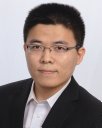
 Yang Liu
· 3 previous affiliations
- Current
- Researcher · 2019–2025
- Postdoc · 2017–2019
- University of Michigan2010–2017
- Postdoc · 2015–2017
- PhD student · 2010–2015
- MS student · 2010–2014
- Shanghai Jiao Tong University2006–2010
- Undergrad student · 2006–2010
78 other authors named Yang Liu: Yang Liu (Nanyang Technological University · 2,333 papers), Yang Liu (Microsoft (United States) · Microsoft Research Asia (China) · 247 papers), Yang Liu (Tsinghua University · 218 papers), Yang Liu (University of California, Santa Cruz · 216 papers), Yang Liu (Peking University · 183 papers), and 73 more
Research Overview
Yang Liu focuses on high-performance computing, autotuning frameworks, and Bayesian optimization for complex systems. Early work addressed fast numerical solvers for physical simulations, while subsequent research has centered on developing sample-efficient, multitask learning approaches to optimize exascale applications. Recent efforts emphasize managing mixed variables in black-box tuning problems and applying Bayesian learning to hardware accelerator design.
Research Trajectory
Liu’s early research trajectory involved developing efficient numerical methods for computational physics. In 2020, as first author, Liu published A hierarchical butterfly LU preconditioner for two-dimensional electromagnetic scattering problems involving open surfaces. This work introduced a fast matrix-vector multiplication and approximate LU factorization method that achieved $O(N \log^2 N)$ complexity, serving as an efficient preconditioner for linear systems arising from two-dimensional electric field integral equations.
By 2021, Liu’s focus shifted toward the performance optimization of large-scale computational applications, specifically addressing the high cost of tuning parameters for exascale systems. A major contribution in this domain was the introduction of the GPTune framework, detailed in the first-author work GPTune: multitask learning for autotuning exascale applications. This research adapted multitask learning to autotuning, treating application codes as black-box functions. By combining multitask learning with multi-objective tuning and incorporating coarse performance models, the framework was designed to find optimal performance parameters using a strictly limited number of expensive function evaluations.
Alongside building practical HPC frameworks, Liu investigated the underlying optimization methodologies, particularly Bayesian optimization (BO). In Non-smooth Bayesian Optimization in Tuning Problems (2021), where Liu served as senior author, the research addressed a critical limitation in standard BO. Traditional Gaussian process models assume smooth or continuous sample paths, but the black-box functions encountered in application tuning are frequently non-smooth. This work sought to adapt Bayesian optimization to better navigate these difficult, discontinuous tuning landscapes.
This dual focus on practical autotuning tools and foundational Bayesian optimization methods continued into 2022. Liu contributed to the expansion of the GPTune framework as second author on GPTuneBand: Multi-task and Multi-fidelity Autotuning for Large-scale High Performance Computing Applications, which integrated multi-fidelity approaches to further reduce the computational cost of tuning large-scale applications.
Concurrently, Liu led research into handling complex, heterogeneous parameter spaces in BO. As senior author on Hybrid Models for Mixed Variables in Bayesian Optimization (2022), Liu guided the development of surrogate models capable of managing both quantitative (continuous and integer) and qualitative (categorical) variables. This approach merged Monte Carlo Tree Search (MCTS) for categorical variables with Gaussian Processes for continuous ones. The research evaluated different search strategies, including frequentist upper confidence bound tree search and Bayesian Dirichlet search, utilizing online kernel selection to improve the efficiency of the surrogate modeling phase.
Current Directions
The most recent work in the evidence, from 2023, applies Liu's expertise in Bayesian learning and sample-efficient optimization to the domain of hardware acceleration for machine learning. Specifically, recent research investigates how to efficiently map algorithms to domain-specific deep neural network (DNN) accelerators.
In Sample-Efficient Mapspace Optimization for DNN Accelerators with Bayesian Learning, Liu, acting as senior author, explores Bayesian optimization approaches to navigate the complex mapspace of hardware accelerators. Finding the optimal mapping traditionally requires either optimizing over a coarse, potentially inaccurate performance model or conducting a large number of empirical evaluations. When using cycle-accurate simulators, the cost of these empirical evaluations becomes prohibitive. This current direction emphasizes high sample efficiency, representing a synthesis of Liu's prior work on black-box tuning and its practical application to modern AI hardware design.
Profile updated
Loading new papers…
Other researchers whose papers cluster into the same research directions — a proxy for overlapping technical interests and shared intellectual neighborhoods.
See something wrong? Report a mistake