

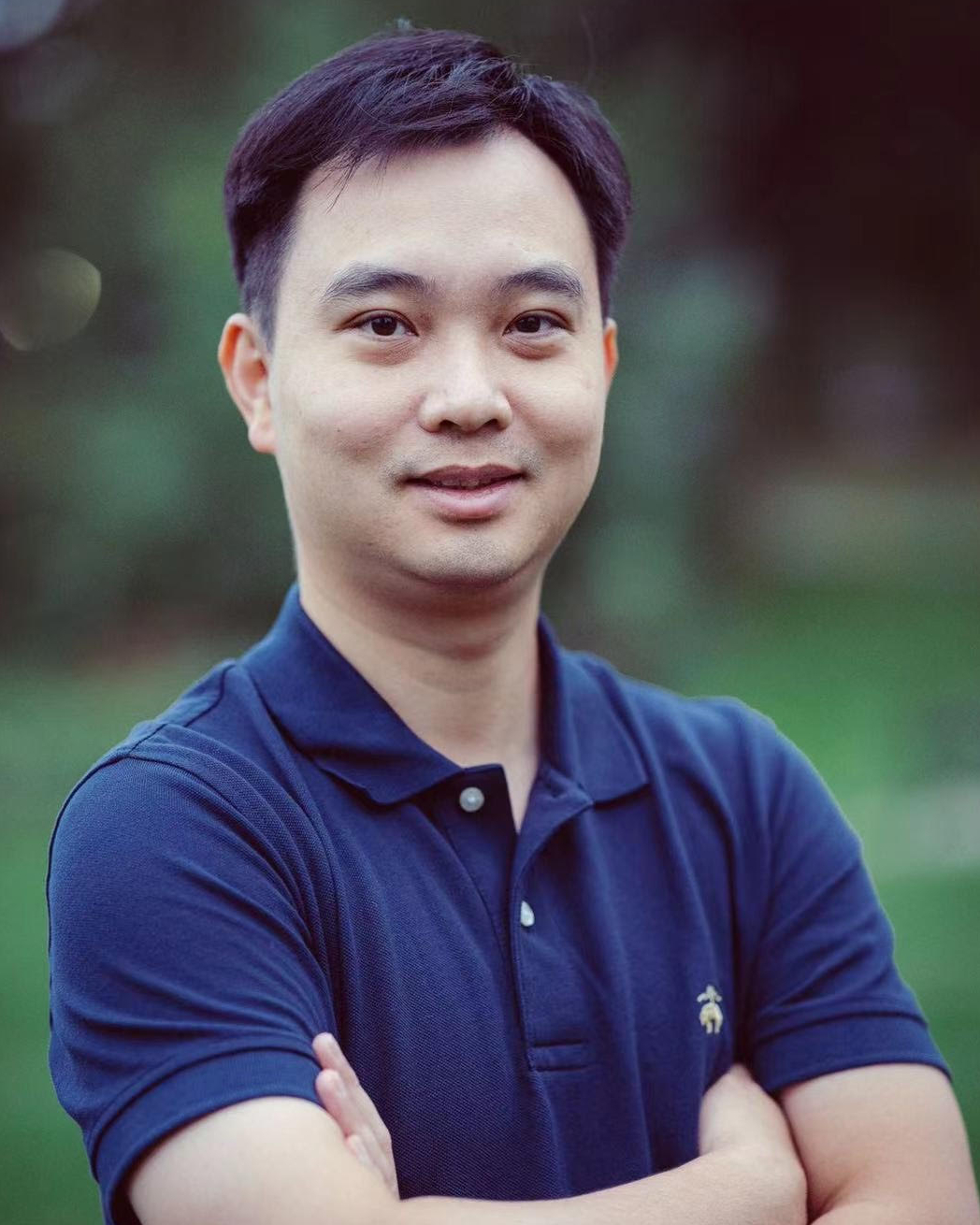
 Yan Luo
· 7 previous affiliations
- Massachusetts Eye and Ear InfirmarySince 2022
- Postdoc · Since 2022
- Broad InstituteSince 2024
- Postdoctoral Research Fellow · Since 2024
- Harvard UniversitySince 2022
- Postdoctoral Research Fellow · Since 2022
- University of Minnesota2017–2022
- Research Assistant · 2017–2022
- National University of Singapore2013–2017
- Doctoral Student · 2015–2017
- Research Assistant · 2013–2015
- SmartClouder2010–2013
- Research And Development Engineer · 2010–2013
- Undergrad student · 2004–2008
5 other authors named Yan Luo: Yan Luo (Nanjing Agricultural University · 68 papers), Yan Luo (7 papers), Yan Luo (Massachusetts Institute of Technology · 4 papers), Yan Luo (1 paper), Yan Luo (1 paper)
Research Overview
Yan Luo focuses on responsible artificial intelligence, algorithmic fairness in medical imaging, and robust computer vision. His early work explored visual saliency and attention mechanisms for image classification and transfer learning. Recently, he has concentrated on developing equitable clinical models and fair evaluation protocols, ensuring that diagnostic and generative systems perform reliably across diverse demographic groups.
Research Trajectory
Luo's early research investigated visual saliency and attention mechanisms, focusing on how models can effectively identify regions of interest across diverse visual domains. In 2015, he introduced a Label Consistent Quadratic Surrogate model for visual saliency prediction to address dataset bias and improve cross-dataset transfer. Concurrently, he developed Multi-Camera Saliency., a framework for fusing visual information from multiple views into a global scene map. This foundational interest in visual attention extended to multi-label image classification, where he proposed a dual-stream neural network in Visual Attention in Multi-Label Image Classification. (2019) to capture semantic information in cluttered scenes. To further address data scarcity in saliency modeling, he presented n-Reference Transfer Learning for Saliency Prediction (2020), enabling efficient knowledge transfer to target domains with limited labeled samples. Together, these contributions advanced the broader area of Scaling Gaze Analysis with Synthetic and Self-Supervised Learning.
Around 2020, his focus expanded to the fundamental optimization and robustness of deep learning representations. He introduced G-Softmax: Improving Intraclass Compactness and Interclass Separability of Features, modeling feature distributions as Gaussians to enhance clustering. Addressing the challenge of visual diversity and task-specific semantics, he developed Direction Concentration Learning: Enhancing Congruency in Machine Learning (2021). Recognizing the critical need for reliable model deployment, he also investigated failure prediction in Learning to Predict Trustworthiness with Steep Slope Loss (2021), designing loss functions to better distinguish between correct and incorrect predictions on large-scale datasets. His work on learning dynamics continued with Learning to Predict Gradients for Semi-Supervised Continual Learning (2022), which explored how unlabeled data affects catastrophic forgetting, and Learning to Minimize the Remainder in Supervised Learning (2022), which incorporated higher-order Taylor series terms into the parameter update process.
Beginning in 2023, Luo's trajectory shifted significantly toward responsible AI in healthcare, specifically addressing algorithmic bias and data scarcity in ophthalmology. He contributed to the curation of large-scale, multimodal datasets, starting with Harvard Glaucoma Detection and Progression: A Multimodal Multitask Dataset and Generalization-Reinforced Semi-Supervised Learning (2023), which utilized a novel pseudo-supervisor model to leverage unlabeled optical coherence tomography (OCT) data. This marked the beginning of extensive work in the research direction of Equitable Clinical AI through Demographic Debiasing.
Recognizing that medical AI often underperforms for marginalized groups, he participated in developing FairSeg: A Large-Scale Medical Image Segmentation Dataset for Fairness Learning Using Segment Anything Model with Fair Error-Bound Scaling (2024). He then developed FairCLIP: Harnessing Fairness in Vision-Language Learning (2024), introducing the Harvard-FairVLMed dataset to audit foundation models. This work proposed an optimal-transport-based framework to minimize demographic disparities, contributing to the areas of The Demographic Metadata Gap in Medical AI Auditing and Mitigating Bias at the Intersection of Multiple Identities.
Continuing his focus on ophthalmology, he introduced the Harvard Glaucoma Fairness: A Retinal Nerve Disease Dataset for Fairness Learning and Fair Identity Normalization (2024). This research proposed Fair Identity Normalization (FIN) to equalize feature importance across demographic groups, a method further validated in Equitable artificial intelligence for glaucoma screening with fair identity normalization (2025). These efforts advanced the broader direction of Demographic Adaptive Mechanisms for Equitable and Accurate Machine Learning and established new standards for the area of Performance Variance Penalties for Equitable Model Evaluation.
Most recently, Luo has extended fairness principles to generative AI and longitudinal forecasting. In FairDiffusion: Enhancing Equity in Latent Diffusion Models via Fair Bayesian Perturbation (2025), he developed methods to reduce demographic disparities in medical image generation. He also explored how to maintain equity over time with TransFair: Transferring fairness from ocular disease classification to progression prediction (2026), using a teacher-student framework to guide progression models with limited longitudinal data. Concurrently, he has continued to refine generative model architectures, as seen in Bidirectional Trajectory Smoothing for Training-Free Image Generation with Rectified Flows (2026), which stabilizes the generation process of Rectified Flow models without retraining.
Current Directions
The most recent papers in the evidence indicate a dual focus on equitable medical AI and the stabilization of generative models. A primary current direction involves ensuring fairness in complex, high-stakes clinical applications, such as transferring equitable performance from static disease classification to longitudinal progression forecasting. Additionally, recent work investigates the intersection of fairness and generative AI, developing Bayesian perturbation techniques to reduce demographic disparities in latent diffusion models. Alongside these clinical applications, there is an ongoing methodological interest in improving the fundamental generation processes of Rectified Flow models through training-free trajectory smoothing techniques.
Profile updated
Loading new papers…
Other researchers whose papers cluster into the same research directions — a proxy for overlapping technical interests and shared intellectual neighborhoods.
See something wrong? Report a mistake