

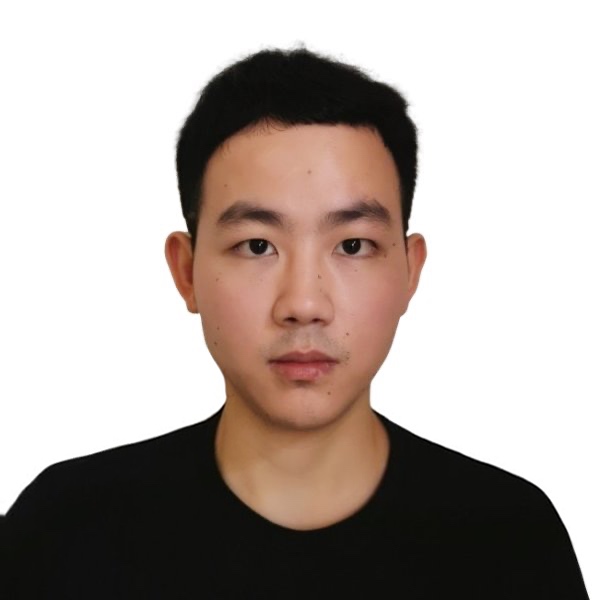
 Min Shi
· 4 previous affiliations
- University of Louisiana at LafayetteSince 2024
- Assistant Professor · Since 2024
- Harvard University2022–2024
- Postdoc · 2022–2024
- Washington University in St. Louis2020–2022
- Postdoc · 2020–2022
- Florida Atlantic University2018–2020
- PhD student · 2018–2020
4 other authors named Min Shi: Min Shi (Georgia Institute of Technology · 45 papers), Min Shi (North China Electric Power University · 3 papers), Min Shi (The Ohio State University · 1 paper), Min Shi (1 paper)
Research Overview
Min Shi focuses on artificial intelligence in healthcare, with an emphasis on algorithmic fairness, medical image analysis, and ophthalmic disease prediction. His research addresses the demographic disparities present in clinical machine learning by developing novel debiasing frameworks and equitable datasets for 2D and 3D imaging. Currently, he investigates fairness in multimodal foundation models, federated learning, and longitudinal disease progression.
Research Trajectory
Shi’s early work established robust methods for ophthalmic image analysis, particularly in handling the anatomical variations and artifacts inherent to retinal imaging. He developed techniques to extract meaningful biomarkers for glaucoma detection, as detailed in Artifact-Tolerant Clustering-Guided Contrastive Embedding Learning for Ophthalmic Images in Glaucoma. To address the scarcity of labeled 3D optical coherence tomography (OCT) data, he introduced a generalization-reinforced semi-supervised learning model in Harvard Glaucoma Detection and Progression: A Multimodal Multitask Dataset and Generalization-Reinforced Semi-Supervised Learning.
Recognizing that clinical AI systems often exhibit disparate performance across demographic groups, Shi's focus expanded significantly into algorithmic fairness. He identified a critical lack of diversity and auditing tools in 3D medical imaging, leading to the creation of Harvard Eye Fairness: A Large-Scale 3D Imaging Dataset for Equitable Eye Diseases Screening and Fair Identity Scaling. This work contributed to the broader area of The Demographic Metadata Gap in Medical AI Auditing and explored techniques in the research direction of Sample Reweighting for Algorithmic Fairness. He formalized these challenges theoretically in Impact of Data Distribution on Fairness Guarantees in Equitable Deep Learning, which provided a rigorous foundation for understanding demographic disparities and advanced the area of Fairness Guarantees and the Smallest Subgroup.
Throughout 2024, Shi and his collaborators systematically addressed fairness across various medical imaging modalities and tasks. In the domain of medical image segmentation, he participated in developing FairSeg: A Large-Scale Medical Image Segmentation Dataset for Fairness Learning Using Segment Anything Model with Fair Error-Bound Scaling, a dataset designed to benchmark equitable performance in delineating anatomical structures. He also investigated how algorithmic bias transfers across different imaging technologies in FairDomain: Achieving Fairness in Cross-Domain Medical Image Segmentation and Classification. Returning to his core focus on retinal disease, he introduced Harvard Glaucoma Fairness: A Retinal Nerve Disease Dataset for Fairness Learning and Fair Identity Normalization, pairing a demographically balanced dataset with a novel normalization method to equalize feature importance across groups. Alongside these fairness interventions, he continued to refine foundational representation learning for retinal imaging in RNFLT2Vec: Artifact-corrected representation learning for retinal nerve fiber layer thickness maps.
As foundation models gained prominence, Shi extended his fairness research to multimodal and generative AI. He co-authored FairCLIP: Harnessing Fairness in Vision-Language Learning, which introduced the Harvard-FairVLMed dataset to audit vision-language models. This research proposed an optimal-transport-based framework to mitigate disparities, contributing to the area of Distributional Fairness via Optimal Transport Theory and addressing challenges in Mitigating Bias at the Intersection of Multiple Identities. In the generative space, he developed FairDiffusion: Enhancing Equity in Latent Diffusion Models via Fair Bayesian Perturbation, utilizing Bayesian optimization to ensure equitable synthetic medical image generation across gender and racial groups.
In his most recent work, Shi has focused on embedding equity into complex, longitudinal clinical tasks and distributed systems. He developed knowledge distillation approaches for equitable forecasting in Equity-enhanced glaucoma progression prediction from OCT with knowledge distillation and further refined screening methodologies in Equitable artificial intelligence for glaucoma screening with fair identity normalization. These contributions advanced the research direction of Demographic Adaptive Mechanisms for Equitable and Accurate Machine Learning. He also explored privacy-preserving collaborative environments, establishing an experimental benchmark for group fairness in medical federated learning with FairFedMed: Benchmarking Group Fairness in Federated Medical Imaging with FairLoRA. Building on these themes, he introduced TransFair: Transferring fairness from ocular disease classification to progression prediction, a framework designed to transfer fairness properties from static classification models to longitudinal progression prediction, ensuring equitable outcomes even when temporal data is sparse.
Current Directions
Recent work investigates the intersection of algorithmic fairness with longitudinal disease modeling and distributed learning systems. A major focus is ensuring that predictive models for disease progression—such as glaucoma forecasting—maintain equitable performance across demographic groups despite the sparsity of longitudinal patient data. Additionally, Shi is exploring fairness in federated learning environments, developing benchmarks and methodologies to mitigate bias when medical data is distributed across heterogeneous, privacy-preserving institutional networks.
Profile updated
Loading new papers…
Other researchers whose papers cluster into the same research directions — a proxy for overlapping technical interests and shared intellectual neighborhoods.
See something wrong? Report a mistake