

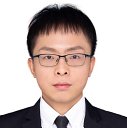
 Yaming Yang
· 1 previous affiliation
- Xidian UniversitySince 2018
- Associate Professor · Since 2022
- PhD student · 2018–2022
1 other author named Yaming Yang: Yaming Yang (Tencent (China) · Peking University · 18 papers)
Research Overview
Yaming Yang focuses on graph representation learning, heterogeneous information networks, and graph data mining. His research trajectory spans from foundational graph clustering and self-supervised pre-training to advanced architectures for heterophilic networks and multi-domain graph foundation models. Currently, his work investigates scalable prompt learning and boundary-aware subgraph mixing to improve the generalization of graph neural networks across diverse domains.
Research Trajectory
Yang's early work established foundations in graph clustering and self-supervised learning. In 2020, he introduced CoHomo: A cluster-attribute correlation aware graph clustering framework, which integrated cluster-attribute correlations to improve graph clustering performance. Building on these structural insights, he advanced the area of Adapting Homogeneous Graph Learning to Heterogeneous Structures with the development of Self-supervised Heterogeneous Graph Pre-training Based on Structural Clustering (2022). This approach, known as SHGP, bypassed the need for manually generating positive and negative examples by employing a shared attention-aggregation scheme, thereby increasing the flexibility of pre-training on heterogeneous information networks.
Continuing his focus on heterogeneous networks, Yang sought to improve both the interpretability and efficiency of graph representations. In 2023, he developed the Interpretable and Efficient Heterogeneous Graph Convolutional Network (ie-HGCN), which automatically discovers and leverages personalized meta-paths to capture complex relational data. In parallel, he explored hierarchical graph modeling in Graph Substructure Assembling Network With Soft Sequence and Context Attention. This work introduced a recurrent neural network variant designed to hierarchically assemble graph components into discriminative substructures, addressing the challenge of extracting interpretable features from complex graph spaces.
Yang's research subsequently expanded into knowledge distillation and large-scale knowledge graph alignment. With collaborators, he participated in the design of AdaGMLP: AdaBoosting GNN-to-MLP Knowledge Distillation (2024), an ensemble framework that distills complex graph neural networks into efficient multi-layer perceptrons, specifically mitigating performance degradation when training data is scarce or features are missing. That same year, he addressed the limitations of pairwise graph alignment by proposing the MultiEA framework in Aligning Multiple Knowledge Graphs in a Single Pass. This method embeds entities from multiple knowledge graphs into a shared space simultaneously, capturing global alignment information more effectively than traditional pairwise approaches.
A major theme in Yang's recent trajectory involves tackling heterophilic graphs—networks where connected nodes are often dissimilar. He introduced the Discrepancy-Aware Graph Mask Auto-Encoder (2025), a self-supervised framework that shifts the learning paradigm from recovering consistency to explicitly preserving discrepancy between nodes and their neighbors. He further explored this challenge in Enhancing Homophily-Heterophily Separation: Relation-Aware Learning in Heterogeneous Graphs, contributing to the broader research direction of Adapting Graph Neural Networks for Evolving Network Topologies. Expanding beyond traditional pairwise edges, Yang also investigated complex group interactions in Defining and Discovering Hyper-meta-paths for Heterogeneous Hypergraphs. This work generalized the concept of meta-paths to hypergraphs, advancing the research direction of Learning Structural Semantics in Heterogeneous Graphs Without Meta-paths by providing richer semantics and improved interpretability for higher-order structures.
Concurrently, Yang has adapted the "pre-train, prompt" paradigm for graph learning. In Higher-order interactions of multi-layer prompt (2025), he proposed a framework that explicitly models the synergistic interactions between prompts at different hierarchical depths, moving beyond treating them as isolated components. He also co-developed MSGCOT, detailed in Beyond Single-Granularity Prompts: A Multi-Scale Chain-of-Thought Prompt Learning for Graph, which utilizes a lightweight coarsening network to generate hierarchical "thoughts" for few-shot graph classification. Looking toward multi-domain generalization, his 2026 collaborative work, MDGMIX: Boundary-Aware Subgraph Mixing for Multi-Domain Graph Pre-Training, challenges the necessity of massive pre-training datasets by focusing exclusively on structurally similar "boundary nodes" across domains, employing a hierarchical mixup strategy to learn domain-invariant features efficiently.
Current Directions
The most recent papers in the evidence indicate a strong focus on scaling graph foundation models and adapting prompt-learning paradigms to graph neural networks. Recent work investigates how to efficiently transfer knowledge across diverse graph domains, as seen in the development of boundary-aware subgraph mixing techniques that reduce computational overhead by isolating domain-invariant structural features. Additionally, Yang is actively exploring multi-scale and multi-layer prompt tuning for graphs. This includes designing chain-of-thought frameworks and modeling higher-order interactions between prompts to improve robust generalization in few-shot node and graph classification tasks. Finally, modeling complex, non-standard graph topologies—such as heterophilic networks and heterogeneous hypergraphs—remains a central open problem in his current research agenda.
Profile updated
Loading new papers…
Other researchers whose papers cluster into the same research directions — a proxy for overlapping technical interests and shared intellectual neighborhoods.
See something wrong? Report a mistake