

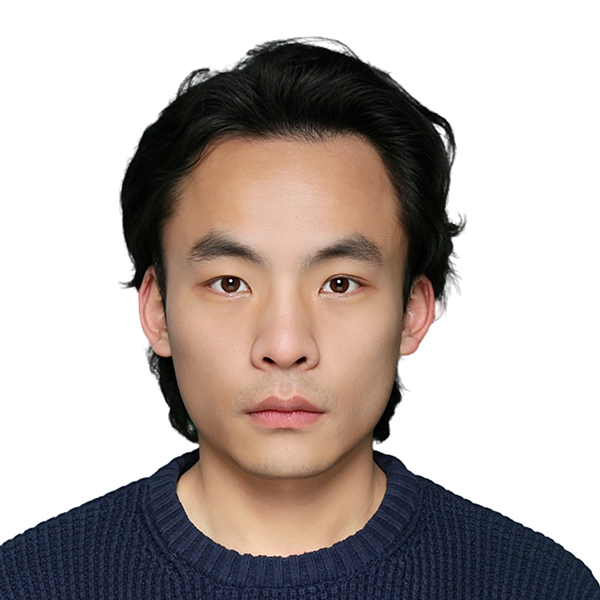
 Weigang Lu
· 3 previous affiliations
- Current
- Postdoc · 2025–2026
- Xidian University2019–2025
- PhD student · 2022–2025
- MS student · 2019–2022
- Anhui Polytechnic University2015–2019
- Undergrad student · 2015–2019
Research Overview
Weigang Lu focuses on graph neural networks, representation learning, and knowledge distillation, with an emphasis on scaling models and improving inference efficiency. His research addresses fundamental bottlenecks in deep graph learning, such as over-smoothing and under-reaching, while developing adaptive augmentation techniques. Recently, his work has expanded to heterogeneous hypergraphs and robust recommendation systems.
Research Trajectory
Lu's early research investigated the fundamental limitations of deep graph convolutional networks (GCNs). A major bottleneck in training deep GCNs is the rapid degradation of performance as layers are added. In 2021, he introduced SkipNode: On Alleviating Over-smoothing for Deep Graph Convolutional Networks, which provided theoretical and experimental analysis showing that over-smoothing and gradient vanishing mutually reinforce each other. To counter this, the work proposed a mechanism to selectively skip node convolutions in intermediate layers. This contribution advanced the broader research area of Scaling Graph Neural Networks Beyond Shallow Architectures and the related direction of Scaling Graph Neural Networks to Hundreds of Layers. He later expanded on this architecture in the 2024 journal extension, SkipNode: On Alleviating Performance Degradation for Deep Graph Convolutional Networks, solidifying the module as a plug-and-play solution for deep graph learning.
Parallel to his work on network depth, Lu explored self-supervised learning paradigms for complex relational data. He participated in the development of Self-supervised Heterogeneous Graph Pre-training Based on Structural Clustering (2022), a method that bypasses the need for manually generating positive and negative examples in heterogeneous information networks. This approach aligns with the research direction of The Virtuous Cycle of Clustering and Representation Learning and contributes to the area of Automated Data Augmentation for Graph Contrastive Learning.
By 2024, his focus on data augmentation and semi-supervised learning deepened, particularly addressing the spatial distribution of labeled data in graphs. He identified the "under-reaching" issue—where labeled nodes are only accessible to a small fraction of unlabeled nodes—and proposed a solution in NodeMixup: Tackling Under-Reaching for Graph Neural Networks. Building on the concept of node-centric interpolations, he subsequently developed AGMixup: Adaptive Graph Mixup for Semi-supervised Node Classification (2025), which introduced an adaptive framework to tailor the mixing ratio for different node pairs, thereby preserving the natural topology of the graph. He further expanded his semi-supervised learning methodologies with Pseudo Contrastive Learning for graph-based semi-supervised learning (2025).
Another major arc in Lu's trajectory involves optimizing the inference efficiency of graph models through knowledge distillation. He explored techniques to distill complex GNNs into faster Multi-Layer Perceptrons (MLPs), beginning with AdaGMLP: AdaBoosting GNN-to-MLP Knowledge Distillation in 2024. He advanced this paradigm in 2025 with ProGMLP: A Progressive Framework for GNN-to-MLP Knowledge Distillation with Efficient Trade-offs. By training a sequence of MLP students to mimic a teacher GNN, this framework enables dynamic runtime trade-offs between speed and accuracy, contributing to the research direction of Confidence Based Early Exiting for Efficient Inference.
In 2025, Lu's research expanded to capture richer semantics in highly complex structures. He collaborated on Defining and Discovering Hyper-meta-paths for Heterogeneous Hypergraphs, which generalized meta-paths to hypergraphs to better model group interactions, advancing work in the area of Learning Structural Semantics in Heterogeneous Graphs Without Meta-paths. His investigations into complex graph topologies continued with Enhancing Homophily-Heterophily Separation: Relation-Aware Learning in Heterogeneous Graphs and the development of self-supervised masking techniques in Discrepancy-Aware Graph Mask Auto-Encoder. Most recently, his work has intersected with recommendation systems, investigating the robustness of these platforms in Does noise in the knowledge graph really harm recommendations? (2026).
Current Directions
The most recent work in the evidence indicates a continued focus on the robustness and efficiency of graph representation learning. A primary current direction involves managing complex relational structures, particularly through the separation of homophily and heterophily in heterogeneous graphs and the modeling of higher-order group interactions via hypergraphs. Additionally, ongoing research addresses the practical deployment of graph models, exploring how noise in underlying knowledge graphs impacts downstream applications like recommendation systems. This is complemented by a sustained interest in self-supervised learning paradigms, such as mask auto-encoders, to learn robust structural semantics without relying on extensive manual annotations.
Profile updated
Loading new papers…
Other researchers whose papers cluster into the same research directions — a proxy for overlapping technical interests and shared intellectual neighborhoods.
See something wrong? Report a mistake