

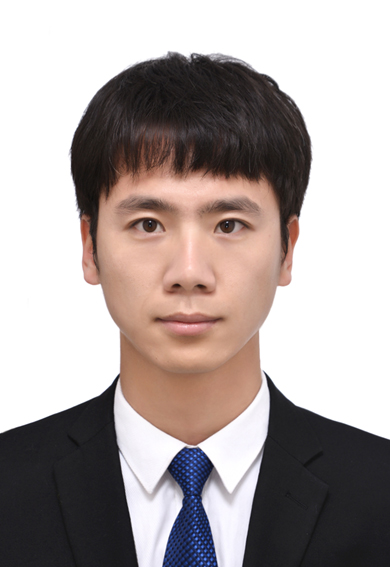
 Xinyan Liang
· 1 previous affiliation
- Shanxi UniversitySince 2016
- Full Professor · Since 2025
- Lecturer · 2022–2024
- PhD student · 2016–2022
Research Overview
Xinyan Liang focuses on multimodal machine learning, multi-view representation learning, and intelligent signal processing. His trajectory spans from foundational work in decision-theoretic rough sets to the development of evolutionary neural architecture search for optimal data fusion. Currently, his research addresses robust multi-view classification, trusted federated clustering, and signal enhancement in noisy environments.
Research Trajectory
Liang’s early research involved foundational work in decision-theoretic frameworks, participating in the development of Local multigranulation decision-theoretic rough sets (2017). He subsequently shifted focus toward optimizing feature extraction across multiple data sources. He introduced an evolutionary algorithm for searching optimal combinations of basic fusion operators, applying this framework directly to image inputs in Evolutionary Deep Fusion Method and its Application in Chemical Structure Recognition (2021).
Building on this foundation, his work expanded to address the limitations of traditional low-level fusion. He developed AF: An Association-Based Fusion Method for Multi-Modal Classification (2022), which integrates complementary information in a high-level feature space to capture inter-modal and intra-modal associations. To overcome the computational bottlenecks of neural architecture search (NAS) in these settings, he proposed DC-NAS: Divide-and-Conquer Neural Architecture Search for Multi-Modal Classification (2024), an efficient evolutionary approach that splits populations across smaller data subsets to accelerate the discovery of optimal classifiers.
In 2025, Liang’s research heavily emphasized robustness and reliability in multi-view learning. He led the development of the TEF framework in Trusted Multi-View Classification via Evolutionary Multi-View Fusion, which constructs an optimal pseudo-view to mitigate view imbalance. This work contributes to several broader research areas, including Automated Search for Multimodal Fusion Architectures, Evidential Deep Learning for Predictive Uncertainty Quantification, and Robust Multi View Learning under Heterogeneous View Quality. He further explored dynamic integration strategies in View-Association-Guided Dynamic Multi-View Classification.
Addressing the challenge of incomplete data, he guided the introduction of the AGF-TI framework in Adversarial Graph Fusion for Incomplete Multi-view Semi-supervised Learning with Tensorial Imputation. This method uses an adversarial min-max scheme and low-rank tensor imputation to recover missing structural information and resolve the disconnected manifolds caused by missing data fragments. Concurrently, he oversaw research on stabilizing deep learning representations by mitigating random consistency biases in Stabilizing Sample Similarity in Representation via Mitigating Random Consistency, forcing neural networks to learn more discriminative features.
Liang has also applied these advanced fusion concepts to specific signal processing domains. This included decoupling local and global signal relationships for audio processing in An Association-based Fusion Method for Speech Enhancement, and addressing prediction ambiguity in noisy environments via Robust Automatic Modulation Classification with Fuzzy Regularization, which explicitly penalizes uncertain probability distributions.
Moving into 2026, the trajectory expands to handle decentralized and noisy environments. He directed the development of EvoFMVC: Trusted Federated Multi-View Clustering with Evolutionary Fusion, which utilizes lightweight trusted evidence for secure data exchange and adaptive fusion across federated clients. He also collaborated on GFD-EMVC: Evolutionary Multi-View Classification with Label Noise via Gradient and Feature Dual-Perception, a method that identifies and recalibrates noisy samples to restore reliable evolutionary search trajectories. Furthermore, he participated in advancing non-stationary signal processing through Signal Enhancement via Multi-view Dynamic Representation and Alignment-aware Fusion, which learns signal-specific fractional Fourier transforms to effectively integrate information from multiple views.
Current Directions
The most recent papers in the evidence indicate a strong focus on scaling multi-view fusion to decentralized and imperfect real-world environments. Recent work investigates federated multi-view clustering, prioritizing privacy-preserving data exchange and adaptive aggregation across distributed clients. Additionally, current research addresses the challenges of label noise and missing data modalities, employing dual-perception recalibration and tensorial imputation to maintain robust evolutionary search trajectories when training data is corrupted. Another ongoing direction involves advanced signal enhancement, utilizing dynamic time-frequency representations and alignment-aware fusion to process non-stationary and low-signal-to-noise-ratio inputs.
Profile updated
Loading new papers…
Other researchers whose papers cluster into the same research directions — a proxy for overlapping technical interests and shared intellectual neighborhoods.
See something wrong? Report a mistake