

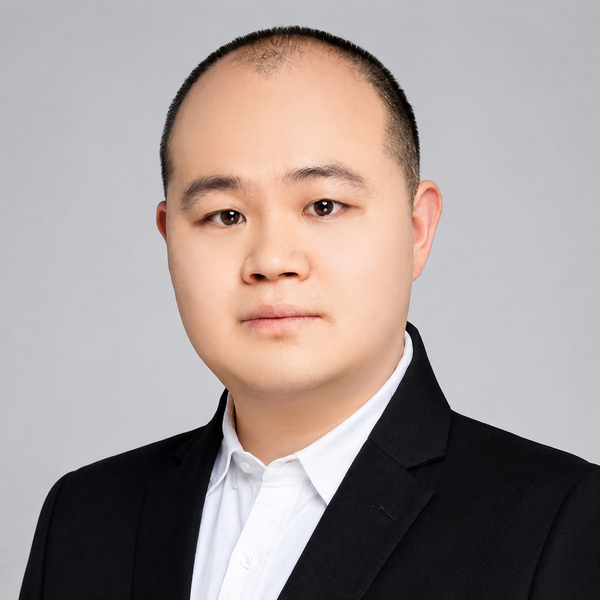
 Bingbing Jiang
· 2 previous affiliations
- Hangzhou Normal UniversityCurrent
- Current
- Associate Professor · 2019–2026
- PhD student · 2014–2019
Research Overview
Bingbing Jiang focuses on machine learning and data mining for complex data, with an emphasis on semi-supervised learning, multi-view learning, and feature selection. His trajectory spans from early probabilistic classification models to scalable graph-based methods for high-dimensional datasets. Recently, his work addresses incomplete multi-view clustering and adaptive similarity fusion to improve the robustness of unsupervised algorithms.
Research Trajectory
Jiang’s early work addressed the scalability and probabilistic outputs of semi-supervised learning. He introduced a framework for Scalable Graph-Based Semi-Supervised Learning through Sparse Bayesian Model (2017) that defined a graph-based sparse prior to handle larger datasets. Expanding on probabilistic approaches, he developed the Probabilistic Feature Selection and Classification Vector Machine, which simultaneously selects relevant features and training samples using sparse Bayesian learning with truncated Gaussian priors. This work contributed to the broader area of Moving Beyond Binary Classification Frameworks, a theme he further participated in by helping to formulate a Multiclass Probabilistic Classification Vector Machine that avoids the contradictory predictions typical of heuristic voting strategies.
Moving into causal discovery and multi-label learning, Jiang focused on identifying underlying cause-effect structures to improve predictive performance and interpretability. He proposed Multi-Label Causal Feature Selection, an algorithm that distinguishes between features affecting multiple labels and those specific to a single label, advancing the research direction of Causal Feature Selection via Markov Blankets. Continuing this trajectory, he contributed to Multi-Target Markov Boundary Discovery: Theory, Algorithm, and Application, investigating how common Markov boundary variables are determined by equivalent information across multiple targets.
In 2024, Jiang extensively investigated multi-view learning and feature selection, particularly addressing the challenges of unreliable similarity graphs and high-dimensional data. As a principal investigator, he guided the development of Multi-View Semi-Supervised Feature Selection with Graph Convolutional Networks to mitigate the impact of low-quality features on graph construction. He also introduced Semi-Supervised Multiview Feature Selection With Adaptive Graph Learning, which integrates graph construction and feature selection to prevent noisy features from degrading the similarity structure. His lab further expanded on scalable unsupervised methods, developing Scalable Multi-view Unsupervised Feature Selection with Structure Learning and Fusion to preserve both similarity and discriminative cluster structures without imposing disruptive orthogonal constraints. To improve data fusion across heterogeneous views, his team proposed Discriminative Multi-View Fusion via Adaptive Regression, which accounts for inter-class distances and intra-class compactness. Additionally, he oversaw work on Multi-cluster nonlinear unsupervised feature selection via joint manifold learning and generalized Lasso to better capture nonlinear data relationships, and contributed to a Nonlinear learning method for local causal structures.
Continuing his focus on multi-view and multi-label challenges, Jiang developed Collaborative Similarity Fusion and Consistency Recovery for Incomplete Multi-view Clustering to handle missing data across different representations. He also led research on Semi-Supervised Multi-Label Feature Selection with Consistent Sparse Graph Learning, addressing the difficulty of evaluating label correlations when labeled samples are scarce. Further refining feature selection, he introduced Semi-supervised multi-view feature selection with adaptive similarity fusion and learning, which automatically identifies salient features, contributing to the research direction of Automated Feature Selection without Manual Thresholding. Most recently, he collaborated on Incomplete Multi-View Clustering via Neighborhood-Conditioned Diffusion, which utilizes generative diffusion models guided by local neighborhood structures to reconstruct missing views more reliably than prior flow-based methods.
Current Directions
Recent work investigates the robustness of machine learning models in the presence of incomplete or missing data, particularly within multi-view clustering environments. The most recent papers in the evidence address how to reliably reconstruct missing information across heterogeneous feature spaces using advanced generative techniques, such as neighborhood-conditioned diffusion models. Additionally, ongoing research focuses on refining semi-supervised feature selection for multi-label data, emphasizing consistent sparse graph learning and adaptive similarity fusion to automatically identify salient features without relying on manual thresholding.
Profile updated
Loading new papers…
Other researchers whose papers cluster into the same research directions — a proxy for overlapping technical interests and shared intellectual neighborhoods.
See something wrong? Report a mistake