

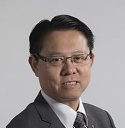
 Xinghuo Yu
· 5 previous affiliations
- RMIT UniversitySince 2002
- Distinguished Professor and Vice-Chancellor's Professorial Fellow · Since 2020
- Associate Deputy Vice-Chancellor and Chair RMIT Professorial Academy · Since 2018
- Full Professor · 2002–2025
- Associate Deputy Vice-Chancellor (Research Capability) & Distinguished Professor · 2016–2018
- Central Queensland University1998–2002
- Associate Dean (Research) · 1998–2002
- Chongqing University2000–2002
- Full Professor · 2000–2002
- Southeast University1985–1988
- Doctor of Philosophy (PhD), Control Science and Engineering · 1985–1988
- Master of Engineering (MEng), Control Engineering · 1982–1984
1 other author named Xinghuo Yu: Xinghuo Yu (1 paper)
Research Overview
Xinghuo Yu focuses on artificial intelligence applications ranging from multi-agent systems and network analysis to memory-augmented language agents. Early work addressed supervised learning for financial security and stochastic modeling for energy markets. More recently, his research investigates hierarchical memory architectures and belief-state reasoning to improve the efficiency and grounding of large language models in complex environments.
Research Trajectory
In 2017, Yu directed research on financial security, specifically targeting the identification of illicit financial activities. He oversaw the development of a supervised learning approach in Detection of Money Laundering Groups: Supervised Learning on Small Networks. This work shifted the analytical focus from individual anomaly detection to evaluating the collective behavior of collaborating individuals within small networks, addressing the challenge of detecting money laundering without prior knowledge of predicate crimes.
Following this, Yu participated in research applying game-theoretic models to energy infrastructure. In the 2018 paper Integrating Demand Response and Renewable Energy In Wholesale Market, he collaborated on a two-stage stochastic game model designed to optimize energy bidding and trading strategies. This work sought to balance demand response mechanisms with renewable energy integration in wholesale electricity markets using Stochastic Stackelberg-Cournot-Nash equilibrium concepts.
A gap in the publication record precedes a shift toward advanced language agents and memory systems in 2026. Yu contributed to the development of MACLA, a framework detailed in Learning Hierarchical Procedural Memory for LLM Agents through Bayesian Selection and Contrastive Refinement. This research decouples reasoning from learning by equipping a frozen large language model with an external hierarchical procedural memory. By learning and refining reusable skills through Bayesian selection and contrastive analysis, the framework reduces training time and computational costs for autonomous agents.
Continuing the exploration of memory-augmented systems, Yu collaborated on LINGUA, a memory-based agent for video question answering, presented in Bridging the Grounding Gap in VideoQA via Typed Memory for Language-based Belief-State Reasoning. This work addresses the "grounding gap"—where models provide correct answers without attending to the relevant visual evidence—by reasoning within an explicit linguistic belief state rather than relying solely on opaque neural embeddings. This paper intersects with several broader research areas, including the research direction of Hierarchical Memory Architectures for Language Agents and the area of Sparse Temporal Representations for Efficient Video Understanding. Furthermore, the methodology contributes to the broader area of The Textual Information Bottleneck in Multimodal Reasoning and touches upon the research direction of Resolving Action Boundary Ambiguity in Video Understanding. The system's iterative verification loops also align with work in the area of Recursive Bayesian Updating for Continual Learning and the research direction of Optimizing the Stability-Plasticity Tradeoff in Sequential Learning.
Current Directions
The most recent papers in the evidence indicate a strong focus on enhancing the reasoning capabilities and interpretability of large language models through structured memory systems. Recent work investigates how external, hierarchical procedural memories can decouple learning from reasoning, allowing agents to acquire and refine reusable skills efficiently without extensive retraining of the underlying model.
Additionally, current research addresses multimodal grounding, particularly in video understanding, by replacing opaque neural embeddings with explicit linguistic belief states. This approach aims to ensure that models accurately attend to relevant spatial and temporal evidence when answering complex questions, bridging the gap between language generation and verifiable visual reasoning.
Profile updated
Loading new papers…
Other researchers whose papers cluster into the same research directions — a proxy for overlapping technical interests and shared intellectual neighborhoods.
See something wrong? Report a mistake