

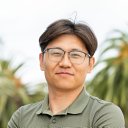
 Xin Eric Wang
· 3 previous affiliations
- SimularSince 2024
- Chief Scientist · Since 2024
- University of California, Santa BarbaraSince 2025
- Assistant Professor · Since 2025
- University of California, Santa Cruz2020–2025
- Assistant Professor · 2020–2025
Research Overview
Xin Eric Wang focuses on multimodal artificial intelligence, natural language processing, and computer vision, with an emphasis on developing agentic systems that can reason and act in complex environments. His trajectory spans early work in vision-and-language navigation to recent advancements in autonomous agents, uncertainty calibration, and physically grounded world models.
Research Trajectory
Wang’s early research focused on bridging natural language and visual environments through reinforcement learning and temporal modeling. He introduced Video Captioning via Hierarchical Reinforcement Learning, which utilized a manager-worker architecture to generate detailed descriptions for videos containing multiple fine-grained actions. This work addressed challenges in multi-scale temporal attention and mitigating exposure bias in generative models. Extending reinforcement learning to embodied agents, he developed Look Before You Leap: Bridging Model-Free and Model-Based Reinforcement Learning for Planned-Ahead Vision-and-Language Navigation. By incorporating a look-ahead module to predict future states and rewards, this approach improved an agent's ability to resolve linguistic ambiguity and generalize to unseen environments.
Continuing in the research area of Cross-Modal Grounding for Embodied Navigation, Wang presented Reinforced Cross-Modal Matching and Self-Supervised Imitation Learning for Vision-Language Navigation. This work tackled the challenge of guiding agents through spatial layouts using natural language instructions and visual feedback, emphasizing persistent spatial memory and precise episode termination. He further expanded on these themes in Natural Language Grounded Multitask Navigation. Concurrently, with collaborators, he explored the broader direction of One-Stage Architectures for Temporal Action Localization through MAN: Moment Alignment Network for Natural Language Moment Retrieval via Iterative Graph Adjustment. This single-shot framework utilized dynamic convolutional filters and relational graph neural networks to align semantic queries with untrimmed video segments, treating candidate moments as interconnected nodes to resolve complex temporal queries.
To address data scarcity in interactive environments, Wang and his colleagues investigated counterfactual thinking as a human-inspired data augmentation strategy. This led to Counterfactual Vision-and-Language Navigation via Adversarial Path Sampler, which generated robust training paths for navigation models. Building on this concept, his research group later applied counterfactual reasoning to vision-language models like CLIP. In the conference publication CPL: Counterfactual Prompt Learning for Vision and Language Models and its accompanying preprint CPL: Counterfactual Prompt Learning for Vision and Language Models, they developed methods to prevent models from learning spurious correlations. This work advanced the research direction of Interpretable Parameter-Efficient Prompt Tuning and the broader area of Counterfactual Data Augmentation for Robust Generalization by using contrastive learning to ensure prompts focused on essential features, leading to better generalization to unseen concepts.
As an Assistant Professor at UC Santa Barbara and Head of Research at Simular, Wang’s recent trajectory has heavily emphasized agentic AI, multimodal reasoning, and the reliable deployment of large language models. A major focus has been on scaling autonomous agents for complex, long-horizon tasks. His group introduced Group-Evolving Agents: Open-Ended Self-Improvement via Experience Sharing, which treats groups of agents as evolutionary units to facilitate shared experience replay for collective reinforcement learning. They also developed Scaling Agents for Computer Use, proposing a framework that converts agent actions into behavior narratives to select optimal trajectories and mitigate compounding errors in long-horizon autonomous agents. Exploring specialized multi-agent frameworks, they presented Presenting a Paper is an Art: Self-Improvement Aesthetic Agents for Academic Presentations, an iterative system that autonomously refines slide aesthetics and scripts using reinforcement learning feedback.
A parallel theme in his recent work is ensuring the safety and physical grounding of AI systems. To address the reliability of GUI grounding models, his team developed SafeGround: Know When to Trust GUI Grounding Models via Uncertainty Calibration, enabling agents to quantify uncertainty and abstain from risky actions while maintaining statistical guarantees. Similarly, they introduced SAFER: Risk-Constrained Sample-then-Filter in Large Language Models, applying conformal prediction techniques to provide distribution-free statistical guarantees for open-ended generation tasks. In the domain of physical and spatial understanding, they released $PhyWorldBench$: A Comprehensive Evaluation of Physical Realism in Text-to-Video Models to stress-test physical consistency in video world models, and Learning Situated Awareness in the Real World, a benchmark evaluating perspective-taking and spatial relationships in egocentric video. Finally, investigating the cognitive architecture of multimodal models, they proposed Reasoning Within the Mind: Dynamic Multimodal Interleaving in Latent Space, which interleaves reasoning and perception directly in the semantic space to reduce computational overhead and improve cross-modal understanding.
Expanding their work on agent evaluation and reliability, Wang's group introduced AgentDecept: Benchmarking Deceptive Behavior in Tool-Using LLM Agents under Pressure, an executable benchmark assessing whether tool-using agents faithfully report executed outcomes versus falsifying or concealing actions under various pressures. Addressing efficiency and oversight in autonomous execution, they proposed LEASH: Uncertainty-Aware Weak-to-Strong Escalation and Oversight for Computer-Use Agents, which leverages latent uncertainty extracted from past trajectory states to govern when a weak agent escalates execution to a strong model and to maintain oversight afterward. Wang also participated in conceptual work on agent exploration in Sampling Is Not Curiosity: Why LLM Agents Should Investigate, arguing that genuine curiosity in language agents requires maintaining and updating predictive models of the environment rather than relying purely on stochastic sampling.
In the realm of model adaptation and continual post-training, Wang's team developed Composable Soft-Prompt Distillation of RL Experts: Toward Continual Post-Training, distilling domain-specific reinforcement learning experts into soft prompts that concatenate without joint training or backbone updates. Furthermore, they introduced MemFold: Learning Compact Soft Memory for Long-Context Personalization via On-Policy Optimization, compressing long personalized histories into compact continuous vectors trained via on-policy reward optimization and confidence-gated distillation to preserve long-horizon preferences.
Wang's research group also investigated the dynamics of self-play reinforcement learning in Survive or Collapse: The Asymmetric Roles of Data Gating and Reward Grounding in Self-Play RL, demonstrating that data-level gating on proposer-generated tasks, rather than reward calibration, acts as the primary stabilizing factor against model collapse. In collaborative work on Step Level Feedback for Long Horizon Reinforcement Learning, Wang contributed to CM2: Reinforcement Learning with Checklist Rewards for Multi-Turn and Multi-Step Agentic Tool Use, which decomposes multi-turn agent interactions into fine-grained checklist criteria to optimize tool-using agents without requiring verifiable outcome rewards.
Current Directions
The most recent papers in the evidence indicate a strong focus on the reliability, physical grounding, and self-improvement capabilities of autonomous agents and multimodal large language models. Recent work investigates how to scale computer-use agents for long-horizon tasks while mitigating compounding errors, often by leveraging multi-agent frameworks, uncertainty-guided weak-to-strong escalation, soft memory compression, and continual distillation of modular reinforcement learning experts. A critical open problem addressed in these newer studies is uncertainty quantification; Wang's group is developing calibration and conformal prediction techniques that allow large language models and GUI agents to assess risk and abstain from unsafe actions. Additionally, current research explores the physical and spatial awareness of generative models, evaluating how well text-to-video models adhere to real-world physics and how multimodal systems can better interleave perception and reasoning directly within latent spaces.
Profile updated
Loading new papers…
Other researchers whose papers cluster into the same research directions — a proxy for overlapping technical interests and shared intellectual neighborhoods.
See something wrong? Report a mistake