

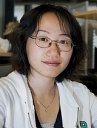
 Xiaoying Gan
· 1 previous affiliation
- Shanghai Jiao Tong UniversitySince 1996
- Full Professor · Since 2006
- PhD student · 2000–2005
- Undergrad student · 1996–2000
Research Overview
Xiaoying Gan focuses on wireless communication networks, graph representation learning, and the integration of large language models with structured data. Early work explored dynamic spectrum access and mobile sensor networks, while subsequent research shifted toward heterogeneous graph neural networks and knowledge discovery. Currently, Gan investigates parallel decoding in diffusion language models and explicit graph structural understanding for large language models.
Research Trajectory
Gan's early research addressed optimization in wireless communication systems. In 2006, Gan introduced a Time-domain clustered transmit power adaptation for OFDM system in fading channels, which significantly reduced feedback requirements compared to conventional frequency-domain schemes. Subsequent research tackled dynamic multichannel access in cognitive radio systems, proposing A Novel Sensing Scheme for Dynamic Multichannel Access based on the restless multiarmed bandit process to optimize throughput and sensing costs under Lagrangian relaxation.
Between 2014 and 2020, the trajectory expanded to encompass mobile sensor networks, crowdsourcing, and mobility modeling. Gan defined the equivalent sensing radius (ESR) to evaluate critical requirements for asymptotic full view coverage in Critical sensing range for mobile heterogeneous camera sensor networks. This foundational analysis was later expanded in Unraveling Impact of Critical Sensing Range on Mobile Camera Sensor Networks, which explored how 1-dimensional and 2-dimensional random walks affect coverage performance and sensing energy consumption. Concurrently, Gan participated in developing incentive mechanisms for crowdsourcing platforms, contributing to Incentivize crowd labeling under budget constraint, which modeled worker-platform interactions as a reverse auction. Other network optimization research included Relay-Assisted Multicast With Markov Mobility, which utilized Lyapunov drift to balance capacity and delay in mobile ad hoc networks, and Fast-Charging Station Deployment Considering Elastic Demand, which formulated deployment strategies for electric vehicles that account for spatial and temporal penalties.
A significant shift toward graph-based learning and knowledge representation emerged around 2020. Gan contributed to Spatiotemporal Adaptive Gated Graph Convolution Network for Urban Traffic Flow Forecasting. In the domain of knowledge diffusion, Gan modeled the spread of information using evolving knowledge graphs and modified epidemic models in Evolving Knowledge Graph-Based Knowledge Diffusion Model. To improve heterogeneous information network embeddings, Gan co-developed a Meta-neighbor Aggregated Graph Attention Network for Heterogeneous Graph Representation that utilizes multiple metapaths and attention mechanisms to fuse semantic information. Further graph research addressed open-set recognition in Graph Open-Set Recognition via Entropy Message Passing.
From 2024 onward, Gan's work increasingly intersected with the broader area of Automated Knowledge Synthesis from Scientific Literature. This included contributions to AceMap: Knowledge Discovery through Academic Graph, an academic system designed for knowledge discovery through large-scale academic graphs, utilizing structural entropy and machine reading to trace idea evolution. Applying machine learning to environmental science, Gan led research on the Reconstruction of dissolved oxygen in the tropical Pacific Ocean for past 100 years based on XGBoost.
Recent work advances the integration of graph structures with large language models, contributing to the research direction of Adapting Homogeneous Graph Learning to Heterogeneous Structures. Gan participated in developing a topology-aware structural tokenizer in <SOG_k>: One LLM Token for Explicit Graph Structural Understanding, which maps graph topology into a single token to mitigate structural hallucination in LLMs. Additional research introduced LEAP: Unlocking dLLM Parallelism via Lookahead Early-Convergence Token Detection, a training-free method for accelerating parallel decoding in diffusion language models. Finally, Gan contributed to GRAND-HC: Graph-Refined Author Name Disambiguation, an end-to-end framework that leverages heterogeneous paper graphs and harmony contrastive learning to address long-tailed author distributions in scholarly networks.
Current Directions
Recent work investigates the intersection of large language models and complex structured data. The most recent papers address the challenge of structural hallucination in LLMs by developing unified token spaces for explicit graph topology input, allowing models to process structural information without excessive token consumption. Additionally, current research explores methods to accelerate inference in diffusion language models, focusing on training-free parallel decoding techniques that detect early-converging tokens to reduce latency and decoding steps while preserving model precision.
Profile updated
Loading new papers…
Other researchers whose papers cluster into the same research directions — a proxy for overlapping technical interests and shared intellectual neighborhoods.
See something wrong? Report a mistake