

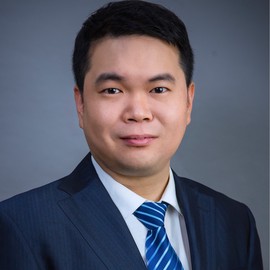
 Jiaxin Ding
· 4 previous affiliations
- Shanghai Jiao Tong UniversitySince 2019
- Associate Professor · Since 2023
- Current
- Assistant Professor · 2019–2022
- Postdoc · 2019
- Stony Brook University2012–2018
- PhD student · 2012–2018
- Peking University2008–2012
- Undergrad student · 2008–2012
Research Overview
Jiaxin Ding focuses on human mobility analysis, privacy-preserving data mining, and safe reinforcement learning. His early trajectory spans spatial information dissemination and location privacy, evolving into robust methodologies for constrained optimization and graph representation learning. Most recently, his research addresses the interpretability of graph neural networks and the evaluation of autonomous code agents.
Research Trajectory
Ding’s early research investigated the intersection of human mobility, spatial data, and privacy. He introduced methods for understanding spatial patterns in vehicle motion, analyzing large-scale taxi GPS traces in Understanding and modelling information dissemination patterns in vehicle-to-vehicle networks (2015) to model how physical proximity facilitates information diffusion. Recognizing the privacy implications of ubiquitous location tracking, he subsequently developed distributed data structures for secure trajectory sensing. In MinHash hierarchy for privacy preserving trajectory sensing and query (2017), he designed a system utilizing MinHash signatures across WiFi and cellular checkpoints to answer traffic queries with near-linear storage while protecting user identities. His group expanded on these vulnerabilities in Are Friends of My Friends Too Social?: Limitations of Location Privacy in a Socially-Connected World (2018), demonstrating how co-location events and social platform data can inadvertently leak the whereabouts of users who otherwise attempt to keep their location private.
Expanding into machine learning optimization, Ding contributed to the research direction of Safe Learning via Log Barrier Interior Point Methods. He developed IPO: Interior-Point Policy Optimization under Constraints (2020), a first-order reinforcement learning algorithm that augments reward objectives with logarithmic barrier functions. This work provided a computationally efficient alternative to complex second-order methods, advancing the broader area of Safe Reinforcement Learning via Constrained Markov Decision Processes. Concurrently, he applied his expertise in mobility data to public health during the COVID-19 pandemic. In Heterogeneous interventions reduce the spread of COVID-19 in simulations on real mobility data (2021), he and his collaborators simulated disease spread to advocate for targeted public health measures, contributing to the area of Targeted Intervention in High-Centrality Transmission Hubs by showing that protecting specific, highly connected locations is more effective than blanket lockdowns.
Returning to trajectory data in 2022, Ding focused on the challenges of representation learning and sparse data collection. He addressed the complexities of passively collected human mobility data—such as cellular handoffs or credit card transactions—in Time Window Frechet and Metric-Based Edit Distance for Passively Collected Trajectories. To improve downstream tasks like clustering and classification, he proposed TSNE: trajectory similarity network embedding, a method that factorizes k-nearest neighbor partial similarity graphs to embed trajectories into low-dimensional vectors. However, he also identified critical security flaws in these very techniques, revealing in Analyzing sensitive information leakage in trajectory embedding models that latent vector spaces can still expose underlying user characteristics. Broadening his privacy research to the Internet of Things, he formalized privacy guarantees for time-series data in Publishing Asynchronous Event Times with Pufferfish Privacy, demonstrating how perturbing timestamps or injecting fake events can mask the occurrence and ordering of sensitive events.
In 2023, Ding’s work shifted toward structuring and analyzing large-scale scientific literature. He led the creation of Covidia: COVID-19 Interdisciplinary Academic Knowledge Graph, integrating over a million papers across diverse fields to facilitate cross-domain knowledge discovery. Building on this macro-level view of scientific output, he participated in a study of knowledge evolution titled Knowledge does not explode but increases linearly over time. This research introduced a Knowledge Quantification Index to argue that while data volume grows exponentially, the actual network of structured ideas expands linearly. This work aligns with the research direction of Joinpoint Regression for Segmented Trend Analysis, analyzing growth rates to distinguish genuine knowledge expansion from mere information surges.
Ding’s most recent trajectory encompasses advanced graph neural networks, safe reinforcement learning, vision-language model distillation, and the evaluation of large language models. He guided the development of TopInG: Topologically Interpretable Graph Learning via Persistent Rationale Filtration (2025), a framework utilizing Topological Data Analysis to make graph neural networks intrinsically interpretable by isolating the subgraphs that drive predictions. Continuing his earlier work in constrained optimization, he collaborated on Controlling Underestimation Bias in Constrained Reinforcement Learning for Safe Exploration (2025), which introduced a memory-driven intrinsic cost estimation technique to prevent agents from underestimating safety costs during training. Finally, he participated in research evaluating autonomous systems with CATArena: Evaluating Evolutionary Capabilities of Code Agents via Iterative Tournaments (2026). This work contributes to the area of The Capability Threshold for Autonomous Self-Improvement by moving beyond single-shot generation to measure how effectively LLM code agents improve through feedback and peer-learning. Additionally, they contributed to Distill the Visual Evidence, Not Just the Answer: Cross-World On-Policy Distillation for Vision-Language Models (2026), presenting a cross-world on-policy distillation approach and diagnostic benchmark that supervise how vision-language models respond to changes in visual evidence rather than solely matching endpoint answers.
Current Directions
The most recent papers in the evidence indicate a focus on the safety, interpretability, and evaluation of complex machine learning systems. Recent work investigates how to extract intrinsically interpretable rationales from graph neural networks using topological data analysis, ensuring that structural predictions can be traced back to specific subgraphs. Concurrently, Ding is addressing safety constraints in reinforcement learning by developing memory-driven mechanisms that prevent agents from underestimating risk during exploration. Ding's research also extends to multimodal and language models, addressing both the distillation of visual evidence transitions in vision-language models and the evaluation of code agents via iterative tournament frameworks.
Profile updated
Loading new papers…
Other researchers whose papers cluster into the same research directions — a proxy for overlapping technical interests and shared intellectual neighborhoods.
See something wrong? Report a mistake