

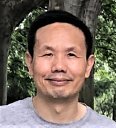
 Xiaoyang Tan
· 2 previous affiliations
- Full Professor · Since 2008
- MS student · 1993–1996
- Undergrad student · 1989–1993
- Nanjing University2001–2005
- PhD student · 2001–2005
Research Overview
Xiaoyang Tan focuses on reinforcement learning, computer vision, and robust machine learning. His early work addressed distance metric learning and face recognition, gradually shifting toward stable policy optimization and multi-agent systems. Currently, his research emphasizes offline reinforcement learning, offline imitation learning, and ensuring agent robustness in out-of-distribution states.
Research Trajectory
Tan’s early research concentrated on computer vision, with a particular emphasis on face recognition and metric learning. In 2006, he introduced a non-metric partial similarity measure designed to capture intra-personal similarities while ignoring confusing dissimilarities in Learning Non-Metric Partial Similarity Based on Maximal Margin Criterion. This methodological work was complemented by a comprehensive overview of the field in Face recognition from a single image per person: A survey. He later expanded on these foundational similarity measures by addressing data imperfections, contributing to the area of Robust Deep Metric Learning under Label Noise. Specifically, in Robust Distance Metric Learning in the Presence of Label Noise (2014), he developed a robust extension of Neighbourhood Components Analysis that models the conditional probability of true labels to mitigate the performance deterioration typically caused by noisy training data.
By the late 2010s, Tan’s focus shifted toward deep reinforcement learning, where he began investigating methods to stabilize policy optimization. He contributed significantly to the research direction of Trust Region and Divergence Regularization for Stable Policy Optimization and the broader area of Recycling Experience for Efficient Policy Optimization. With collaborators, he analyzed the exploratory behavior of Proximal Policy Optimization (PPO) in Trust Region-Guided Proximal Policy Optimization (2019), proposing a trust region-guided method to prevent agents from becoming trapped in bad local optima due to poor initialization. He continued to refine these mechanisms in Truly Proximal Policy Optimization (2019), further improving the stability and performance of PPO algorithms.
Building on his work in policy optimization, Tan explored methods to improve agent robustness against estimation errors. This led to contributions in the area of Action Gap Operators for Robust Reinforcement Learning, exemplified by Robust Action Gap Increasing with Clipped Advantage Learning (2022). In this work, he introduced a clipped advantage learning method that selectively increases the action gap to prevent the accumulation of errors in performance loss bounds. Around this time, he also addressed cooperative multi-agent reinforcement learning (MARL). In SMIX(λ): Enhancing Centralized Value Functions for Cooperative Multiagent Reinforcement Learning (2023), he proposed an off-policy training approach to learn stable centralized value functions without relying on greedy assumptions. His multi-agent research also encompasses the broader directions of Non-Monotonic Value Factorization in Multi-Agent Reinforcement Learning and Beyond Monotonicity in Cooperative Multi Agent Reinforcement Learning.
A major theme in Tan’s subsequent trajectory is offline reinforcement learning, particularly the challenge of safely handling out-of-distribution (OOD) states. In Recovering from Out-of-sample States via Inverse Dynamics in Offline Reinforcement Learning (2023), he introduced the State Recovery Principle, utilizing an inverse dynamics model to teach agents how to return to familiar data distributions when encountering unseen states at test time. He further addressed extrapolation errors in Contextual Conservative Q-Learning for Offline Reinforcement Learning (2023), leveraging contextual information to guide policies toward stable transitions. Additionally, he explored goal-directed behaviors in Self-imitation guided goal-conditioned reinforcement learning (2023).
Tan’s most recent work integrates advanced generative and mathematical frameworks into offline RL and imitation learning. In Dynamics‑Aligned Diffusion Planning for Offline RL: A Unified Framework with Forward and Inverse Guidance (2025), he developed a framework that explicitly enforces dynamics consistency during the diffusion denoising process, ensuring that generated trajectories are physically feasible. He continued to tackle OOD drift in Variational OOD State Correction for Offline Reinforcement Learning (2025). In 2026, he introduced a novel data augmentation framework in Koopman-Assisted Trajectory Synthesis: A Data Augmentation Framework for Offline Imitation Learning, which exploits mathematical symmetries in a learned linear latent space to generate physically consistent expert trajectories from limited data. He also addressed the challenge of learning from suboptimal data in Beyond non-expert demonstrations: Outcome-driven action constraint for offline reinforcement learning (2026), focusing on the consequences of actions to enable safer policy learning.
Concurrently with his RL advancements, Tan has maintained an interest in computer vision, applying robust learning principles to modern security challenges. In Contrastive Desensitization Learning for Cross Domain Face Forgery Detection (2025), he co-developed a network that desensitizes models to domain-specific styles, significantly improving the detection of deepfakes across unseen environments.
Current Directions
The most recent papers in the evidence indicate a strong focus on offline reinforcement learning and imitation learning, particularly leveraging advanced mathematical and generative models to ensure physical consistency and robustness. Recent work investigates diffusion-based planning frameworks that align generated trajectories with true environment dynamics, as well as Koopman operator theory for synthesizing physically consistent expert trajectories from limited data. Additionally, Tan continues to explore methods for correcting out-of-distribution state drift and learning safe policies from suboptimal, non-expert demonstrations. Alongside these reinforcement learning advancements, he is also actively researching cross-domain face forgery detection, focusing on learning invariant features to identify deepfakes across diverse environments.
Profile updated
Loading new papers…
Other researchers whose papers cluster into the same research directions — a proxy for overlapping technical interests and shared intellectual neighborhoods.
See something wrong? Report a mistake