

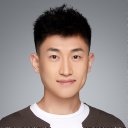
 Xiaoteng Ma
· 3 previous affiliations
- Mind LabSince 2025
- Principal Researcher · Since 2025
- Tsinghua UniversityCurrent
- Current
- Postdoc · 2023–2025
- PhD student · 2017–2023
- Xi'an Jiaotong University2013–2017
- Undergrad student · 2013–2017
Research Overview
Xiaoteng Ma focuses on reinforcement learning, offline policy optimization, and the development of adaptive artificial intelligence agents. His trajectory spans foundational work in risk-sensitive and multi-agent reinforcement learning to recent applications in robotics and large language model memory systems. He currently explores experiential intelligence, building systems that continuously improve through real-world interaction.
Research Trajectory
Xiaoteng Ma’s early research applied reinforcement learning to complex, highly dynamic environments. In 2018, he investigated unmanned aircraft systems with Air-Combat Strategy Using Deep Q-Learning, demonstrating that deep Q-networks could learn long-term tactical policies that outperformed traditional search-based methods like Minimax and Monte Carlo Tree Search. He subsequently expanded into foundational reinforcement learning theory, developing a unified trust region framework in Average-Reward Reinforcement Learning with Trust Region Methods (2021) to derive novel performance bounds for long-run average criteria, which are often preferred in engineering applications over discounted rewards.
Between 2021 and 2022, a major focus of his work centered on the research direction of Out of Distribution Overestimation in Offline Reinforcement Learning. Because offline RL relies on static datasets, policies often fail when encountering out-of-distribution actions. He contributed to Believe What You See: Implicit Constraint Approach for Offline Multi-Agent Reinforcement Learning (2021), introducing an algorithm that restricts value estimation to data present in the offline dataset, achieving strong performance in complex multi-agent tasks like StarCraft II. He continued to refine offline value estimation by collaborating on Mildly Conservative Q-Learning for Offline Reinforcement Learning (2022), which sought to balance necessary pessimism with the ability to generalize, avoiding the excessive conservatism that often hinders performance improvement.
To address the mismatch between training simulators and real-world deployment, he developed Distributionally Robust Offline Reinforcement Learning with Linear Function Approximation (2022), optimizing policies against worst-case perturbations using historical data. In parallel, he introduced Expectile V-Learning (EVL) in Offline Reinforcement Learning with Value-based Episodic Memory (2022). By learning the V-function rather than the Q-function, EVL smoothly interpolates between optimal value learning and behavior cloning, advancing the broader areas of Expectile Regression for Implicit Value Optimization and Implicit Planning through Trajectory Stitching.
His work in continuous control and risk-sensitive optimization also matured during this period. He proposed the Double Actors Regularized Critics (DARC) algorithm in Efficient Continuous Control with Double Actors and Regularized Critics (2022), utilizing a dual-actor architecture to enhance exploration and correct value estimation bias. Addressing risk in decision-making, he published Mean-Semivariance Policy Optimization via Risk-Averse Reinforcement Learning (2022). This interest in risk management culminated in DSAC: Distributional Soft Actor-Critic for Risk-Sensitive Reinforcement Learning (2025), which models the full distribution of future returns rather than just expected values, contributing to the research direction of Downside Risk Optimization and Asymmetric Volatility. Further advancing robust learning, he co-authored Single-Trajectory Distributionally Robust Reinforcement Learning (2024), detailing a model-free algorithm capable of learning robust policies from a single continuous trajectory without a simulator, a significant step in the area of Unbiased Estimation for Non-linear Robust Bellman Operators.
Recently, his research has expanded into physical robotics, computer vision, and large language model (LLM) agents. In robotics, he developed Integrating Diffusion-based Multi-task Learning with Online Reinforcement Learning for Robust Quadruped Robot Control (2025), a framework combining the expressive generation of diffusion models with the stability of online RL to enable real-time, language-guided locomotion. In computer vision, he collaborated on MPSN: Motion-aware Pseudo-Siamese Network for indoor video head detection in buildings (2026), leveraging movement to distinguish subjects from complex backgrounds, contributing to the area of Constraining Spatial Attention with Temporal Motion Signals.
Concurrent with his role as Chief Research Officer at Macaron AI, his 2026 publications focus heavily on the cognitive architecture of AI agents. He led the development of the Streaming Memory Benchmark: Stage-level Diagnosis with Evidence Dependency Control, addressing the limitations of static memory evaluations by structuring conversations into streaming episodes to isolate pipeline latencies and verify true memory dependency. Additionally, he participated in From Word to World: Can Large Language Models be Implicit Text-based World Models? (2026), investigating how LLMs can simulate environments to improve the safety and learning efficiency of text-based agents.
Current Directions
The most recent papers in the evidence indicate a strong focus on the architecture and evaluation of experiential AI agents, particularly those powered by large language models. A primary current direction is the design of streaming memory systems that allow agents to process incremental evidence, manage bounded contexts, and maintain an updated understanding of their environment over time. This involves creating rigorous, stage-level diagnostic benchmarks to ensure agents rely on genuine memory retrieval rather than in-context inference shortcuts.
Alongside agentic memory, recent work investigates the capacity of LLMs to serve as implicit world models, enabling safer and more efficient exploration in simulated text-based environments. Finally, there is an ongoing focus on bridging generative AI with physical control, demonstrated by recent efforts to integrate diffusion models with online reinforcement learning for robust, real-time quadruped robot locomotion.
Profile updated
Loading new papers…
Other researchers whose papers cluster into the same research directions — a proxy for overlapping technical interests and shared intellectual neighborhoods.
See something wrong? Report a mistake