

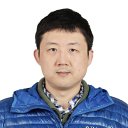
 Xiaoting Wang
· 1 previous affiliation
- Full Professor · Since 2017
1 other author named Xiaoting Wang: Xiaoting Wang (1 paper)
Research Overview
Xiaoting Wang focuses on quantum control theory, physics-informed machine learning, and the optimization of large-scale foundation models. Wang’s work bridges the gap between the mathematical rigor of quantum dynamics and the practical challenges of adapting large language models (LLMs) to specialized tasks. Current research directions involve the development of efficient optimization trajectories for variational quantum algorithms and the refinement of prompt tuning techniques to improve model performance in data-constrained environments.
Research Trajectory
Wang’s early research, spanning approximately 2010 to 2012, was primarily situated within the field of quantum control. This work addressed the fundamental problem of how to manipulate quantum states using external fields or interactions with the environment. During this period, Wang focused on the application of Lyapunov-based control laws to ensure the stability and convergence of quantum systems. This involved rigorous mathematical analysis of non-generic quantum states and the exploration of controllability within spin networks, particularly focusing on how complex systems could be managed through minimal control nodes.
In the early 2020s, Wang’s research trajectory expanded to include the challenges of modern machine learning, specifically regarding foundation models and heterogeneous data. This shift reflects an interest in the structural similarities between controlling physical systems and optimizing high-dimensional neural networks. Wang has contributed to the study of Hybrid Discrete Continuous Prompt Tuning, a methodology designed to mitigate the brittleness of natural language instructions by integrating learnable continuous vectors. This work addresses the trade-off between the interpretability of "hard" prompts and the performance gains associated with "soft" tuning.
By 2025, Wang’s work has converged into a synthesis of physics and optimization. This is most clearly evidenced by the development of physics-informed models intended to accelerate quantum optimization. By treating the training of variational quantum algorithms as a physical dynamical system, Wang has sought to reduce the computational and measurement overhead that typically limits the scalability of quantum computing.
Current Directions
A central theme in Wang’s recent work is the alignment of pre-trained models with specific downstream requirements. This includes Aligning Downstream Tasks with Pre-Training Objectives, which investigates how to preserve the knowledge embedded in a model's original pre-training head when transitioning to new tasks with limited data. This research challenges the standard "pre-train, fine-tune" paradigm by seeking methods that do not require the total replacement of output layers, which often leads to instability in few-shot scenarios.
Wang also investigates the application of these models to structured data environments. The research into Tabular Foundation Models for Heterogeneous Data explores how Transformer architectures, which have seen immense success in natural language processing, can be adapted for the tabular formats used in credit scoring and medical diagnostics. In the clinical domain, Wang has participated in research regarding Parsimonious Clinical Prediction via LASSO Regularization, focusing on the use of regularization to select critical predictors from high-dimensional electronic health records and prevent overfitting.
Furthermore, Wang’s work addresses the limitations of standard optimization algorithms. Research into Scalable Second-Order Optimization for Neural Networks examines how leveraging the local geometry of the loss landscape can provide more efficient convergence than first-order methods like SGD or Adam. This interest in optimization efficiency is a recurring motif, appearing both in the context of deep learning and in the refinement of Mitigating Pre-training Objective Misalignment in Downstream Adaptation.
Representative Work
In Analysis of Effectiveness of Lyapunov Control for Non-Generic Quantum States, Wang provides a formal analysis of control laws for quantum systems that do not follow standard generic assumptions. This work established a foundation for understanding how Lyapunov methods can be used to drive systems toward target states even under constrained conditions.
The paper Stabilizing Quantum States by Constructive Design of Open Quantum Dynamics, where Wang served as the senior author, shifted the focus toward open quantum systems. Rather than viewing environmental interaction solely as a source of decoherence, this research explores how the constructive design of dynamics can be used to stabilize desired quantum states, offering a method for robust state preparation.
Wang further detailed the mathematical underpinnings of these control strategies in Analysis of Lyapunov Method for Control of Quantum States. This first-author publication focuses on the convergence properties of Lyapunov-based controllers, providing theoretical guarantees for the performance of these methods in quantum state engineering.
In Symmetry and Subspace Controllability for Spin Networks With a Single-Node Control, Wang addressed the problem of scalability in quantum control. The research identifies the conditions under which a large network of interacting spins can be fully controlled through a single node, utilizing the inherent symmetries of the network to reduce the complexity of the control hardware required.
More recently, as senior author of PALQO: Physics-informed model for Accelerating Large-scale Quantum Optimization, Wang introduced a framework that utilizes Physics-Informed Neural Networks (PINNs) to model the training trajectories of Variational Quantum Algorithms (VQAs). By treating the optimization as a nonlinear partial differential equation, the PALQO model achieves significant reductions in the number of quantum measurements required for systems up to 40 qubits, demonstrating a substantial improvement in the efficiency of large-scale quantum optimization.
Profile updated
| Title | Venue | Year |
|---|---|---|
| PALQO: Physics-informed model for Accelerating Large-scale Quantum Optimization | NeurIPS | 2025 |
| Symmetry and Subspace Controllability for Spin Networks With a Single-Node Control | IEEE Trans. Automatic Control | 2012 |
| Analysis of Effectiveness of Lyapunov Control for Non-Generic Quantum States | IEEE Trans. Automatic Control | 2010 |
| Analysis of Lyapunov Method for Control of Quantum States | IEEE Trans. Automatic Control | 2010 |
| Stabilizing Quantum States by Constructive Design of Open Quantum Dynamics | IEEE Trans. Automatic Control | 2010 |
Loading new papers…
Other researchers whose papers cluster into the same research directions — a proxy for overlapping technical interests and shared intellectual neighborhoods.
See something wrong? Report a mistake