

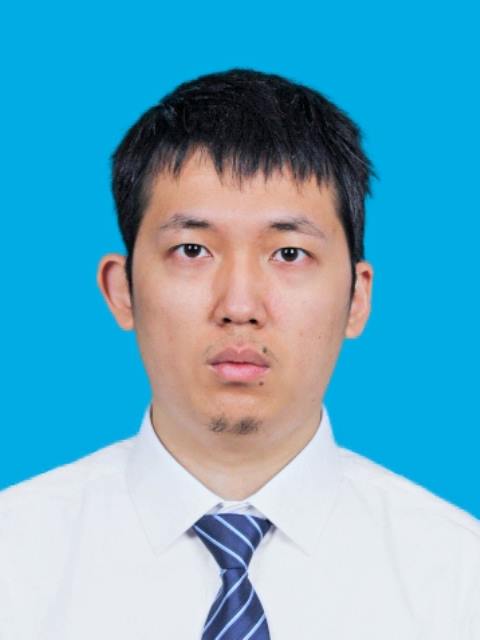
 Qisheng Wang
· 4 previous affiliations
- Current
- University of Edinburgh2024–2025
- Researcher · 2024–2025
- Nagoya University2022–2023
- Assistant Professor · 2022–2023
- Tsinghua University2013–2022
- PhD student · 2017–2022
- Undergrad student · 2013–2017
Research Overview
Qisheng Wang focuses on quantum algorithms, complexity theory, and quantum information theory, with a particular emphasis on developing efficient methods for quantum state characterization and quantum machine learning. His work spans the design of algorithms for entropy estimation, fidelity testing, and online learning, as well as the formal verification of sequential quantum circuits. Currently, his research addresses the theoretical limits of quantum query complexity and the optimization of precision in quantum algorithms to overcome fundamental bottlenecks in state preparation and measurement.
Research Trajectory
Wang’s research career began with a focus on the formal foundations of quantum computation. During his doctoral studies at Tsinghua University, he investigated the intersection of formal methods and quantum automata. This period was characterized by an inquiry into the mathematical structures required to verify quantum systems, culminating in his work on Quantum Büchi Automata. In this early phase, he established pumping lemmas and closure properties for quantum languages, utilizing tools such as the Tarski-Seidenberg elimination to prove the decidability of emptiness problems. This foundational work provided a rigorous framework for understanding the behavior of sequential quantum circuits, a theme that remained central to his Ph.D. thesis.
Following his doctoral work, Wang shifted toward the design and analysis of quantum algorithms, specifically targeting problems in Bridging Upper and Lower Bounds in Quantum Query Complexity. Between 2020 and 2022, he developed algorithms for classical string problems, such as finding the lexicographically minimal rotation of a string. During this time, he began to explore the average-case complexity of quantum queries, demonstrating that quantum algorithms could achieve near-optimal performance for specific combinatorial tasks.
As a researcher at Nagoya University and later the University of Edinburgh, Wang’s focus evolved toward quantum information theory and the practical challenges of Measuring Distinguishability in Mixed Quantum Systems. He addressed the high resource costs associated with estimating von Neumann entropy and state fidelity, particularly for high-dimensional systems. His work in this period introduced the "samplizer" framework and other techniques to achieve exponential speedups in the low-rank case. This transition marked a move from purely theoretical automata to the development of tools for quantum device certification and benchmarking.
Most recently, Wang has extended his algorithmic expertise into the domain of quantum machine learning and optimization. Since 2023, he has led research into Breaking the Square Root Regret Barrier with Quantum Learning, applying quantum techniques to online learning and zero-sum games. This work involves "quantizing" classical optimization methods, such as multiplicative weight updates and gradient descent, to achieve quadratic speedups in dimensionality while maintaining near-optimal convergence rates. His current trajectory involves integrating these learning algorithms with advanced simulation techniques, such as parallel Hamiltonian simulation, to enhance the efficiency of quantum-enhanced data science.
Current Directions
A primary focus of Wang’s current work is addressing The Precision Bottleneck in Quantum Algorithms. While many quantum algorithms offer speedups in terms of input size, their performance often degrades significantly as the required error tolerance ($\epsilon$) decreases. Wang’s recent research aims to optimize the query complexity relative to $\epsilon$, particularly for trace distance and fidelity estimation. By developing generalized amplitude estimation techniques, he has sought to improve the scaling of these estimations from the standard $O(1/\epsilon^2)$ to the optimal $\Theta(1/\epsilon)$.
In the realm of quantum learning, Wang is investigating how quantum access to data can circumvent classical limits in non-stationary environments. This includes work on The Moving Target Problem in Multi Agent Learning, where he applies quantum multi-Gibbs samplers to solve zero-sum games with logarithmic regret. He is also exploring the The QRAM Dependency in Sublinear Quantum Algorithms, seeking ways to maintain algorithmic speedups even when data loading or state preparation costs are high. This involves designing sparse online learning algorithms that utilize truncated gradient descent to produce efficient, high-dimensional models.
Furthermore, Wang continues to contribute to the theory of quantum state testing. His recent collaborations have explored unitarily invariant properties of bipartite states, demonstrating that local testers can often match the performance of global ones. This line of inquiry has significant implications for property testing and the study of entanglement spectra, suggesting that purified samples may not always provide the advantages previously assumed in mixed-state testing.
Representative Work
Quantum Büchi Automata. In this early work, Wang defined the formal model of Quantum Büchi Automata (QBA) to process infinite words. He introduced two distinct acceptance conditions—non-disturbing and disturbing—and established pumping lemmas to characterize the languages they accept. By applying the Tarski-Seidenberg elimination theorem, he proved the decidability of the emptiness problem for QBAs under various semantics, including probable and almost sure acceptance. This research laid the groundwork for the formal verification of quantum systems that operate over infinite time horizons.
Quantum Algorithm for Lexicographically Minimal String Rotation. Wang developed a quantum query algorithm for the lexicographically minimal string rotation (LMSR) problem, achieving a worst-case complexity of $O(n^{3/4})$. More significantly, the algorithm achieves an average-case query complexity of $O(\sqrt{n} \log n)$, which he proved to be asymptotically optimal up to polylogarithmic factors. This work demonstrated the potential for quantum speedups in fundamental string processing tasks that are widely used in graph equality checking and chemical structure analysis.
New Quantum Algorithms for Computing Quantum Entropies and Distances. This paper presents a suite of algorithms for estimating von Neumann entropy, Rényi entropy, trace distance, and fidelity. Wang focused on the low-rank regime, where the rank $r$ of an $N$-dimensional state is much smaller than $N$. He achieved significant speedups over prior methods, including a time complexity of $\tilde{O}(r/\epsilon^2)$ for von Neumann entropy. These algorithms are particularly relevant for characterizing the outputs of near-term quantum devices where states are often approximately low-rank.
Logarithmic-Regret Quantum Learning Algorithms for Zero-Sum Games. Serving as the senior author, Wang introduced the first online quantum algorithm for zero-sum games to achieve logarithmic regret. The approach involves a "quantized" version of the optimistic multiplicative weight update method, supported by a novel, fast quantum multi-Gibbs sampler. The algorithm provides a quadratic speedup in the dimensions of the game while maintaining the near-optimal convergence rates required for efficient equilibrium computation in multi-agent settings.
Optimal Trace Distance and Fidelity Estimations for Pure Quantum States. In this work, Wang developed quantum algorithms that estimate the trace distance and fidelity between pure states using $\Theta(1/\epsilon)$ queries to their state-preparation circuits. This result quadratically improves upon the $O(1/\epsilon^2)$ scaling often cited in quantum information literature. The core of this contribution is a generalized quantum square root amplitude estimation technique, which provides a more efficient path for state distinguishability tasks.
Quantum Algorithm for Sparse Online Learning with Truncated Gradient Descent. As senior author, Wang developed a quantum framework for sparse online learning applicable to logistic regression, Support Vector Machines (SVM), and least squares. By adapting the classical truncated gradient descent method to the quantum setting, the algorithm achieves a quadratic speedup in the dimensionality of the input data. This work addresses the need for sparse solutions in high-dimensional, real-time data processing, providing a quantum-enhanced approach to traditional statistical learning problems.
Profile updated
Loading new papers…
Other researchers whose papers cluster into the same research directions — a proxy for overlapping technical interests and shared intellectual neighborhoods.
See something wrong? Report a mistake