

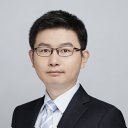
 Xiaojun Chang
· 5 previous affiliations
- University of Technology SydneySince 2022
- Full Professor · Since 2022
- Current
- RMIT University2021–2022
- Associate Professor · 2021–2022
- Monash University2018–2021
- Senior Lecturer · 2018–2021
- Carnegie Mellon University2016–2018
- Postdoc · 2016–2018
2 other authors named Xiaojun Chang: Xiaojun Chang (19 papers), Xiaojun Chang (Monash University · University of Science and Technology of China · 3 papers)
Research Overview
Xiaojun Chang focuses on multi-agent reinforcement learning, neural architecture search, and multimodal video understanding. His trajectory spans the development of foundational libraries for cooperative agents and training-free metrics for efficient model design. Recently, his work emphasizes progressive online video reasoning and the integration of geometric perception into multimodal large language models.
Research Trajectory
Chang’s early work addressed foundational challenges in medical imaging and multi-agent systems. In 2021, he developed FFA-IR: Towards an Explainable and Reliable Medical Report Generation Benchmark, which tackled the lack of explainable annotations and reliable evaluation tools in automated medical report generation. The following year, his focus expanded to cooperative multi-agent reinforcement learning (MARL). He investigated how varying agent attributes impact joint policies in Role Diversity Matters: A Study of Cooperative Training Strategies for Multi-Agent RL (2022), quantifying agent differences to prevent policy degradation in complex environments like Starcraft II.
In 2023, Chang’s research diversified into efficient model deployment, video processing, and MARL infrastructure. He participated in edge AI optimization with MatchNAS: Optimizing Edge AI in Sparse-Label Data Contexts via Automating Deep Neural Network Porting for Mobile Deployment, addressing the labor-intensive process of porting deep learning models to smart edge devices. Concurrently, he contributed to video processing efficiency in Mask Propagation for Efficient Video Semantic Segmentation, a framework that utilizes query-based flow estimation to warp segment masks from sparse keyframes, significantly reducing computational costs. Returning to multi-agent systems, he led the creation of MARLlib: Extending RLlib for Multi-agent Reinforcement Learning, a comprehensive algorithm library designed to standardize implementation and evaluation across various MARL benchmarks. He also contributed to the area of Self-Supervised Learning via Swapped Assignment Prediction through ViewCo: Discovering Text-Supervised Segmentation Masks via Multi-View Semantic Consistency, which models text-to-views consistency to improve visual representations learned from sparse text supervision.
By 2024, Chang made significant advances in neural architecture search (NAS) and heterogeneous MARL. He participated in advancing the research direction of Sequential Policy Updates for Multi-Agent Reinforcement Learning with Maximum Entropy Heterogeneous-Agent Reinforcement Learning. This work introduced a framework that prioritizes stochastic policies, helping agent teams escape suboptimal local traps to reach a more robust equilibrium. In the domain of model efficiency, he led the development of SWAP-NAS: Sample-Wise Activation Patterns for Ultra-fast NAS, contributing to the broader area of Reliable Performance Estimation for Neural Architecture Search. SWAP-NAS introduced a training-free metric that evaluates architectures rapidly by analyzing activation patterns across samples rather than within them. He further explored efficient architectures in Masked Distillation Advances Self-Supervised Transformer Architecture Search, which intersects with work in In-place Distillation for Slimmable Weight-Sharing Networks. This approach utilized masked image modeling and a teacher-student distillation framework to search for Vision Transformer architectures without relying on manual labels.
In 2025, Chang’s focus shifted toward the compression of large language models (LLMs) and the generation and understanding of complex video narratives. He addressed LLM efficiency in Let LLM Tell What to Prune and How Much to Prune, introducing a hierarchical structured pruning framework. This work aligns with the research direction of Integrating Orthogonal Model Compression Techniques, utilizing information-theoretic metrics like transfer entropy to dynamically optimize performance-efficiency trade-offs. He also participated in building Shot2Story: A New Benchmark for Comprehensive Understanding of Multi-shot Videos, a large-scale dataset providing detailed shot-by-shot captions and summaries to evaluate how well AI models follow narrative progression. Additionally, he contributed to the area of Formalizing Cinematic Intent for Autonomous Camera Control through Sitcom-Crafter: A Plot-Driven Human Motion Generation System in 3D Scenes, a system that transforms descriptive plot scripts into complex, collision-free human animations within 3D environments.
Most recently, in 2026, Chang has advanced multimodal reasoning and online video processing. He led Progressive Online Video Understanding with Evidence-Aligned Timing and Transparent Decisions, introducing a framework that allows AI agents to respond to streaming queries exactly when sufficient visual evidence appears, decoupling reasoning control from memory integration. He also developed GeoSense: Internalizing Geometric Necessity Perception for Multimodal Reasoning, a novel framework enabling multimodal large language models to intelligently decide when to utilize 3D geometric information, thereby boosting spatial reasoning performance without compromising general visual understanding. Furthermore, Chang guided the development of Seeing Together, Acting Apart: Shared Environmental Understanding for Multi-Robot Navigation, proposing SEER to aggregate partial observations across robots into a common upstream representation layer that enables collaboration prior to decentralized decision-making.
Current Directions
Recent work investigates the intersection of multimodal reasoning, streaming video understanding, and the efficient deployment of large-scale models. The most recent papers in the evidence address how multimodal large language models can selectively internalize 3D geometric information for spatial reasoning, ensuring that geometric data is only processed when necessary. Parallel efforts focus on progressive online video understanding, exploring how AI agents can process continuous video streams by decoupling reasoning control from memory integration to make transparent, evidence-aligned decisions. Additionally, ongoing research explores hierarchical structured pruning techniques to optimize the performance and computational efficiency of large language models.
Profile updated
Loading new papers…
Other researchers whose papers cluster into the same research directions — a proxy for overlapping technical interests and shared intellectual neighborhoods.
See something wrong? Report a mistake