

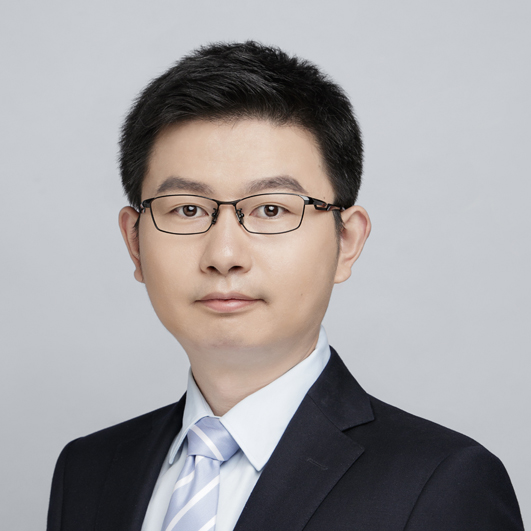
 Xiaojun Chang
· 3 previous affiliations
- Monash UniversitySince 2018
- Senior Lecturer · Since 2020
- Lecturer · 2018–2020
- Current
- Carnegie Mellon University2016–2018
- Postdoc · 2016–2018
2 other authors named Xiaojun Chang: Xiaojun Chang (University of Technology Sydney · University of Science and Technology of China · 64 papers), Xiaojun Chang (19 papers)
Research Overview
Xiaojun Chang focuses on the development of adaptable machine learning architectures, specifically exploring the intersection of multi-agent reinforcement learning (MARL), transformer-based models, and the security of large-scale language model interfaces. Their work addresses the challenges of model generalization across diverse tasks and the robustness of neural networks when deployed in real-world environments. By investigating how complex models can be decoupled from fixed input-output constraints and how they respond to adversarial extraction, Chang contributes to the broader understanding of scalable and secure artificial intelligence.
Research Trajectory
The observed trajectory of Chang’s research between 2020 and 2021 reflects a transition from analyzing the vulnerabilities of static natural language processing (NLP) deployments to developing dynamic, universal architectures for cooperative multi-agent systems. This evolution suggests an increasing interest in the flexibility of neural representations and the practical requirements of deploying AI in unconstrained or adversarial settings.
In 2020, Chang participated in research concerning the security of fine-tuned BERT models. This work focused on the risks associated with exposing powerful language models through APIs, identifying that even when models are encapsulated to protect intellectual property, they remain susceptible to extraction attacks. This research highlighted a critical tension between the utility of "as-a-service" machine learning and the privacy-sensitive nature of training data.
By 2021, Chang’s focus shifted toward the structural limitations of reinforcement learning. Traditional MARL models often suffer from a lack of transferability; a model trained for a specific number of agents or a specific observation space typically cannot be applied to a different configuration without retraining from scratch. Chang contributed to the development of architectures that utilize Iterative Refinement and Feedback Loops in Neural Inference to decouple policies from specific task dimensions. This period also saw an expansion into benchmarking for indoor navigation, emphasizing the need for agents to operate using realistic, first-person visual inputs rather than the idealized, formatted data common in earlier simulation environments.
Universal Architectures and Multi-Agent Systems
A significant portion of Chang’s recent work involves overcoming the "one-model-one-task" limitation in multi-agent reinforcement learning. In collaborative research, Chang explored how Transformer architectures—originally designed for sequence modeling in NLP—could be adapted to handle the varying input and action dimensions of different multi-agent games. This approach aligns with broader trends in Spatiotemporal Window Attention for Efficient Video Transformers, where the goal is to manage high-dimensional data efficiently while maintaining the ability to capture complex dependencies.
The move toward "universal" MARL pipelines represents an attempt to allow agents to accumulate experience across tasks of varying difficulty. By decoupling the policy from the specific observation and action configurations of a single environment, this research facilitates the transfer of learned behaviors. This is particularly relevant in complex scenarios where agents must navigate 3D spaces, a domain where Preserving Temporal Structure in Video Representation Learning is essential for maintaining a coherent understanding of the environment over time.
Security and Robustness in Language Models
Parallel to the work in reinforcement learning, Chang has investigated the robustness of BERT-based systems. As large-scale language models become the backbone of commercial AI services, understanding their failure modes becomes a priority. Chang’s research in this area examined how adversaries might "steal" a model’s functionality by querying its API and training a surrogate model on the responses.
This work underscores the difficulty of securing foundation models. Even when the internal weights and training data are hidden, the semantic outputs of the model provide enough signal for an attacker to reconstruct a functional equivalent. This line of inquiry is foundational for developing more resilient Open-Domain Event Understanding via Semantic Transfer systems, where the goal is to ensure that models remain reliable and secure even as they are applied to increasingly diverse and unconstrained real-world data.
Representative Work
The following papers represent key contributions to the fields of NLP security and multi-agent systems during the 2020-2021 period.
In EXPLORING VULNERABILITIES OF BERT-BASED APIS, Chang and colleagues investigated the privacy and robustness issues inherent in deploying fine-tuned BERT models as services. The study demonstrated an effective model extraction attack, showing that an adversary could practically replicate a target API's performance. This research highlighted the vulnerability of intellectual property and privacy-sensitive information in the context of modern NLP deployment.
Chang contributed to the design of a novel reinforcement learning pipeline in UPDeT: Universal Multi-agent RL via Policy Decoupling with Transformers. This work addressed the restriction of fixed input and output dimensions in traditional RNN-based MARL models. By utilizing a Transformer-based architecture, the team enabled a single model to fit tasks with different observation and action configurations, facilitating experience transfer across diverse levels of difficulty in multi-agent games.
The challenge of bridging the gap between simulation and reality was addressed in MAIN: A Multi-agent Indoor Navigation Benchmark for Cooperative Learning. Chang participated in the creation of this benchmark, which requires agents to navigate 3D indoor environments using realistic, first-person visual inputs. Unlike previous environments that provided clean, formatted data, MAIN forces agents to handle noisy observations, a necessary step toward Zero-Shot Vision via Foundation Model Semantic Anchoring and other forms of robust, real-world perception.
Current Directions
Based on the most recent available evidence, Chang’s research continues to focus on the intersection of cooperative learning and architectural flexibility. The emphasis on benchmarking in realistic 3D environments suggests a move toward more complex, embodied AI tasks. Furthermore, the integration of Transformer architectures into reinforcement learning indicates a sustained interest in leveraging the strengths of foundation models to solve traditional control and coordination problems. The overarching goal remains the development of AI systems that are not only high-performing but also adaptable to new tasks and resilient against adversarial exploitation.
Profile updated
Loading new papers…
Loading research neighbors…
See something wrong? Report a mistake