

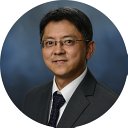
 Xiao Qin
· 4 previous affiliations
- Auburn UniversitySince 2007
- Director of Graduate Programs · Since 2017
- Full Professor · Since 2015
- Associate Professor · 2010–2015
- Assistant Professor · 2007–2010
- Assistant Professor of Computer Science · 2004–2007
- University of Nebraska–Lincoln2001–2004
- Research Assistant · 2001–2004
- M.S., Computer Science · 1992–1999
1 other author named Xiao Qin: Xiao Qin (Amazon (United States) · Snowflake Inc. (United States) · 43 papers)
Research Overview
Xiao Qin focuses on energy-efficient data storage systems, parallel computing architectures, and high-performance key-value stores. His trajectory spans from early work on real-time scheduling in heterogeneous clusters to the development of thermal-aware storage and hardware-accelerated data management. Currently, he investigates intelligent resource allocation, serverless computing efficiency, and GPU-empowered storage optimizations for large-scale cloud environments.
Research Trajectory
In the early 2000s, research focused on the scheduling and reliability of parallel systems. He introduced heuristic dynamic scheduling schemes for parallel real-time jobs, modeled as directed acyclic graphs, to enhance system reliability without incurring additional hardware costs in Dynamic, Reliability-Driven Scheduling of Parallel Real-Time Jobs in Heterogeneous Systems. Expanding on scheduling in clustered environments, he participated in developing a security overhead model designed to balance mandatory security requirements with stringent timing constraints in Scheduling Security-Critical Real-Time Applications on Clusters.
By the late 2000s, his focus shifted toward the massive energy consumption of data centers and I/O-intensive applications. To address these inefficiencies, he proposed a buffer-disk architecture that saves energy by keeping idle data disks in sleeping mode for extended periods, detailed in An Energy-Efficient Framework for Large-Scale Parallel Storage Systems. This architectural work was complemented by algorithmic solutions for cluster performance, such as Dynamic load balancing for I/O-intensive applications on clusters.
In the 2010s, he expanded on thermal management and data-intensive computing challenges. He contributed to dynamic thermal management through strategic file placements, estimating heat re-circulation to reduce the cooling costs of storage nodes in TIGER: Thermal-Aware File Assignment in Storage Clusters. Concurrently, he addressed the parallelization of large-scale data mining tasks, designing a MapReduce-based algorithm that utilizes a frequent items ultrametric tree to avoid building conditional pattern bases in FiDoop: Parallel Mining of Frequent Itemsets Using MapReduce. He also applied computational prediction methods to bioinformatics, developing tools for characterizing non-coding regulatory variants in TIVAN: tissue-specific cis-eQTL single nucleotide variant annotation and prediction.
Moving into the 2020s, his research addresses modern cloud, serverless, and IoT infrastructures. He surveyed the intersection of energy efficiency and security in IoT ecosystems in A Survey on Energy-Aware Security Mechanisms for the Internet of Things, highlighting the need for energy-autonomous systems and standardized interoperability across heterogeneous hardware networks. In the cloud computing domain, he investigated serverless efficiency, proposing a framework to execute invocations concurrently within a single container to reduce memory waste in FaaSBatch: Boosting Serverless Efficiency With In-Container Parallelism and Resource Multiplexing. He also returned to thermal management, developing a split-and-recombine algorithm to handle bursty workloads while maintaining energy efficiency in BTVMP: A Burst-Aware and Thermal-Efficient Virtual Machine Placement Approach for Cloud Data Centers.
His most recent work heavily emphasizes high-performance storage, specifically LSM-tree-based key-value stores and solid-state drives (SSDs). He addressed the lack of integrated data management between memory and disks by designing TrieKV: A High-Performance Key-Value Store Design With Memory as Its First-Class Citizen. To overcome CPU bottlenecks during LSM-tree compaction, he explored hardware acceleration, first in gLSM: Using GPGPU to Accelerate Compactions in LSM-tree-based Key-value Stores, and subsequently by optimizing data transfer and parallel processing in RGKV: A GPGPU-Empowered Compaction Framework for LSM-Tree-Based KV Stores With Optimized Data Transfer and Parallel Processing. In the domain of SSD performance, his research tackles the challenges of multi-tenant environments and parallel operations. He proposed a read-request driven adaptive allocation scheme to mitigate data fragmentation and garbage collection latency in RDA: A Read-Request Driven Adaptive Allocation Scheme for Improving SSD Performance. He further optimized multi-tenant SSDs by developing iCache: An Intelligent Cache Allocation Strategy for Multitenant in High-Performance Solid-State Disks to reduce performance interference, and explored machine learning techniques for storage maintenance in iGC: Reinforcement learning-guided intelligent garbage collection strategy for multi-tenant SSDs.
Current Directions
The most recent papers in the evidence point toward a sustained focus on optimizing high-performance storage architectures and cloud resource management. A major current direction involves leveraging hardware acceleration—specifically GPGPUs—to relieve CPU bottlenecks during the compaction processes of LSM-tree-based key-value stores. Concurrently, recent work investigates intelligent, adaptive strategies for multi-tenant solid-state drives, utilizing reinforcement learning and read-request-driven allocation to manage cache resources and garbage collection. Finally, ongoing research addresses the efficiency of modern cloud paradigms, exploring in-container parallelism for serverless computing and thermal-aware virtual machine placement for bursty workloads.
Profile updated
Loading new papers…
Other researchers whose papers cluster into the same research directions — a proxy for overlapping technical interests and shared intellectual neighborhoods.
See something wrong? Report a mistake