

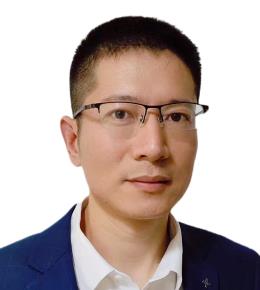
 Longwei Wang
· 2 previous affiliations
- University of South DakotaSince 2023
- Assistant Professor · Since 2023
- Auburn University2018–2022
- PhD student · 2018–2022
Research Overview
Longwei Wang focuses on explainable artificial intelligence, adversarial robustness, and the development of trustworthy machine learning systems. His early research addressed optimization in wireless networks before shifting toward the interpretability and security of deep neural networks. His current work investigates how geometric priors and explainability-guided refinement can defend models against adversarial threats and improve performance in domains like medical imaging.
Research Trajectory
Wang’s early research concentrated on optimization and resource allocation in wireless communication systems. He introduced methods for multiuser channel selection in cognitive radio networks with heterogeneous channel availability, formulating the problem as an evolutionary game governed by replicator dynamics in Collaborative spectrum sharing based on information pooling for cognitive radio networks with channel heterogeneity. He subsequently developed distributed optimization techniques for dynamic user association in heterogeneous cellular networks, aiming to maximize base station utilization by balancing loads and channel gains in Congestion aware dynamic user association in Heterogeneous cellular network: A stochastic decision approach. Expanding into empirical studies of organizational behavior, he investigated the dynamics of trust within 196 R&D alliances in China, demonstrating that competence trust linearly benefits knowledge creation while goodwill trust exhibits an inverted U-shaped relationship in Trust and knowledge creation: the moderating effects of legal inadequacy. Returning to communications, he analyzed cooperative multicell precoding using large random matrix theory to approximate signal-to-interference-plus-noise ratios based on slow fading statistics in Performance Analysis of Cooperative Multicell Precoding With Global CSI and Local Individual CSI in the Large Dimensional Regime.
Around 2021, Wang’s focus shifted toward the interpretability and security of deep learning models. He applied information-theoretic analysis to understand layer-wise neuron activations and their impact on classification performance in Explaining the Behavior of Neuron Activations in Deep Neural Networks. Concurrently, he explored model-agnostic defenses against adversarial examples, proposing a large-difference transformation technique that rebuilds input images using colorful triangle primitives in Improving robustness of deep neural networks via large-difference transformation.
By 2024, his work deeply integrated architectural innovations with adversarial defense mechanisms. He developed frameworks combining supervised contrastive learning with margin-based losses, explicitly enforcing tighter intra-class clustering and wider inter-class margins to create stable decision boundaries in Enhancing Adversarial Robustness of Deep Neural Networks Through Supervised Contrastive Learning. To further improve resilience, he introduced an architecture that merges the parameter efficiency of DenseNets with ensemble learning via intermediate cross-connections in Dense Cross-Connected Ensemble Convolutional Neural Networks for Enhanced Model Robustness. This approach advanced the broader area of Robustness to Common Corruptions and Natural Perturbations. He also addressed the vulnerability of local convolutions by combining Convolutional Block Attention Modules (CBAM) with optimized non-local blocks to capture broader context in Enhanced Model Robustness by Integrated Local and Global Processing.
A major theme in Wang’s recent trajectory is the active use of explainability tools to refine models rather than merely diagnose them. With collaborators, he introduced a framework utilizing Local Interpretable Model-Agnostic Explanations (LIME) to detect and ignore spurious feature dependencies, iteratively retraining networks to boost out-of-distribution generalization in Bridging Interpretability and Robustness Using LIME-Guided Model Refinement.
In 2025, Wang expanded his focus to geometric priors and sustainable computing. He demonstrated that embedding symmetry priors into architectures via group-equivariant convolutions yields high resistance to adversarial attacks without the computational burden of traditional adversarial training in Bridging Symmetry and Robustness: On the Role of Equivariance in Enhancing Adversarial Robustness. He also tackled texture bias in Convolutional Neural Networks, introducing frequency-based and contrastive regularization strategies to prioritize global shapes over local textures in Promoting Shape Bias in CNNs: Frequency-Based and Contrastive Regularization for Corruption Robustness, contributing to the research direction of Geometric Latent Space Organization via Supervised Contrastive Learning. Addressing the environmental impact of large-scale models, his lab proposed a resource-frugal framework that leverages meta-learning and active learning to learn efficiently from small data streams while respecting ecological budgets in Toward Carbon-Neutral Human AI: Rethinking Data, Computation, and Learning Paradigms for Sustainable Intelligence. This approach intersects with the area of Sample Selection Guided by Model Uncertainty.
Moving into 2026, Wang applied his expertise in explainability and data efficiency to the medical domain. He developed a dual-framework integrating expert knowledge into both model training and data acquisition for medical image analysis in Expert-Guided Explainable Few-Shot Learning with Active Sample Selection for Medical Image Analysis. Additionally, he participated in research evaluating the safety alignment of large language models, contributing to a novel jailbreaking attack that decomposes harmful queries into semantically coherent sub-questions using hyperbolic Hamiltonian dynamics in Structured Multi-step Jailbreaking under a Hamiltonian Generative Formulation. He also contributed to examining adversarial vulnerabilities in generative models, participating in the development of an adversarial advertising framework for text-to-image diffusion models using multivariate continuously scaled phase-type distributions and masked parameter smoothing in Exploring Advertising Manipulation in Diffusion Image Generation.
Current Directions
The most recent papers in the evidence indicate a dual focus on applying trustworthy AI principles to high-stakes domains and evaluating the safety of foundational models. Recent work investigates explainable few-shot learning for medical image analysis, emphasizing the integration of expert knowledge and active sample selection to overcome data scarcity while maintaining interpretability. Concurrently, Wang is exploring the vulnerabilities of generative and aligned foundation models, participating in research on structured jailbreaking techniques and adversarial advertising manipulations in diffusion models. His ongoing research also continues to address the fundamental robustness of neural networks through geometric inductive biases, such as equivariance, and the development of sustainable, carbon-neutral learning paradigms.
Profile updated
Loading new papers…
Other researchers whose papers cluster into the same research directions — a proxy for overlapping technical interests and shared intellectual neighborhoods.
See something wrong? Report a mistake