

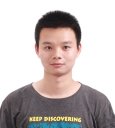
 Xianxu Hou
· 2 previous affiliations
- Xi'an Jiaotong-Liverpool UniversitySince 2023
- Assistant Professor · Since 2023
- Shenzhen University2020–2023
- Researcher · 2020–2023
Research Overview
Xianxu Hou focuses on computer vision and deep learning, with specific emphasis on facial image generation, vision-language alignment, and weakly supervised semantic segmentation. His early work explored generative adversarial networks for semantic face manipulation and contrastive learning for object localization. More recently, he investigates large-scale visual-linguistic pre-training for facial representation learning and multi-modal face analysis.
Research Trajectory
In 2022, Hou contributed to advancements in weakly supervised object localization and semantic segmentation. With collaborators, he developed C2 AM: Contrastive learning of Class-agnostic Activation Map for Weakly Supervised Object Localization and Semantic Segmentation, a method that generates activation maps using only unlabeled image data, without image-level supervision. This work leverages the observation that the semantic information of foreground objects typically differs from their backgrounds, addressing the tendency of standard classifiers to focus solely on discriminative object regions. This contributes to the broader area of Class-Agnostic Contrastive Learning for Foreground Background Separation and the research direction of Similarity Aware Weighting for Contrastive Learning. In parallel, he explored how natural language supervision can improve segmentation models. He co-authored CLIMS: Cross Language Image Matching for Weakly Supervised Semantic Segmentation, which leverages contrastive language-image pre-training to activate more complete object regions and suppress background noise, advancing the field of Open Vocabulary Detection through Vision Language Alignment.
During the same period, Hou's research expanded into facial image synthesis and manipulation. He participated in the development of RamGAN: Region Attentive Morphing GAN for Region-Level Makeup Transfer, which introduced a spatial-aware morphing module to encode attention matrices for specific facial features like lips and eyes. This approach enables precise, localized makeup transfer, intersecting with research areas such as Disentangling Perceptual Factors in Neural Style Transfer, Bridging Geometric Mismatches in Facial Style Transfer, and Parser Free Architectures for Robust Human Image Synthesis. Building on themes of semantic control, he introduced GuidedStyle: Attribute knowledge guided style manipulation for semantic face editing, utilizing attribute knowledge to guide the manipulation of facial styles. He also co-developed Talk2Face: A Unified Sequence-based Framework for Diverse Face Generation and Analysis Tasks, proposing a single sequence-to-sequence architecture capable of handling multiple tasks—including text-guided face synthesis, face captioning, and age estimation—simultaneously. By tokenizing both text and facial images, the framework applies the same parameters and objectives across diverse modalities.
In 2023, Hou continued to refine techniques for semantic face manipulation by leveraging the latent spaces of pretrained generative adversarial networks. He presented Lifelong Age Transformation With a Deep Generative Prior, a framework that models the conditional aging process within a GAN latent space while employing a cycle consistency loss to preserve identity across a wide range of synthesized ages. Expanding on the integration of text and facial synthesis, he developed TextFace: Text-to-Style Mapping Based Face Generation and Manipulation. This work introduced a text-to-style mapping technique that encodes text descriptions directly into the latent space of a pretrained StyleGAN, enabling high-resolution, diverse face generation guided by text-image similarity matching. Further exploring these latent representations, he published Deep generative image priors for semantic face manipulation, which investigates how deep generative priors can be harnessed for fine-grained semantic editing of facial images.
The trajectory of integrating language and facial imagery culminated in large-scale dataset curation and pre-training efforts. In 2024, Hou and collaborators introduced FLIP-80M: 80 Million Visual-Linguistic Pairs for Facial Language-Image Pre-Training. Recognizing the scarcity of massive image-text datasets specific to the facial domain, this work details the construction of a dataset containing over 80 million face images paired with text descriptions, filtered from billions of general-domain samples. The project utilizes AI-generated content methods for data augmentation and quality management to advance facial representation learning.
Current Directions
The most recent papers in the evidence indicate a strong focus on large-scale visual-linguistic pre-training and multi-modal facial analysis. Current work investigates the creation and utilization of massive domain-specific datasets to bridge the gap between text and facial imagery. This involves developing robust facial representation learning models that can handle complex, open-vocabulary text descriptions for generation and manipulation tasks. Additionally, ongoing themes include the continued exploration of deep generative priors to achieve high-fidelity, identity-preserving transformations, such as lifelong age progression and fine-grained semantic editing driven by natural language.
Profile updated
Loading new papers…
Other researchers whose papers cluster into the same research directions — a proxy for overlapping technical interests and shared intellectual neighborhoods.
See something wrong? Report a mistake