

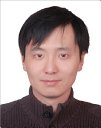
 Xian Wu
· 4 previous affiliations
- Tencent (China)Since 2017
- Principal Researcher · Since 2017
- Microsoft (United States)2012–2017
- Applied Researcher Manager · 2012–2017
- Shanghai Jiao Tong University2009–2015
- PhD student · 2009–2015
- Researcher · 2007–2012
8 other authors named Xian Wu: Xian Wu (74 papers), Xian Wu (Meta (United States) · Meta AI · 17 papers), Xian Wu (Tencent (China) · University of Hong Kong · 10 papers), Xian Wu (1 paper), Xian Wu (The University of Texas at Dallas · 1 paper), and 3 more
Research Overview
Xian Wu focuses on adapting large language models for specialized domains, clinical reasoning, and parameter-efficient fine-tuning. His trajectory spans early work in semantic web annotations and multimodal representation learning to recent advancements in medical artificial intelligence and recommender systems. Currently, he investigates test-time scaling, multi-hop reasoning, and methods for grounding language models to mitigate hallucinations in high-stakes environments.
Research Trajectory
Xian Wu’s research trajectory began with early contributions to the semantic web. In 2006, he introduced Exploring social annotations for the semantic web, examining how informal, user-generated annotations could complement explicitly defined formal ontologies to make web resources more machine-understandable.
By 2018, his focus had expanded to complex representation learning and computer vision. He developed Interpretable Video Captioning via Trajectory Structured Localization, a method designed to capture fine-grained motion information and the relations between moving instances for more nuanced linguistic descriptions of open-domain videos. Concurrently, he addressed fundamental challenges in high-dimensional vector representations with Local Density Estimation in High Dimensions, proposing techniques to estimate the number of points within specific radii for robust representation learning.
In 2019, Wu began a sustained line of research in clinical decision support and medical artificial intelligence. He introduced MNN: Multimodal Attentional Neural Networks for Diagnosis Prediction, which improved the prediction of future patient diagnoses by fusing noisy, structured electronic health record codes with unstructured clinical data. This clinical focus deepened with Exploring and Distilling Posterior and Prior Knowledge for Radiology Report Generation in 2021. By explicitly modeling how human radiologists combine direct visual evidence with background medical knowledge, the framework mitigated the tendency of AI models to ignore rare abnormalities.
Alongside his medical research, Wu advanced the capabilities of recommender systems. With U-BERT: Pre-training User Representations for Improved Recommendation, he adapted NLP pre-training paradigms to learn cross-domain user representations, significantly improving recommendation accuracy in data-sparse environments.
As large language models (LLMs) became central to artificial intelligence, Wu focused on parameter-efficient fine-tuning for complex, multi-task domains. In 2023, he proposed MOELoRA: An MOE-based Parameter Efficient Fine-Tuning Method for Multi-task Medical Applications, combining Low-Rank Adaptation with a Mixture-of-Experts architecture to handle diverse medical tasks without the computational burden of full fine-tuning. He further refined this approach in When MOE Meets LLMs: Parameter Efficient Fine-tuning for Multi-task Medical Applications, addressing the interference problem where data from one task degrades performance on another during medical LLM adaptation. During this period, he also explored explainability in reinforcement learning, developing StateMask: Explaining Deep Reinforcement Learning through State Mask to identify the specific moments in a trajectory responsible for an agent's success or failure.
By 2024, his work heavily emphasized the evaluation and reliability of medical foundation models. He led the development of MedJourney: Benchmark and Evaluation of Large Language Models over Patient Clinical Journey, a comprehensive benchmark assessing LLMs across a four-stage clinical workflow from initial symptoms to ongoing care. To address hallucinations in medical consultations, he introduced MedKP: Medical Dialogue with Knowledge Enhancement and Clinical Pathway Encoding. By grounding models in external knowledge graphs and internal clinical pathways, this work directly contributes to the research direction of Grounding Large Language Models for Clinical Reliability and the broader area of Grounding Language Models with External Knowledge Retrieval.
In 2025, Wu's research expanded into the efficiency and reasoning capabilities of LLMs. Overseeing research into test-time scaling, he investigated the computational trade-offs of massive chain-of-thought sequences in Think or Not? Exploring Thinking Efficiency in Large Reasoning Models via an Information-Theoretic Lens. He also proposed AnchorCoT: Anchors Pave the Way for Multi-hop Reasoning, a method that predicts key entity anchors to guide models through complex logical steps. Continuing his work in recommender systems, he developed LLMEmb: Large Language Model Can Be a Good Embedding Generator for Sequential Recommendation, leveraging textual metadata to address the long-tail problem. This aligns with the research area of Semantic Item Representations for Open World Recommendation and the direction of Decoupling Large Language Models from Real Time Inference. Additionally, he introduced Training-free LLM Merging for Multi-task Learning, a hierarchical iterative merging technique to combine specialized models without further training.
In 2026, Wu contributed to Copy-Paste to Mitigate Large Language Model Hallucinations, exploring how to resolve conflicts between a model's parametric memory and external context by encouraging the direct quotation of provided fragments. Wu also addressed calibration under post-training in Feeling of Knowing in Large Language Models, introducing a two-channel framework to resolve desynchronization between what an LLM knows and its feeling of knowing. Extending medical AI into resource-constrained settings, Wu co-authored Rare Disease Diagnosis Agent with Decoupled Workflows and Knowledge-Driven Self-Evaluation, presenting a decoupled diagnostic agent for small-scale LLMs. Furthermore, Wu oversaw the development of GeLVR: Geometry-Consistent Latent Visual Reasoning in Multimodal LLMs, preserving continuous relational structure during multimodal latent reasoning via geometry-preserving policy optimization, and contributed to Lie Routing Vision Language Models for View-Robust 3D Understanding to counteract viewpoint-induced semantic drift in 3D multi-view understanding.
Current Directions
The most recent papers in the evidence address the efficiency, reasoning capabilities, and factual reliability of large language models. Recent work investigates test-time scaling and the information-theoretic efficiency of large reasoning models, seeking to optimize chain-of-thought generation without unnecessary computational overhead. Concurrently, Wu is exploring methods to improve multi-hop reasoning by anchoring logical steps with key entities, as well as training-free techniques for merging specialized LLMs into unified multi-task systems.
Another major focus involves mitigating hallucinations by resolving conflicts between a model's internal parametric memory and external context, ensuring greater faithfulness in generative outputs. Finally, he continues to advance recommender systems by utilizing LLMs as offline embedding generators, bridging semantic understanding with sequential recommendation architectures to improve personalization for long-tail items.
Profile updated
Loading new papers…
Other researchers whose papers cluster into the same research directions — a proxy for overlapping technical interests and shared intellectual neighborhoods.
See something wrong? Report a mistake