

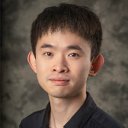
 Chenyu You
· 6 previous affiliations
- Stony Brook UniversitySince 2024
- Assistant Professor · Since 2024
- Yale University2019–2024
- PhD student · 2019–2024
- Google DeepMind (United Kingdom)2022–2023
- Student Researcher · 2022–2023
- Research Intern · 2022
- Stanford University2017–2019
- MS student · 2017–2019
- Rensselaer Polytechnic Institute2013–2017
- Undergrad student · 2013–2017
Research Overview
Chenyu You focuses on medical image analysis, foundation models for healthcare, and efficient machine learning systems. His early work addressed high-fidelity reconstruction and semi-supervised learning for clinical imaging. More recently, his research investigates the reliability of large language models in medicine, multimodal reasoning, and ultra-sparse representations for efficient neural search.
Research Trajectory
His early research primarily addressed the challenges of noise and resolution in computed tomography (CT) imaging. He introduced Structurally-Sensitive Multi-Scale Deep Neural Network for Low-Dose CT Denoising (2018), a 3D deep learning model that incorporates volumetric information to preserve anatomical details. This work contributes to the area of High Fidelity Reconstruction for Low Dose Medical Imaging and addresses the broader challenges of Metric Discordance in AI Assisted Medical Imaging and Preserving High-Frequency Textures in Image Restoration. He subsequently developed CT Super-Resolution GAN Constrained by the Identical, Residual, and Cycle Learning Ensemble (GAN-CIRCLE) (2020), a framework combining adversarial learning with cycle consistency to generate high-resolution scans from low-resolution inputs, aiming to improve diagnostic quality while minimizing radiation dose.
Beyond image reconstruction, his research expanded into model security and label-efficient learning. In the domain of intellectual property protection, he participated in research on Undistillable: Making A Nasty Teacher That CANNOT teach students (2021), exploring methods for the research direction of Defending Machine Learning Models Against Extraction Attacks by preventing knowledge distillation. Returning to medical imaging, he addressed the scarcity of annotated clinical data through the research direction of Semi-Supervised Learning for Medical Image Segmentation. This effort included SimCVD: Simple Contrastive Voxel-Wise Representation Distillation for Semi-Supervised Medical Image Segmentation (2022) and Rethinking Semi-Supervised Medical Image Segmentation: A Variance-Reduction Perspective (2023), which introduced the ARCO framework to stabilize training and improve accuracy when relying on limited labeled data. Concurrently, he mapped the evolving landscape of artificial intelligence in healthcare with A Survey of Large Language Models in Medicine: Progress, Application, and Challenge (2023), highlighting the performance gap between standardized benchmarks and real-world clinical environments, thereby contributing to the broader area of Grounding Large Language Models for Clinical Reliability.
As foundation models became increasingly prominent, his focus broadened to include multimodal reasoning, multi-agent systems, and efficient architectures. In 2025, he developed methods for dynamic expert allocation in sparse transformers with Route Experts by Sequence, not by Token, shifting the computational budget to prioritize difficult tokens. To improve spatial understanding in vision-language models, his group introduced VisReason: A Large-Scale Dataset for Visual Chain-of-Thought Reasoning, teaching models a global-to-local reasoning process to reduce hallucinations. In clinical applications, he addressed representation collapse with Together, Then Apart: Revisiting Multimodal Survival Analysis via a Min-Max Perspective, balancing cross-modal alignment with modality-specific distinctiveness for cancer benchmarks. He also explored modular agentic pipelines with SlideGen: Collaborative Multimodal Agents for Scientific Slide Generation, orchestrating specialized vision-language agents to transform scientific papers into structured presentations. Concurrently, he advanced efficient neural search with Beyond Matryoshka: Revisiting Sparse Coding for Adaptive Representation, demonstrating that contrastive sparse autoencoders applied to frozen pre-trained models can significantly accelerate retrieval tasks.
Building on these architectural improvements, his most recent work pushes the limits of compute efficiency and generative modeling. In 2026, he introduced No More K-means: Single-Stage Sparse Coding for Efficient Multi-Vector Retrieval, replacing traditional clustering bottlenecks with high-dimensional sparse coding to improve indexing and retrieval speeds. He further refined this approach with CSRv2: Unlocking Ultra-Sparse Embeddings, making highly compact embeddings practically viable through progressive annealing and contrastive learning. In the realm of language model reasoning, he proposed When to Think, When to Speak: Learning Disclosure Policies for LLM Reasoning, a method allowing models to interleave private deliberation tokens with public outputs to balance latency and accuracy. His recent medical AI work includes Let EEG Models Learn EEG, which treats electroencephalogram synthesis as a continuous dynamical process using conditional flow matching, and Supervise Less, See More: Training-free Nuclear Instance Segmentation with Prototype-Guided Prompting, a framework that automates prompt generation for foundation models in digital pathology without requiring manual annotations. In Towards Robust, Reliable, and Generalized Medical AI (2026), You investigates principles for building resilient clinical machine learning systems. In generative modeling, You contributed to AnaDiffusion: Anatomically Compositional Latent Diffusion for Controllable 3D Brain MRI Generation, factorizing volume synthesis into regional parts for local controllability, and guided the development of FreeBridge: Variational Schrödinger Bridges for Cellular Transition Dynamics. Additionally, they participated in developing RuleSmith: Multi-Agent LLMs for Automated Game Balancing, coupling multi-agent self-play with Bayesian optimization to balance game mechanics.
Current Directions
The most recent papers in the evidence point toward two primary research directions: the development of highly efficient representation learning systems and the advancement of reasoning capabilities in foundation models, particularly for clinical applications. Recent work investigates ultra-sparse embeddings and single-stage sparse coding to overcome latency bottlenecks in large-scale vector retrieval. In parallel, his research addresses the reasoning processes of large language models, exploring disclosure policies that interleave internal deliberation with public outputs to optimize inference. Within medical AI, current efforts focus on generative synthesis for continuous physiological signals like EEG and training-free prompting frameworks that adapt generalist vision models to specialized tasks such as nuclear instance segmentation in pathology.
Profile updated
Loading new papers…
Other researchers whose papers cluster into the same research directions — a proxy for overlapping technical interests and shared intellectual neighborhoods.
See something wrong? Report a mistake