

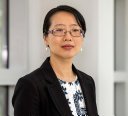
 Xia Ning
· 2 previous affiliations
- The Ohio State UniversitySince 2020
- Full Professor · Since 2023
- Associate Professor · 2020–2023
- University of Minnesota2005–2012
- PhD student · 2005–2012
Research Overview
Xia Ning focuses on artificial intelligence for computational chemistry, domain-specific language modeling, and the internal reasoning mechanisms of foundation models. Her trajectory spans from graph-based retrosynthesis and molecular property prediction to specialized conversational agents for e-commerce and healthcare. Most recently, her work investigates the theoretical limits of in-context learning and the optimization of latent reasoning in large language models.
Research Trajectory
Ning’s early work in the corpus addresses the complexities of computational chemistry and molecular design. In 2023, she and her collaborators introduced G2Retro as a two-step graph generative models for retrosynthesis prediction, a framework designed to improve the accuracy and interpretability of reverse-engineering target molecules into simpler starting materials. This work contributes to the area of Overcoming the Generalization Bottleneck of Chemical Reaction Templates and advances the broader field of Multi-Step Synthesis Planning for Complex Molecules. Building on this chemical focus, she developed methods to improve Graph Neural Networks (GNNs) when experimental data is scarce. In Enhancing molecular property prediction with auxiliary learning and task-specific adaptation (2024), she introduced RCGrad, a gradient surgery technique that aligns conflicting training signals to boost predictive performance on small molecular datasets.
Her methodological work naturally extends into clinical and healthcare applications. In 2024, she addressed information extraction challenges in unstructured medical records with Entity Decomposition with Filtering: A Zero-Shot Clinical Named Entity Recognition Framework, leveraging large language models to categorize broad clinical concepts without task-specific fine-tuning. The following year, she contributed to precision oncology through Integrated circulating tumor DNA-based prognostic algorithm for limited stage small-cell lung cancer under definitive chemoradiotherapy and utility in consolidation immunotherapy benefit prediction. This research presented a Bayesian liquid biopsy algorithm capable of predicting patient relapse from circulating tumor DNA, successfully identifying high-risk individuals who would benefit most from consolidation immunotherapy. Returning to drug discovery with the integration of modern LLMs, she led the development of an autonomous agent in LIDDIA: Language-based Intelligent Drug Discovery Agent (2025). By decoupling reasoning from execution, LIDDIA navigates the drug discovery process in silico, contributing significantly to the research area of Bridging the Synthesizability Gap in Molecular Generation.
Parallel to her scientific applications, Ning has extensively researched the adaptation of foundation models for specialized domains, particularly e-commerce and conversational recommendation. In 2024, she introduced eCeLLM: Generalizing Large Language Models for E-commerce from Large-scale, High-quality Instruction Data, which presented the ECInstruct dataset and demonstrated how specialized models can outperform general-purpose models in cold-start product scenarios. To improve how these systems interact with users over multiple turns, she co-authored SAPIENT: Mastering Multi-turn Conversational Recommendation with Strategic Planning and Monte Carlo Tree Search, proposing a framework that uses Monte Carlo Tree Search to optimize long-term conversational planning rather than relying on greedy action selection. She expanded this domain-specific focus to multimodal architectures in 2025 with EcomMMMU: Strategic Utilization of Visuals for Robust Multimodal E-Commerce Models. This work challenged the assumption that more visual data strictly improves performance, introducing a framework for the strategic selection of images to enhance logical reasoning in e-commerce AI.
Most recently, Ning’s trajectory has moved toward the fundamental mechanics and theoretical limitations of large language models. In 2025, she began investigating how models encode their own success during reasoning. This research was first detailed in the preprint Latent Thinking Optimization: Your Latent Reasoning Language Model Secretly Encodes Reward Signals in its Latent Thoughts and subsequently formalized in the ICLR 2026 publication Latent Thinking Optimization: Your Latent Reasoning Language Model Secretly Encodes Reward Signals in Its Latent Thoughts. The work introduces a Latent Reward Model that steers hidden reasoning processes directly in the vector space, improving performance on math and logic tasks without the latency of verbal chain-of-thought generation. Concurrently, she explored the mathematical properties of few-shot prompting. She proposed the Linear Combination Conjecture in Understanding Task Vectors in In-Context Learning: Emergence, Functionality, and Limitations, which was also accepted to ICLR 2026 as Understanding Task Vectors in In-Context Learning: Emergence, Functionality, and Limitations. These papers demonstrate that while task vectors efficiently compress multiple in-context examples into a single distilled demonstration, they are inherently limited to "rank-one" logic, causing them to fail on complex mappings like bijections.
Current Directions
The most recent papers in the evidence indicate a strong focus on the internal representations and theoretical constraints of foundation models. Ning is actively investigating how to optimize the latent reasoning spaces of LLMs, moving beyond text-based chain-of-thought to steer model logic directly within hidden states. Additionally, her work addresses the mathematical limitations of in-context learning, seeking to understand where compressed representations like task vectors succeed and where they fundamentally break down. Alongside these theoretical pursuits, she continues to explore the deployment of LLMs as autonomous agents capable of executing complex, multi-step workflows in scientific domains such as computational drug discovery.
Profile updated
Loading new papers…
Other researchers whose papers cluster into the same research directions — a proxy for overlapping technical interests and shared intellectual neighborhoods.
See something wrong? Report a mistake