

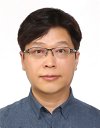
 Wook-Shin Han
· 4 previous affiliations
- Full Professor · Since 2013
- Kyungpook National University2003–2013
- Associate Professor · 2003–2013
- IBM (United States)2005–2006
- Postdoc · 2005–2006
- Postdoc · 2002–2003
- PhD student · 1996–2001
Research Overview
Wook-Shin Han focuses on core database management systems, large-scale graph analytics, and query optimization. His early work pioneered the tight coupling of databases with information retrieval and advanced progressive query optimization for parallel architectures. Currently, he investigates continuous subgraph matching, cardinality estimation, and the application of large language models to multimodal reasoning and agentic traversal.
Research Trajectory
The early phase of his research centered on foundational improvements to database management systems. In 2001, he explored type-level access patterns to improve prefetching in object-relational databases, minimizing client-server round-trips (Prefetching Based on Type-Level Access Pattern in Object-Relational DBMSs). He subsequently contributed to time-series databases by generalizing window construction for subsequence matching, which reduced false alarms and improved point-filtering effects (General match: a subsequence matching method in time-series databases based on generalized windows). This period culminated in the development of Odysseus, a high-performance object-relational DBMS tightly coupled with information retrieval features (Odysseus: A High-Performance ORDBMS Tightly-Coupled with IR Features). This system aligns with the broader research direction of Resolving Query Underspecification through Interactive Clarification.
Moving into parallel database architectures, he addressed cardinality estimation errors by introducing progressive optimization techniques for shared-nothing parallel databases (Progressive optimization in a shared-nothing parallel database). This approach monitored actual cardinalities at run-time to trigger re-optimization, adapting serial processing solutions for distributed environments.
In the 2010s, his focus shifted toward large-scale graph analytics and the computationally demanding problem of subgraph isomorphism. After participating in a comprehensive evaluation of existing subgraph isomorphism algorithms (An In-depth Comparison of Subgraph Isomorphism Algorithms in Graph Databases), he introduced Turbo, a robust search method that optimized matching order selection to avoid useless computations (Turbo: towards ultrafast and robust subgraph isomorphism search in large graph databases). He then developed TurboGraph, a highly parallel, disk-based graph engine capable of processing billion-scale graphs on a single machine, bypassing the need for complex distributed clusters (TurboGraph: a fast parallel graph engine handling billion-scale graphs in a single PC).
His trajectory in the early 2020s expanded on graph pattern cardinality estimation and continuous subgraph matching. He developed ALLEY, a hybrid approach combining sampling and synopses for graph pattern cardinality estimation with worst-case optimal guarantees (Combining Sampling and Synopses with Worst-Case Optimal Runtime and Quality Guarantees for Graph Pattern Cardinality Estimation), contributing to the area of Incremental Maintenance of Graph Based Search Indices. Alongside his database research, he also explored generative modeling, proposing a "Draft-and-Revise" framework with a Contextual RQ-Transformer to improve how autoregressive models capture global contexts in high-resolution image generation (Draft-and-Revise: Effective Image Generation with Contextual RQ-Transformer).
Returning to graph systems, he continued to refine subgraph search by leveraging static and dynamic vertex equivalences to reduce search spaces (Fast subgraph query processing and subgraph matching via static and dynamic equivalences). In 2024, his group published extensively on continuous subgraph matching and query optimization. This included a filtering-sampling approach for cardinality estimation (Cardinality Estimation of Subgraph Matching: A Filtering-Sampling Approach) and a time-constrained algorithm for continuous subgraph matching that uses temporal information for filtering and backtracking (Time-Constrained Continuous Subgraph Matching Using Temporal Information for Filtering and Backtracking). To ensure fair evaluation of such methods, he proposed a unified delta query compilation framework for continuous subgraph matching (In-depth Analysis of Continuous Subgraph Matching in a Common Delta Query Compilation Framework). Beyond graphs, he addressed JSON schema discovery with ReCG, a bottom-up algorithm using a Minimum Description Length cost model (ReCG: Bottom-Up JSON Schema Discovery Using a Repetitive Cluster-and-Generalize Framework), and introduced ASM, a learned cardinality estimation method harmonizing autoregressive models and sampling (ASM: Harmonizing Autoregressive Model, Sampling, and Multi-dimensional Statistics Merging for Cardinality Estimation).
Current Directions
The most recent papers in the evidence indicate a strong focus on multimodal reasoning, large language models (LLMs), and agentic systems. Recent work investigates the personalization of Vision-Language-Action (VLA) models, introducing training-free frameworks that allow robots to recognize and manipulate specific personal items using visual attentive prompting (Bring My Cup! Personalizing Vision-Language-Action Models with Visual Attentive Prompting). In the domain of complex reasoning, he has developed scalable benchmarks for multi-hop question answering over combined tabular and textual data, revealing performance gaps in current LLMs when handling deep, tree-structured SQL queries (SPARTA: Scalable and Principled Benchmark of Tree-Structured Multi-hop QA over Text and Tables). Additionally, his current research addresses multimodal document retrieval by framing it as a sequential decision process, utilizing history-aware backtracking to enable intelligent agentic traversal through complex document graphs (Failure is Feedback: History-Aware Backtracking for Agentic Traversal in Multimodal Graphs).
Profile updated
Loading new papers…
Other researchers whose papers cluster into the same research directions — a proxy for overlapping technical interests and shared intellectual neighborhoods.
See something wrong? Report a mistake