

 Authors
Export
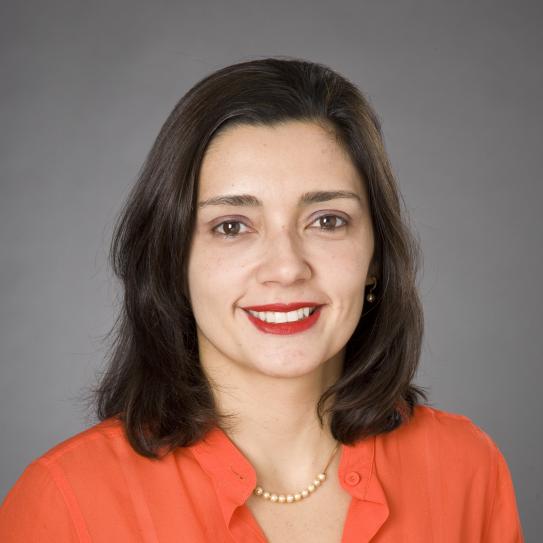
Juliana Freire
· 5 previous affiliations
- New York UniversitySince 2011
- Institute Professor · Since 2022
- Professor of Data Science · Since 2014
- Associated Faculty · Since 2013
- Affiliated Faculty · Since 2012
- Professor of Computer Science and Data Science · Since 2011
- Program Manager (I20 Office) · 2022
- Association for Computing Machinery2017–2022
- Chair · 2017–2022
- University of Utah2005–2011
- Professor of Computer Science · 2005–2011
- Stony Brook University1992–1997
- Ph.D. in Computer Science · 1993–1997
- Master of Science - MS, Computer Science · 1992–1993
Research Overview
Juliana Freire focuses on large-scale data management, provenance tracking, and computational reproducibility. Her trajectory spans early work in web information discovery and scientific visualization to foundational systems for capturing and preserving computational environments. Her current research investigates the application of large language models to automate complex data integration, schema matching, and biomedical data harmonization tasks.
Research Trajectory
The early phase of her research explored optimizations and data mapping strategies for complex systems. This included foundational work on scheduling in logic programming, detailed in Beyond Depth-First Strategies: Improving Tabled Logic Programs through Alternative Scheduling. She subsequently addressed the challenge of mapping semi-structured data to relational systems, participating in the development of LegoDB: Customizing Relational Storage for XML Documents, which automatically generated efficient relational storage mappings for XML applications. This work touched on broader areas like automating semantic mapping for heterogeneous data integration and learned cardinality estimation for database query optimization. Around this time, she also investigated methods for discovering deep web content in Searching for Hidden-Web Databases.
Transitioning into the mid-2000s, the focus shifted toward scientific workflows and provenance. A major contribution was VisTrails: visualization meets data management, a system designed to manage the complex, iterative process of scientific visualization by tracking provenance and enabling researchers to correlate disparate data interactively. This interest in complex data relationships extended to urban environments, where she directed the development of Data Polygamy: The Many-Many Relationships among Urban Spatio-Temporal Data Sets, a framework for discovering spatio-temporal relationships across diverse, large-scale city datasets.
A central theme of her trajectory is computational reproducibility. She spearheaded the creation of ReproZip: Computational Reproducibility With Ease, a tool that simplifies the process of capturing and packaging computational environments. This work significantly advanced the research direction of Computational Environment Sensitivity and Its Mitigation and contributed to Autonomous Research Orchestration for Reproducible Science. By addressing the challenges of packaging dependencies, this research also intersected with the broader areas of Mitigating Environment Drift in Research Software and Formal Verification of Computational Research Artifacts.
In recent years, the trajectory has evolved to integrate machine learning into data systems, contributing to the broader area of Learned Components for Autonomous Data Management and the Automated Configuration of Multi-Stage AI Pipelines. She synthesized the state of this field in Large Language Models for Data Discovery and Integration: Challenges and Opportunities, outlining the potential of LLMs while touching on areas like generalist foundation models for zero-shot domain generalization, tabular serialization for large language models, and batch prompting for efficient inference.
She guided the development of Harmonia, detailed in Interactive Data Harmonization with LLM Agents, which combines specialized integration algorithms with LLM reasoning to automate the merging of disparate datasets. This work spans multiple research directions, including interactive refinement for semantic data alignment, automated provenance tracking for verifiable data pipelines, and modular task decomposition for multi-agent LLM pipelines. It also addresses challenges in managing stochastic instability in large language model reasoning. Continuing this theme, she explored hybrid model architectures in Magneto: Combining Small and Large Language Models for Schema Matching. To support rigorous evaluation in this domain, she oversaw the creation of GDC-SM: The GDC Schema Matching Benchmark, which provides a real-world biomedical data harmonization scenario based on the National Cancer Institute's standards.
Her research has also applied LLMs to domain-specific extraction tasks, such as tracking illegal trades in A Cost-Effective LLM-based Approach to Identify Wildlife Trafficking in Online Marketplaces. Alongside her technical contributions, she has remained active in community leadership, as reflected in her Editorial for Special Issue: VLDB 2022.
Most recently, her work investigates human-AI interaction and large-scale data exploration. She contributed to HILTS: Human-LLM collaboration for effective data labeling and participated in the development of LakeQA: An Exploratory QA Benchmark over a Million-Scale Data Lake. The latter introduces a massive benchmark for exploratory question answering, revealing the limitations of frontier models in large-scale document discovery and contributing to areas such as iterative reasoning and retrieval for multi-hop tasks and multimodal reasoning disparity in open and proprietary models.
Current Directions
The most recent papers in the evidence address the intersection of large language models and complex data management tasks. Recent work investigates how LLM agents can be deployed for exploratory question answering over massive data lakes, highlighting the challenges frontier models face with large-scale document discovery. Additionally, current research focuses on human-LLM collaboration for effective data labeling and the development of hybrid architectures that combine small and large language models for robust schema matching. A significant domain of application for these methods is biomedical data harmonization, where recent efforts involve creating standardized benchmarks to evaluate automated integration pipelines against real-world clinical datasets.
Profile updated
Loading new papers…
Other researchers whose papers cluster into the same research directions — a proxy for overlapping technical interests and shared intellectual neighborhoods.
See something wrong? Report a mistake