

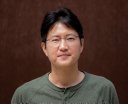
 Wonjong Rhee
· 6 previous affiliations
- Saehan VenturesSince 2026
- Partner · Since 2026
- VCs and start-ups2013–2026
- Advisor · 2013–2026
- Seoul National University2014–2026
- Full Professor · 2014–2026
- Bachelor's, Electrical Engineering
- ASSIA, Inc.2004–2014
- VP of Research/ASSIA Fellow · 2004–2014
- ArrayComm2001–2003
- Research Staff · 2001–2003
- Stanford University1996–2002
- PhD student · 1998–2002
- MS student · 1996–1998
Research Overview
Wonjong Rhee focuses on deep representation learning, generative artificial intelligence, and optimization strategies for neural networks. His early research addressed capacity and beam-forming in multi-antenna wireless communication systems before transitioning to machine learning. Currently, his work investigates the internal mechanisms of deep learning models, emphasizing text-to-image diffusion control, meta-learning, and efficient model compression.
Research Trajectory
The trajectory begins in the early 2000s with foundational work in wireless communications and information theory. Rhee explored multi-antenna systems, introducing methods for Utilizing multiuser diversity for multiple antenna systems. He subsequently investigated capacity limits and transmission strategies, detailing findings in On the asymptotic optimality of beam-forming in multi-antenna Gaussian multiple access channels and On the capacity of multiuser wireless channels with multiple antennas. This period also included collaborative research on power allocation algorithms, yielding Iterative water-filling for Gaussian vector multiple-access channels and Sum power iterative water-filling for multi-antenna Gaussian broadcast channels.
Following this early focus on communications, Rhee’s research shifted toward the fundamental mechanisms of deep learning, particularly how internal representations are formed and optimized. Contributing to the research area of Overcoming Cubic Complexity in High Dimensional Learning, his group proposed von Neumann Entropy as a plug-and-play regularizer to control eigenvalue distributions in deep networks, detailed in VNE: An Effective Method for Improving Deep Representation by Manipulating Eigenvalue Distribution. He also participated in the development of meta-learning algorithms, advancing the research direction of Feedback Driven and Learned Optimization Strategies through collaborative work on Meta-Learning with a Geometry-Adaptive Preconditioner. This interest in optimization extended to domain adaptation, where he later developed a Task-Specific Preconditioner for Cross-Domain Few-Shot Learning, advancing the broader area of Pretrained Optimization Models for Zero-Shot Generalization by blending meta-learned domain-specific strategies to navigate complex parameter spaces.
Rhee has also addressed the practical constraints of deploying neural networks. In the area of Budget-Aware Optimization for Efficient Deep Learning, he developed LESS: LEARNING TO SELECT A STRUCTURED ARCHITECTURE OVER FILTER PRUNING AND LOW-RANK DECOMPOSITION, an algorithm that jointly optimizes pruning and low-rank decomposition under resource budgets to achieve better performance than applying these compression techniques iteratively. In parallel, his work in Representation Learning via Multi-View Consistency includes Enhancing Contrastive Learning with Efficient Combinatorial Positive Pairing, which accelerates self-supervised learning by generating and pairing multiple image views at varying resolutions. To better evaluate these learned representations, he collaborated on A Benchmark Suite for Evaluating Neural Mutual Information Estimators on Unstructured Datasets, supporting the research direction of Information Theoretic Generalization and the Bottleneck Principle.
Most recently, Rhee’s trajectory has expanded into generative artificial intelligence, focusing on the control and internal mechanics of diffusion models and large language models. In the area of Functional Specialization in Multi-Head Attention, he investigated how individual cross-attention heads in text-to-image models map to specific visual concepts, mapping these specializations to steer model behavior in Cross-Attention Head Position Patterns Can Align with Human Visual Concepts in Text-to-Image Generative Models. Addressing related challenges in Spatial and Semantic Grounding for Multi-Object Generation, his group tackled object neglect and mixing through DOS: Directional Object Separation in Text Embeddings for Multi-Object Image Generation. He also advanced the area of Structural Preservation in Instruction Based Image Editing with ReFlex: Text-Guided Editing of Real Images in Rectified Flow via Mid-Step Feature Extraction and Attention Adaptation, a training-free framework for high-fidelity image inversion and editing.
Beyond vision models, Rhee has explored the functional architecture of large language models. Contributing to the research direction of Task Vectors for Steering Large Language Models, he demonstrated that shifting task conditioning from the prompt space directly into the model's internal activations can be highly effective, as detailed in Soft Injection of Task Embeddings Outperforms Prompt-Based In-Context Learning. Additionally, his work in Iterative Reasoning and Retrieval for Multi-Hop Tasks includes the development of a progressive multimodal search framework for knowledge-intensive queries, presented in Multimodal Iterative RAG for Knowledge-Intensive Visual Question Answering. Extending this focus on adaptation and agentic retrieval, Rhee's group surveyed weight-, prompt-, and embedding-based methods in Efficient Task Adaptation in Large Language Models: A Survey of Weight-Based, Prompt-Based, and Embedding-Based Adaptations, establishing a unified taxonomy across adaptation paradigms. They also developed VMSA: Video Memory Skill Agent for Long Video Understanding, combining structured external video memories with induced retrieval skills for long-form video question answering.
Current Directions
Recent work investigates the fine-grained control and internal reasoning mechanisms of large-scale generative models. A primary focus is on text-to-image synthesis, where Rhee explores methods to disentangle semantic concepts, prevent object neglect, and enable high-fidelity, training-free image editing using rectified flow models. In the natural language and multimodal domains, current research addresses the limitations of standard prompt-based in-context learning by directly injecting task embeddings into model activations. Additionally, their group is developing structured external video memory agents and unifying frameworks for efficient LLM adaptation across weights, prompts, and embeddings.
Profile updated
Loading new papers…
Other researchers whose papers cluster into the same research directions — a proxy for overlapping technical interests and shared intellectual neighborhoods.
See something wrong? Report a mistake