

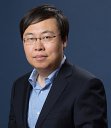
 Weiming Dong
· 3 previous affiliations
- Chinese Academy of SciencesSince 2007
- Full Professor · Since 2016
- Associate Professor · 2010–2016
- Assistant Professor · 2009–2010
- Postdoc · 2007–2009
- PhD student · 2004–2007
- Tsinghua University1997–2004
- MS student · 2001–2004
- Undergrad student · 1997–2001
Research Overview
Weiming Dong focuses on computational visual media, artificial intelligence-generated content, and computational creativity. His trajectory spans from early work in content-aware image resizing and meta-learning to advanced frameworks for image stylization and multimodal synthesis. Currently, his research emphasizes zero-shot generative customization, structural preservation in diffusion models, and the robust detection of machine-generated text.
Research Trajectory
Weiming Dong’s early research addressed foundational problems in image manipulation and machine learning. In 2009, he developed a content-aware image resizing method that combined discrete seam carving with continuous scaling to preserve important visual regions and overall image structure, detailed in Optimized image resizing using seam carving and scaling. A decade later, his work expanded into meta-learning and network synthesis. He collaborated on LGM-Net: Learning to Generate Matching Networks for Few-Shot Learning (2019), contributing to approaches that produce network parameters for unseen tasks to enable rapid adaptation.
By 2021, his focus encompassed both deep learning stability and advanced image stylization. He addressed catastrophic forgetting in neural networks through Incremental Concept Learning via Online Generative Memory Recall, proposing a generative memory recall mechanism that allows models to learn continuously without losing previously acquired skills. This work advanced the research direction of Generative Replay for Continual Learning. Concurrently, he led the development of Towards Harmonized Regional Style Transfer and Manipulation for Facial Images, introducing a multi-region style attention module to edit specific facial features while avoiding visual artifacts. This framework contributed significantly to the broader area of Decoupling Style from Content in Diffusion Models.
Throughout 2022, Dong continued to explore computational aesthetics and stylization. He participated in research on arbitrary image style transfer via contrastive learning in Domain Enhanced Arbitrary Image Style Transfer via Contrastive Learning, which extracts style representations directly from image features to prevent local distortions. He also collaborated on transformer-based stylization architectures in StyTr2: Image Style Transfer with Transformers, and directed work on aesthetic evaluation, such as Optimal Composition Recommendation for Portrait Photography.
As generative diffusion models became prominent, his research increasingly emphasized fine-grained control and multimodal synthesis. In 2023, he co-developed ProSpect: Prompt Spectrum for Attribute-Aware Personalization of Diffusion Models, a method that analyzes how diffusion models generate images across different frequency steps to enable precise, disentangled attribute editing. He also guided the creation of PLDGAN: portrait line drawing generation with prior knowledge and conditioning target, compressing rich photographic textures into sparse geometric elements while preserving semantic fidelity.
In 2024, Dong introduced several flexible frameworks for generative customization. He oversaw FreeStyler: A Free-Form Stylization Method via Multimodal Vector Quantization, allowing image stylization to be guided by text or audio when visual references are absent. He also led the development of Z*: Zero-shot Style Transfer via Attention Reweighting, which leverages dual denoising paths in latent space to integrate generative priors without retraining. This research intersects with areas such as Structural Preservation in Generative Image Stylization and The Temporal Hierarchy of Generative Diffusion. Further expanding into multimodal creativity, he authored CreativeSynth: Creative Blending and Synthesis of Visual Arts based on Multimodal Diffusion, a unified framework for cohesive artistic image editing, and directed Dance Montage through Style Transfer and Music Generation.
Continuing into 2025 and beyond, his research addresses multi-attribute customization, inversion-free generation, and AI safety. He oversaw Z-Magic: Zero-shot Multiple Attributes Guided Image Creator, which models dependencies between attributes to enhance contextual coherence, contributing to the research direction of Zero-Shot Synthesis via Pre-trained Generative Priors. He also collaborated on Inversion-Free Style Transfer with Dual Rectified Flows, a framework that bypasses computationally expensive inversion processes for faster, high-fidelity stylization. Most recently, his work has expanded into text analysis; he led the research on HLD: Approximate Hierarchical Linguistic Distribution Modeling for LLM-Generated Text Detection (2026), a framework that analyzes hierarchical linguistic patterns to accurately detect machine-generated text.
Current Directions
The most recent work in the evidence points toward two primary research themes: the refinement of zero-shot generative customization and the robust detection of machine-generated content. In the domain of computational visual media, current efforts focus on improving the contextual coherence of multi-attribute image creation and developing inversion-free frameworks that accelerate high-fidelity style transfer. Concurrently, there is a growing emphasis on AI safety and attribution, specifically addressing the need for interpretable, multi-granularity detection systems capable of distinguishing large language model outputs from human-written text by analyzing deep semantic and structural linguistic patterns.
Profile updated
Loading new papers…
Other researchers whose papers cluster into the same research directions — a proxy for overlapping technical interests and shared intellectual neighborhoods.
See something wrong? Report a mistake