

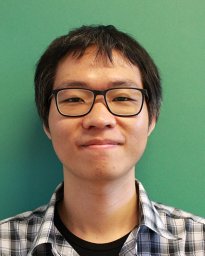
 Wittawat Jitkrittum
· 7 previous affiliations
- Current
- Research Scientist · 2025–2026
- Google (United States)2020–2025
- Research Scientist · 2020–2025
- Postdoctoral Researcher · 2018–2020
- University College London2013–2017
- PhD student · 2013–2017
- Teaching Assistant · 2014–2015
- Doctor of Philosophy (Ph.D.), Machine Learning · 2013–2017
- Sirindhorn International Institute of Technology2012–2013
- Lab instructor · 2012–2013
- Bachelor of Science (B.Sc.), Computer Science
- Tokyo Institute of Technology2010–2012
- MS student · 2010–2012
Research Overview
Wittawat Jitkrittum focuses on statistical model comparison, kernel hypothesis testing, and efficient inference for large language models. His early work developed computationally efficient, interpretable nonparametric tests to evaluate and compare complex distributions. More recently, his research addresses the optimization of model routing and cascade systems to reduce the computational costs of deploying large-scale generative models.
Research Trajectory
Jitkrittum's early research explored foundational machine learning problems, including semi-supervised learning and manifold discovery. He introduced Squared-loss Mutual Information Regularization: A Novel Information-theoretic Approach to Semi-supervised Learning, a strictly convex formulation that offered closed-form analytical solutions for multi-class problems. He also contributed to probabilistic models for non-linear manifold discovery with Bayesian Manifold Learning: The Locally Linear Latent Variable Model (LL-LVM), which enabled variational optimization of posterior distributions over coordinates and locally linear maps.
A major focus of his subsequent work involved the research direction of Maximizing Statistical Power for Kernel Hypothesis Testing. In Interpretable Distribution Features with Maximum Testing Power, he proposed semimetrics on probability distributions that optimize a lower bound on test power, yielding interpretable indications of how distributions differ locally. He applied kernel embeddings to simulation-based inference in K2-ABC: Approximate Bayesian Computation with Kernel Embeddings, contributing to the broader area of Scaling Kernel Methods with Random Fourier Features. This line of inquiry expanded to include An Adaptive Test of Independence with Analytic Kernel Embeddings, which introduced a computationally efficient dependence measure based on analytic embeddings.
Addressing the computational bottlenecks of traditional kernel tests, he developed A Linear-Time Kernel Goodness-of-Fit Test. By leveraging Stein's method, this approach learned features that best indicated differences between observed samples and a reference model without requiring the model's normalizing constant, advancing the area of Localized Diagnostics for Statistical Model Criticism. He extended these principles to relative goodness-of-fit in Informative Features for Model Comparison, creating nonparametric tests capable of identifying specific data regions where one candidate model outperformed another, such as in the evaluation of generative adversarial networks.
Jitkrittum later investigated the challenges of selection bias in statistical analysis. He collaborated on More Powerful Selective Kernel Tests for Feature Selection, which addressed the reduction in test power caused by data splitting, a problem central to the research direction of Minimal Conditioning for Powerful Selective Inference. He further refined this approach in Learning Kernel Tests Without Data Splitting, proposing a framework to learn hyperparameters and test on the full sample while correctly calibrating for dependency. In Kernel Stein Tests for Multiple Model Comparison, he introduced tests for simultaneously comparing multiple candidate models, contributing to the area of Valid Statistical Inference After Data Dependent Selection. His expertise in kernel methods also informed his formal Discussion of 'Multiscale Fisher's Independence Test for Multivariate Dependence', which evaluated a multiscale approach against modern kernel-based alternatives.
Around 2022, his work broadened to encompass diverse deep learning architectures and applications. He developed TASK-former in A Sketch is Worth a Thousand Words: Image Retrieval with Text and Sketch, a multi-task dual-encoder model that combined semantic text with spatial sketch data. He also explored privacy-preserving computation in HD-cos Networks: Efficient Neural Architechtures for Secure Multi-Party Computation, addressing the high costs of non-linear activations in multi-party setups. Additionally, he investigated long-tailed data distributions in ELM: Embedding and Logit Margins for Long-Tail Learning.
During his tenure as a Research Scientist at Google Research and later Google DeepMind, Jitkrittum's focus shifted toward optimizing the inference efficiency of large language models (LLMs). He investigated adaptive inference strategies in When Does Confidence-Based Cascade Deferral Suffice?, analyzing the conditions under which simple confidence-based routing rules succeed or fail, contributing to the area of Unified Selective Classification and Out-of-Distribution Detection.
This foundational work on cascades evolved into sophisticated routing mechanisms for heterogeneous model environments. In Universal LLM Routing with Correctness-Based Representation and the subsequent Universal Model Routing for Efficient LLM Inference, he developed UniRoute, a dynamic routing framework capable of generalizing to unseen LLMs at test time by representing models based on their error patterns. To further improve these systems, he collaborated on I Know What I Don't Know: Improving Model Cascades Through Confidence Tuning, which introduced GATEKEEPER, a loss function designed to fine-tune smaller models to exhibit lower confidence when incorrect, thereby enhancing the reliability of deferral decisions to larger models.
Current Directions
The most recent papers in the evidence address the computational efficiency of deploying large language models through dynamic model routing and cascade systems. Recent work investigates how to intelligently route queries across a diverse pool of language models, reserving large, computationally expensive models for complex tasks while utilizing smaller models for simpler queries. This includes developing "correctness-based representations" that allow routing frameworks to generalize to new, unseen models at test time without requiring retraining. Additionally, current research explores confidence tuning techniques that calibrate smaller models to accurately assess their own limitations, ensuring more reliable deferral decisions within adaptive inference cascades.
Profile updated
Loading new papers…
Other researchers whose papers cluster into the same research directions — a proxy for overlapping technical interests and shared intellectual neighborhoods.
See something wrong? Report a mistake