

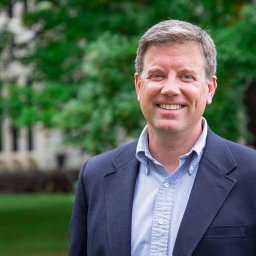
 William A. Ingram
· 5 previous affiliations
- Virginia TechSince 2016
- Associate Professor · Since 2024
- Associate Dean and Executive Director for IT, University Libraries · Since 2023
- Doctor of Philosophy - PhD, Computer Science · 2017–2024
- Assistant Dean and Director of IT, University Libraries · 2018–2023
- Director, University Libraries IT Services · 2016–2018
- University LibrariesCurrent
- Current
- Manager, Scholarly Communication and Repository Services · 2014–2016
- Master of Science - MS, Library and Information Science · 2007–2008
- Research Programmer, University Library · 2007
- Rare Book School2004–2007
- Assistant Director for Programs · 2005–2007
- Systems Consultant / Webmaster · 2004–2005
- Empire Machinery & Supply Corporation2001–2003
- Assistant Director for Information Technology · 2001–2003
Research Overview
William A. Ingram focuses on the development of computational methods for enhancing the discoverability, accessibility, and utility of scholarly documents within digital libraries. His work primarily addresses the challenges of extracting structured information from complex, long-form documents, specifically Electronic Theses and Dissertations (ETDs). By leveraging machine learning, computer vision, and natural language processing, Ingram investigates how to transform unstructured or poorly described academic outputs into machine-readable resources that support advanced information retrieval and research impact assessment.
Research Trajectory
Ingram’s research trajectory is defined by a consistent focus on the "long-form" scholarly document, moving from foundational extraction tasks to the application of sophisticated generative models for document understanding. In the early 2020s, his work centered on the technical hurdles associated with legacy academic corpora. A significant portion of the ETD record consists of scanned documents rather than born-digital PDFs, which complicates standard text-mining approaches. During this period, Ingram contributed to the development of hybrid models that combined text-based features with visual cues to improve metadata extraction and figure identification. This work recognized that for scanned documents, the spatial layout and visual presentation of information are as critical as the character-level data.
By 2022 and 2023, Ingram’s focus expanded to include the functional utility and accessibility of these documents. He began investigating the presence of open-access datasets and software URLs within ETDs, treating these links as proxies for computational reproducibility. This period also marked a shift toward document remediation, where he led efforts to convert static, inaccessible PDFs into semantically tagged HTML. This transition was motivated by the need for equitable access, ensuring that the domain knowledge contained in ETDs is available to users with visual or cognitive impairments and is more easily indexed by modern search engines.
Most recently, from 2024 to 2025, Ingram has pivoted toward the use of Large Language Models (LLMs) and agentic AI to solve high-level classification and quality-control problems. This phase of his work addresses the limitations of traditional keyword-based search and broad metadata schemes. He has explored how LLMs can be used to identify scholarly contributions to specific global benchmarks, such as the United Nations’ Sustainable Development Goals (SDGs), and how these models can be deployed as agents to validate and enhance metadata at scale. His latest research critically examines the biases and divergences inherent in using LLMs for document labeling, signaling a move toward more robust and transparent AI-driven information retrieval pipelines.
Representative Work
Ingram has led or significantly contributed to several key projects that establish benchmarks and frameworks for document analysis in digital libraries.
In the area of foundational data infrastructure, Ingram served as the lead author on Building datasets to support information extraction and structure parsing from electronic theses and dissertations. This work addresses a critical bottleneck in the field: the lack of high-quality, labeled training data specifically tailored to the unique structure of ETDs. By providing datasets designed for tasks like structure parsing and information extraction, this research enables the broader community to train and evaluate machine learning models on documents that are significantly longer and more complex than the standard short-form journal articles typically used in scholarly document processing.
His commitment to document utility is further evidenced in Maximizing Equitable Reach and Accessibility of ETDs. As the first author, Ingram proposed a framework for using AI techniques—including natural language processing and computer vision—to transform PDFs into machine-readable HTML. This work emphasizes the importance of semantic tagging and structural extraction (such as figures and tables) not just for searchability, but for accessibility. The project highlights a shift from viewing ETDs as static archival objects to treating them as dynamic, structured data sources that can be reformatted to meet diverse user needs.
Ingram’s recent work has increasingly focused on the intersection of AI and research assessment. In Agentic AI for Improving Precision in Identifying Contributions to Sustainable Development Goals, he investigated the use of autoregressive LLMs as evaluation agents. The study demonstrates that keyword-based queries often fail to capture the true relevance of a document to complex targets like the SDGs. By using LLMs to analyze abstracts, Ingram showed how retrieval precision can be improved, providing a more accurate mechanism for institutions to benchmark their research output against global goals.
This interest in LLM performance led to the first-authored study, When LLMs Disagree: Diagnosing Relevance Filtering Bias and Retrieval Divergence in SDG Search. In this work, Ingram analyzed the systematic disagreements between different open-weight models, such as LLaMA and Qwen, when assigning relevance labels. The research provides a critical look at the "black box" of AI-driven labeling, identifying how lexical properties and model-specific biases can lead to retrieval divergence. This work is essential for establishing the reliability of LLMs in automated information retrieval pipelines.
In the domain of document structure, Ingram co-authored ScanBank: A Benchmark Dataset for Figure Extraction from Scanned Electronic Theses and Dissertations. As the second author, he contributed to the creation of a large-scale benchmark for identifying figures within scanned documents. This work addressed the limitations of existing extraction methods that were designed for born-digital PDFs, which often fail when confronted with the noise and layout irregularities of scanned pages. ScanBank serves as a vital resource for improving the utility of the millions of legacy ETDs currently held in institutional repositories.
Finally, Ingram has addressed the need for more granular document description in Automating Chapter-Level Classification for Electronic Theses and Dissertations. Serving as the second author, he worked on methods to move beyond high-level metadata by classifying individual chapters. This approach recognizes the interdisciplinary nature of ETDs, where a single dissertation may cover multiple distinct themes across its chapters. By automating chapter-level classification, the research improves the discoverability of specific sections of these long-form works, making them more navigable for researchers.
Current Directions
Ingram’s current research is focused on the scalability and robustness of metadata enhancement systems. He is involved in the development of the ETD Metadata Improvement System (ETDMIS), which seeks to integrate machine learning-based error detection with human-in-the-loop validation and version control. This work acknowledges that while AI can significantly speed up metadata correction, it is not infallible; therefore, building systems that can mitigate model-induced errors is a priority.
Additionally, he continues to investigate the technical challenges of URL extraction and link persistence in scholarly works. Recent work in 2025 has examined how different file formats (PDF, LaTeX, HTML, XML) affect the accuracy of URL extraction. This research is critical for the "Open Science" movement, as it seeks to ensure that the datasets and software underlying scientific claims remain findable and accessible over time. By evaluating extraction performance across formats, Ingram aims to identify the most reliable methods for capturing the digital breadcrumbs of the research process.
Throughout his work, Ingram maintains a focus on the practical application of advanced computational techniques to the specific needs of university libraries and academic repositories. His research bridges the gap between high-level AI development and the archival necessity of maintaining accurate, accessible, and discoverable records of scholarly achievement.
Profile updated
Loading new papers…
Other researchers whose papers cluster into the same research directions — a proxy for overlapping technical interests and shared intellectual neighborhoods.
See something wrong? Report a mistake