

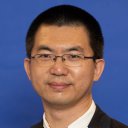
 Jian Wu
· 2 previous affiliations
- Old Dominion UniversitySince 2018
- Associate Professor · Since 2025
- Assistant Professor · 2018–2025
- Pennsylvania State University2004–2018
- Lecturer · 2017–2018
- Postdoc · 2011–2017
- PhD student · 2004–2011
6 other authors named Jian Wu: Jian Wu (Zhejiang University · 135 papers), Jian Wu (Alibaba Group (China) · 65 papers), Jian Wu (7 papers), Jian Wu (4 papers), Jian Wu (ByteDance (China) · 2 papers), and 1 more
Research Overview
Jian Wu focuses on the application of artificial intelligence and machine learning to scholarly big data, digital libraries, and complex document analysis. His work addresses the technical challenges of processing large-scale academic corpora, ranging from automated metadata extraction and document disambiguation to the structural analysis and accessibility of long-form documents such as electronic theses and dissertations (ETDs).
Research Trajectory
Wu’s early research was centered on the architectural and algorithmic foundations of digital library search engines. As a primary contributor to the CiteSeerX project, he investigated the use of AI for document classification, deduplication, and metadata indexing. This period established a focus on "scholarly big data," treating the vast corpus of web-acquired academic documents as a structured information resource. This work involved developing robust systems for automatic information extraction and organizing large-scale collections of scholarly documents from the world wide web.
By 2019, Wu’s research transitioned toward more granular information extraction within scientific texts. This included the development of models for identifying specific entities like methods and datasets, as well as the classification of mathematical statements. This shift moved the focus from document-level metadata to the internal semantic structure of research papers, aiming to facilitate better discipline analysis and algorithm recommendation.
More recently, Wu has concentrated on the specific challenges posed by Electronic Theses and Dissertations (ETDs). This work addresses the "understudied" nature of ETDs, which are typically longer and more structurally complex than standard journal articles or conference proceedings. His research in this area focuses on segmenting these documents, extracting non-textual elements like figures and tables, and improving metadata quality to ensure these works are discoverable and accessible. This includes a strong emphasis on open science, investigating how document formats—such as PDF, HTML, and XML—impact the extraction of research-critical links and software citations.
Multimodal and Acoustic Modeling
Parallel to his work in digital libraries, Wu has contributed to advancements in acoustic modeling and computer vision. This includes research into Factorized Time Delay Neural Networks for Efficient Acoustic Modeling, which optimizes temporal context processing by treating it as a spatial dimension rather than relying on explicit recurrence. His work in speech processing also explores Source Separation with Unknown Number of Speakers and Spatial Feature Integration for Multichannel Speech Processing, addressing the "cocktail party problem" through Identity-Conditioned Neural Networks for Target Speaker Extraction.
In the domain of audio synthesis, he has investigated Bidirectional Context for Efficient Non-Autoregressive Audio Synthesis, moving away from computationally expensive autoregressive models like WaveNet. More recently, his work in computer vision has involved Automated Prompting for Foundation Segmentation Models, specifically focusing on reducing the need for manual human-provided geometric cues in foundation models like the Segment Anything Model (SAM).
Current Directions
Wu’s current research emphasizes the accessibility and reproducibility of science. This is evidenced by his work on converting legacy PDF documents into machine-readable formats and his investigations into the reliability of URL extraction from various file formats to support open science initiatives. He is also involved in improving the metadata quality of university library repositories through automated detection and correction frameworks. His recent projects aim to close the gap of accessibility between long-text documents (like ETDs) and short-text documents (like journal articles) by creating new research opportunities for the scholarly community through large-scale, multi-domain datasets.
Representative Work
CiteSeerX: AI in a Digital Library Search Engine As first author, Wu details the AI technologies underpinning CiteSeerX, a digital library search engine serving millions of users. The paper describes the development of components for document classification, deduplication, citation clustering, and author disambiguation. This work highlights the practical application of AI in managing a corpus of over 4 million academic documents, focusing on the payoff and usage status of these technologies in a production environment.
Big Scholarly Data in CiteSeerX: Information Extraction from the Web In this second-author paper, Wu examines the intelligent systems designed to automatically acquire and organize scholarly documents from the web. The research focuses on the functional aspects of automatic information extraction and alternative search modes within the CiteSeerX ecosystem, setting the stage for future developments in scholarly big data.
Method and Dataset Mining in Scientific Papers Serving as the senior author, Wu proposes a novel entity recognition model called MDER to extract information about methods (M) and datasets (D) from machine learning papers. By constructing a dataset from PAKDD conference papers, the work demonstrates how mining the content of papers—rather than just metadata—can support discipline analysis and algorithm recommendation.
ScanBank: A Benchmark Dataset for Figure Extraction from Scanned Electronic Theses and Dissertations As senior author, Wu addresses the challenge of extracting figures and tables from non-born-digital PDFs. While methods exist for modern PDFs, older scanned documents present unique difficulties. This work introduces ScanBank, a benchmark dataset designed to improve access to the information buried in millions of legacy theses and dissertations, thereby expanding their utility for research and education.
ETDPC: A Multimodality Framework for Classifying Pages in Electronic Theses and Dissertations In this senior-author paper, Wu introduces ETDPC, a multimodality framework for document page classification. Recognizing that general document classification frameworks perform poorly on the unique structure of ETDs, this work enables the segmentation of long documents. This allows readers and researchers to navigate to specific sections, such as tables of contents or bibliographies, more efficiently.
Toward Robust URL Extraction for Open Science: A Study of arXiv File Formats and Temporal Trends As senior author, Wu investigates how the input format of a scientific paper (PDF, Text, HTML, or XML) affects the accuracy of URL extraction. The study finds that structured formats like HTML and XML yield significantly better results than PDFs. This research is critical for open science, as it identifies the technical barriers to accurately tracking the datasets and software packages cited in research publications.
Profile updated
Loading new papers…
Other researchers whose papers cluster into the same research directions — a proxy for overlapping technical interests and shared intellectual neighborhoods.
See something wrong? Report a mistake