

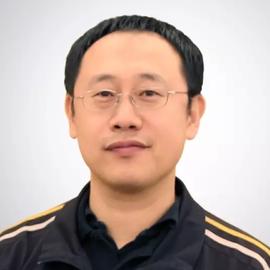
 Wenguang Chen
· 1 previous affiliation
- Tsinghua UniversitySince 2008
- Full Professor · Since 2008
Research Overview
Wenguang Chen focuses on parallel and distributed systems, programming systems, and high-performance computing. His work addresses the fundamental challenges of scaling complex applications on large-scale architectures, ranging from compiler-level data dependence analysis to the design of specialized systems for graph processing and scientific computing. His recent research emphasizes the development of domain-specific languages (DSLs) for partial differential equation (PDE) solvers and the optimization of graph storage and traversal at an unprecedented scale.
Research Trajectory
The evolution of Chen’s research reflects a consistent focus on the intersection of software systems and hardware performance, beginning with foundational work in parallelizing compilers. In the early 2000s, his work centered on improving the exploitation of inherent parallelism in sequential programs. A significant contribution during this period was the development of Interactive data dependence analysis based on range tests, which addressed the limitations of automatic analysis tools by incorporating user-provided semantic information to resolve uncertainties in data dependence.
By the late 2000s and early 2010s, Chen’s focus shifted toward performance modeling and communication patterns in large-scale parallel systems. Recognizing that full-scale execution for performance analysis was becoming prohibitively expensive, he explored methods to predict application behavior on non-existing or future architectures. This led to the development of PHANTOM, a system designed to accurately and efficiently estimate sequential computation time within large-scale parallel applications, facilitating the design phase of high-performance computers. During this era, he also addressed the growing importance of cloud computing, developing systems like ACIC to automate the configuration of I/O systems, significantly improving performance and cost-efficiency for cloud-based applications.
In the mid-2010s, Chen expanded his scope to include big data analytics and the systemic challenges of online social networks. His work in this area analyzed the opportunities for interdisciplinary research between sociology and information science, focusing on issues such as Scaling Clinical Evidence Beyond Small Patient Cohorts and the application of data mining to complex systems, including Mapping Complex Herbal Formulas to Modern Signaling Pathways. This period also saw a deepening interest in system reliability for high-performance computing (HPC). As system scales grew, fault tolerance became a critical bottleneck, prompting the development of Self-Checkpoint, an in-memory checkpointing method that optimized memory usage while maintaining high reliability.
The most recent phase of Chen’s research, spanning from 2018 to the present, is characterized by a focus on post-exascale programming and specialized graph processing. He has articulated a vision for future systems that must overcome challenges in heterogeneity, parallelism, and fault tolerance. His practical work in this domain includes the development of TCStream: Large-Scale Graph Triangle-Counting on a single Machine using GPUs, which enables the processing of graphs with tens of billions of edges by managing memory constraints and load imbalances on GPU-accelerated systems. Furthermore, his work on the New Sunway supercomputer demonstrated the ability to scale graph traversal to 281 trillion edges across 40 million cores, addressing the extreme irregularities of such workloads.
Current Directions
Chen’s current research continues to push the boundaries of system efficiency and programmability. A major current focus is the development of modular, high-level abstractions for scientific computing. As the senior author of Mat2Stencil: A Modular Matrix-Based DSL for Explicit and Implicit Matrix-Free PDE Solvers on Structured Grid, he has introduced a domain-specific language that allows researchers to express complex PDE solvers using structured sparse matrix abstractions. This approach bridges the gap between the ease of high-level mathematical expression and the low-level performance required for large-scale scientific simulations.
Additionally, Chen is involved in optimizing the underlying storage layers for graph data. His participation in research regarding high-performance graph storage on tree-structured key-value stores indicates an ongoing interest in the architectural trade-offs of graph databases used in financial risk assessment and recommendation systems. He has also contributed to theoretical analyses of machine learning scaling, particularly concerning the effects of multi-epoch training when high-quality data becomes scarce.
Representative Work
Interactive data dependence analysis based on range tests This early work addresses the limitations of automatic parallelization by introducing an interactive framework. By allowing users to provide semantic knowledge that automatic tools cannot infer, the system improves the precision of data dependence analysis, which is essential for exploiting parallelism in sequential applications.
PHANTOM PHANTOM provides a methodology for predicting the performance of large-scale parallel applications during the design phase of new hardware. It focuses on accurately estimating sequential computation time, a critical component of the total execution time that is often difficult to model efficiently for non-existing target machines.
Self-Checkpoint Addressing the reliability challenges of massive HPC systems, this paper proposes an in-memory checkpointing technique. Unlike traditional disk-based or dual-copy in-memory methods, Self-Checkpoint reduces the memory overhead and I/O bottlenecks associated with fault tolerance, allowing applications to maintain high availability with minimal performance impact.
TCStream: Large-Scale Graph Triangle-Counting on a single Machine using GPUs This work presents a high-performance system for triangle counting on graphs that exceed the memory capacity of a single GPU. TCStream introduces techniques to handle power-law graph distributions and the resulting load imbalances, enabling large-scale social network analysis on relatively modest hardware configurations.
Mat2Stencil: A Modular Matrix-Based DSL for Explicit and Implicit Matrix-Free PDE Solvers on Structured Grid As the senior author, Chen presents a DSL and compiler designed for PDE solvers. Mat2Stencil uses a structured sparse matrix abstraction to provide a modular and flexible way to implement various solvers (such as Jacobi or Gauss-Seidel) while maintaining the performance benefits of low-level, grid-specific optimizations.
Scaling graph traversal to 281 trillion edges with 40 million cores This research details the implementation of graph traversal at an unprecedented scale on the New Sunway supercomputer. The work addresses the severe performance challenges of load imbalance and irregular memory access that arise when processing hundreds of trillions of edges across tens of millions of cores.
Profile updated
Loading new papers…
Other researchers whose papers cluster into the same research directions — a proxy for overlapping technical interests and shared intellectual neighborhoods.
See something wrong? Report a mistake