

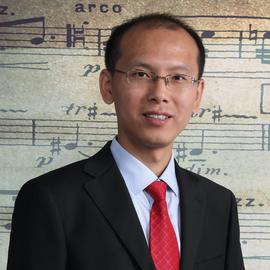
 Jidong Zhai
· 1 previous affiliation
- Tsinghua UniversitySince 2023
- Full Professor · Since 2023
Research Overview
Jidong Zhai focuses on the performance optimization of large-scale parallel systems, tensor compilers, and the efficient training and serving of large language models. His trajectory spans from foundational scalability analysis in high-performance computing to advanced memory orchestration for deep learning workloads. Currently, he investigates high-throughput inference and parameter-efficient fine-tuning for multimodal architectures.
Research Trajectory
Zhai’s early work addressed the evaluation and optimization of complex workloads on high-end computers. He designed a large-scale evaluation system for database benchmarks, utilizing solid-state drive arrays to manage complex transaction processing workloads in Characterizing and optimizing TPC-C workloads on large-scale systems using SSD arrays. Building on this systems expertise, his focus expanded to the broader challenge of parallel program performance. He led efforts to pinpoint inefficiencies in large-scale parallel applications in Identifying scalability bottlenecks for large-scale parallel programs with graph analysis, establishing a foundation for his long-term interest in diagnostic performance tools.
As deep learning models scaled, Zhai’s research transitioned toward optimizing the underlying software infrastructure for neural networks. He contributed to novel tensor program optimization frameworks, including PET: Optimizing Tensor Programs with Partially Equivalent Transformations and Automated Corrections, which utilized partially equivalent transformations to improve execution efficiency, and later EINNET: Optimizing Tensor Programs with Derivation-Based Transformations. Concurrently, he addressed the specific systems challenges of trillion-parameter architectures. In FasterMoE: modeling and optimizing training of large-scale dynamic pre-trained models, he collaborated on optimizing the training of Mixture-of-Expert models, tackling dynamic load imbalance and inefficient synchronous execution. His group also explored the interpretability of these massive models, proposing semantic anchors to mitigate hallucination in pretrained language models used for neural semantic parsing in Unveiling the Black Box of PLMs with Semantic Anchors: Towards Interpretable Neural Semantic Parsing. Alongside these advancements in machine learning systems, he maintained a commitment to rigorous high-performance computing evaluation, overseeing a reproducibility study on parallel frameworks in Critique of "A Parallel Framework for Constraint-Based Bayesian Network Learning via Markov Blanket Discovery" by SCC Team From Tsinghua University.
In recent years, Zhai’s work has concentrated on the acute computational and memory bottlenecks associated with deploying large language models (LLMs). He directed the development of FastDecode: High-Throughput LLM Serving through Disaggregating Attention Computation, which increases serving throughput by disaggregating attention computation to overcome CPU-GPU bandwidth limitations during KV-Cache access. This focus on memory management extended to the efficient adaptation of large-scale models, where his team introduced mTuner: Accelerating Parameter-Efficient Fine-Tuning on Multi-GPU Servers with Elastic Tensor to accelerate fine-tuning on multi-GPU servers using dynamic memory allocation.
He also advanced the efficiency of multimodal architectures, contributing to dynamic memory orchestration and context scaling for large-scale model serving. This culminated in FastCache: Optimizing Multimodal LLM Serving through Lightweight KV-Cache Compression Framework, a framework that utilizes modality-specific linear compression and dynamic batching to drastically reduce latency and memory usage. Furthermore, he participated in the design of DITRON: Distributed Multi-level Tiling Compiler for Parallel Tensor Programs, a hierarchical compiler that simplifies tensor programming for LLMs, aligning with the broader research direction of Operator Fusion for Memory-Bound Deep Learning and techniques for hiding memory latency.
Parallel to these deep learning systems innovations, Zhai continued to mature his earlier work on parallel program diagnostics. He formalized a methodology for bottleneck detection in Graph-Centric Performance Analysis for Large-Scale Parallel Applications and subsequently developed ScalAna in Leveraging Graph Analysis to Pinpoint Root Causes of Scalability Issues for Parallel Applications. This static analysis tool combines the low overhead of profiling with the detailed dependency tracking of tracing to pinpoint root causes of scalability issues in supercomputing applications.
Expanding his focus on generative model acceleration, Zhai co-developed CuBic: Curvature-Driven Dynamic Inference Caching for Fast, High-Fidelity Flow Matching, a train-free inference caching framework for flow matching models that leverages velocity field curvature to dynamically guide spatial partitioning, budget-constrained update scheduling, and sparse execution for accelerated image and video generation.
Current Directions
The most recent papers in the evidence indicate a sustained focus on the intersection of compiler design, memory management, and distributed systems for generative AI. Zhai’s current work investigates techniques to alleviate the memory wall in large-scale model training and inference. This includes developing hierarchical tiling abstractions for distributed tensor compilers and engineering dynamic memory and computation caching strategies—such as elastic tensors, lightweight KV-cache compression, and curvature-driven caching for flow matching models—to enable high-throughput, low-latency generation and serving. Additionally, he continues to refine static analysis methodologies for diagnosing scalability bottlenecks in high-performance computing environments.
Profile updated
Loading new papers…
Other researchers whose papers cluster into the same research directions — a proxy for overlapping technical interests and shared intellectual neighborhoods.
See something wrong? Report a mistake