

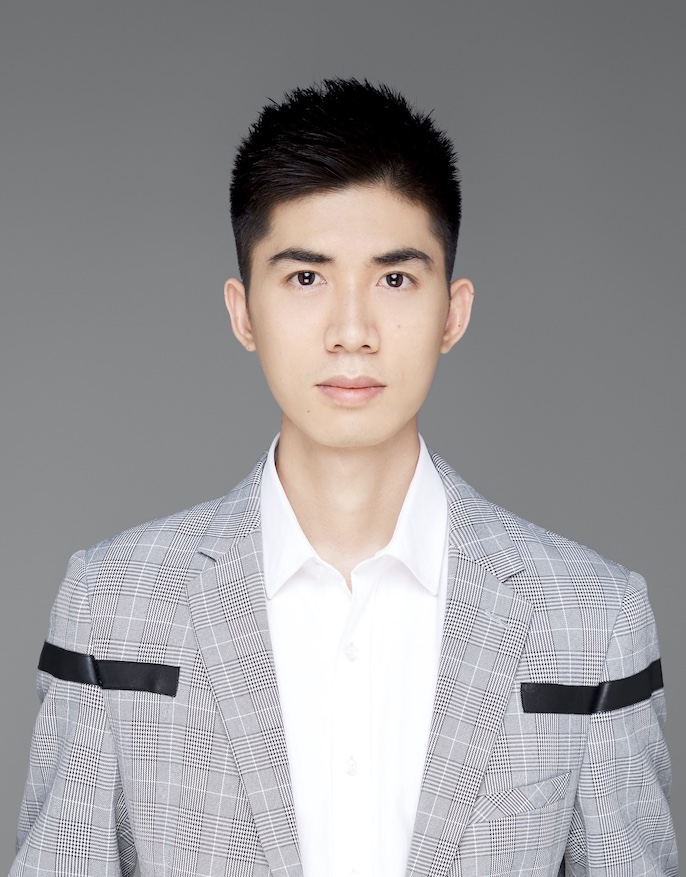
 Wenbin Li
· 2 previous affiliations
- Nanjing UniversitySince 2013
- Associate Professor · 2024–2027
- Current
- Assistant Professor · 2020–2024
- PhD student · 2013–2019
- Undergrad student · 2009–2013
5 other authors named Wenbin Li: Wenbin Li (31 papers), Wenbin Li (3 papers), Wenbin Li (Max Planck Institute for Informatics · 2 papers), Wenbin Li (University of Bath · 2 papers), Wenbin Li (1 paper)
Research Overview
Wenbin Li focuses on few-shot concept learning, continual learning, and the development of efficient generative AI systems. His early trajectory spans metric learning and image translation, evolving into robust methodologies for multi-agent reinforcement learning and self-supervised frameworks. Currently, he investigates multimodal foundation models, model editing, and the reliable deployment of large-scale models on edge devices.
Research Trajectory
His early research established foundational methodologies in streaming data evaluation and metric learning. In 2018, he introduced OPML: A one-pass closed-form solution for online metric learning, providing an efficient approach to processing sequential data. This naturally extended into the area of local feature matching for few-shot learning. In 2019, he developed Revisiting Local Descriptor Based Image-To-Class Measure for Few-Shot Learning, which proposed the Deep Nearest Neighbor Neural Network (DN4). By replacing traditional global pooling with local pattern comparisons against an entire class, this approach significantly improved fine-grained classification performance in data-scarce environments.
Concurrently, he explored the research direction of unpaired image translation across disparate domains. He designed CariGAN: Caricature generation through weakly paired adversarial learning (2020), a generative adversarial network framework capable of creating plausible, identity-preserving caricatures. He later participated in extending these concepts in CAST: Learning Both Geometric and Texture Style Transfers for Effective Caricature Generation (2022), which successfully decoupled shape exaggeration from artistic style transfer.
By 2023, his focus broadened significantly across several learning paradigms. Building on his early metric learning research, he advanced the broader area of Nonlinear Dimensionality Reduction for Complex Systems with A Multilayer Framework for Online Metric Learning, proposing a stacked architecture to capture complex, non-linear data relationships in streaming environments.
In the domain of few-shot learning, he consolidated the field by introducing LibFewShot: A Comprehensive Library for Few-Shot Learning. This unified platform re-implemented numerous state-of-the-art methods, providing rigorous evaluations that advanced the research directions of Bridging the Domain Shift in Few Shot Learning and Episodic Simulation for Few-Shot Meta-Learning. He also addressed security vulnerabilities in this space with Defensive Few-Shot Learning, developing robust models against adversarial attacks where traditional sample-level distribution consistency assumptions fail.
His 2023 work also tackled clustering and representation learning. He proposed symmetric Kullback-Leibler divergence constraints in Modeling Inter-Class and Intra-Class Constraints in Novel Class Discovery to better transfer knowledge from labeled to unlabeled datasets. Additionally, he contributed to the area of Preventing Representation Collapse in Joint Embedding Architectures through Trip-ROMA: Self-Supervised Learning with Triplets and Random Mappings, alongside work in high-performance contrastive learning without massive batches.
Expanding into multi-agent systems, he addressed the research direction of credit assignment in cooperative multi-agent systems. In Learning Explicit Credit Assignment for Cooperative Multi-Agent Reinforcement Learning via Polarization Policy Gradient, he introduced MAPPG, a mathematical polarization function designed to amplify optimal joint actions and suppress noise, thereby escaping the safe policy trap in multiagent coordination.
In 2024, his trajectory incorporated scene representation and foundation models. He participated in developing InsertNeRF: Instilling Generalizability into NeRF with HyperNet Modules, which utilized hypernetworks to dynamically tailor MLP weights using multi-scale features. This advanced the research direction of Bypassing Per Scene Optimization in 3D Scene Reconstruction. He also published Continual Learning meets Multimodal Foundation Models: Fundamentals and Advances, bridging the gap between lifelong learning paradigms and large-scale multimodal architectures.
Current Directions
Recent work investigates the intersection of efficient hardware deployment, game-theoretic optimization, and the internal mechanics of large language models.
In the realm of hardware-software co-design, he has focused on the research direction of noise-resilient analog in-memory computing. This is exemplified by Robust distillation for compute-in-memory: Realizing reliable intelligence using imperfect memristors (2025), which introduces a multi-teacher distillation framework to maintain high accuracy on imperfect memristor-based edge devices.
His recent collaborative work also addresses game theory and optimization, contributing to the area of parameter-free online convex optimization in unconstrained domains. With A Faster Parameter-Free Regret Matching Algorithm (2026), he participated in developing MI-SPRM+, an algorithm that utilizes an adaptive regret domain to find Nash Equilibria in large-scale games without manual step-size tuning.
Furthermore, he is actively exploring the internal representations and adaptability of foundation models. He contributed to The Shape of Addition: Geometric Structures of Arithmetic in Large Language Models (2026), which models arithmetic errors as geometric slippages to enable self-correction during inference, advancing the research direction of aligning internal model knowledge with external token generation. Additionally, his work in the area of surgical knowledge editing in transformer models includes Retain and Adapt: Auto-Balanced Model Editing for Open-Vocabulary Object Detection under Domain Shifts (2026). This research introduces a lightweight technique to inject new task knowledge directly into feed-forward network layers, balancing the learning of new domains with the retention of original capabilities.
Profile updated
Loading new papers…
Other researchers whose papers cluster into the same research directions — a proxy for overlapping technical interests and shared intellectual neighborhoods.
See something wrong? Report a mistake