

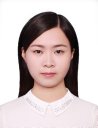
 Jing Huo
· 1 previous affiliation
- Nanjing UniversitySince 2017
- Associate Professor · Since 2020
- Assistant Professor · 2017–2020
Research Overview
Jing Huo focuses on computer vision, embodied artificial intelligence, and interdisciplinary applications spanning biomedical sciences and sustainable development. Early work encompasses image style transfer alongside empirical studies in neurobiology and epidemiology. Subsequent research transitions toward advanced robotic control, 3D scene reconstruction, and long-horizon multimodal navigation, reflecting a growing emphasis on complex autonomous systems.
Research Trajectory
The trajectory begins in 2024 with contributions across distinct scientific domains, including neurobiology and computer vision. In the biomedical domain, Huo investigated traumatic brain injury recovery, demonstrating in Delayed simvastatin treatment improves neurological recovery after cryogenic traumatic brain injury through downregulation of ELOVL1 by inhibiting mTOR signaling that delayed simvastatin therapy promotes neurological repair by inhibiting specific signaling pathways. Concurrently, research in computer vision addressed generative models, specifically focusing on image and video stylization. This is evidenced by Towards efficient image and video style transfer via distillation and learnable feature transformation.
In 2025, the focus on style transfer expanded with REST: A resolution preserving network for photorealistic style transfer via semantic distillation and Dictionary Based Generative Adversarial Network for Multi-Collection Style Transfer, which refined the semantic and multi-collection capabilities of generative adversarial networks. During this period, Huo also contributed to empirical studies in the biological and social sciences. Work in the area of Molecular Identification of Zoonotic Reservoirs and Spatial Niche Partitioning in Host-Associated Microbiomes included an Epidemiological survey on parasites of squamates in Eastern China based on molecular detection, which utilized techniques related to the direction of Genome-Wide Gene Family Identification Using Profile Hidden Markov Models. Additionally, Huo explored sustainable development policy in Bridging the legal divide: evaluating stakeholder awareness, regulatory effectiveness, and governance gaps in sustainable development across urban and rural China. This research engaged with methodologies in the broader areas of Multi-Stage Stratified Sampling for Large Populations and Structural Equation Modeling for Complex Causal Pathways, while analyzing the Spatial Heterogeneity of Policy Effectiveness and Structural Validity through Confirmatory Factor Analysis.
Also in 2025, the trajectory shifted significantly toward embodied artificial intelligence and robotics. Huo presented RoboHiMan: A Hierarchical Evaluation Paradigm for Compositional Generalization in Long-Horizon Manipulation. This work addressed challenges in the research direction of Scaling Robotic Control to Long-Horizon Multi-Stage Tasks and The Compositional Generalization Gap in Neural Networks. It also contributed to areas such as Training Models via Progressive Task Complexity, 3D Spatial Grounding for Robotic Manipulation, Zero-Shot Skill Composition for Robotic Manipulation, Compounding Errors in Long Horizon Agent Execution, Granular Failure Analysis for Embodied AI, and The Limitations of Open Loop Robotic Execution.
In 2026, Huo continued to advance autonomous systems and physical modeling. In the area of Eliminating Per-Scene Optimization with Feed-Forward 3D Reconstruction, Huo introduced PhysForge: Material-Controllable 3D Reconstruction with Separable Components, a framework for material-controllable physical fitting that aligns with the direction of Aligning Video Generation Models with Physical Laws.
Navigation and long-horizon planning remained central themes. Huo developed FineCog-Nav: Integrating Fine-Grained Cognitive Modules for Zero-Shot Multimodal UAV Navigation, contributing to the areas of Hierarchical Memory Architectures for Long-Horizon Agents, The Spatial Reasoning Bottleneck in Multimodal Models, Predictive Mental Simulation for Autonomous Agents, Sensor Noise Robustness for Sim-to-Real Transfer, and Role Specialization in Multi-Agent Architectures. Collaborative work further explored these themes in RoboLongR: Causally Consistent Rewards Teach Robots to Progressively Master Long-Horizon Manipulation, which proposed an offline-to-online framework for policy adaptation. Additionally, Huo participated in the development of Mem-X: A Memory-Dependent Cross-Episode Benchmark for Vision-and-Language Navigation, a benchmark evaluating memory-dependent cross-episode navigation and establishing spatial correspondence with historical memory alongside the MemBridge baseline. Finally, in the domain of language model training, Huo presented Adaptive Pullback: Reweighting Supervision at Penalty Jumps in On-Policy Distillation, proposing a method to dynamically adjust supervision coefficients during on-policy distillation.
Current Directions
Recent work investigates embodied artificial intelligence, specifically focusing on long-horizon multimodal navigation and physically grounded 3D reconstruction. The most recent papers address the integration of fine-grained cognitive modules for zero-shot UAV navigation and the development of causally consistent rewards for robotic manipulation. Furthermore, ongoing research explores on-policy distillation techniques for optimizing model supervision, highlighting an interest in improving the training dynamics and reliability of complex neural architectures.
Profile updated
Loading new papers…
Other researchers whose papers cluster into the same research directions — a proxy for overlapping technical interests and shared intellectual neighborhoods.
See something wrong? Report a mistake