

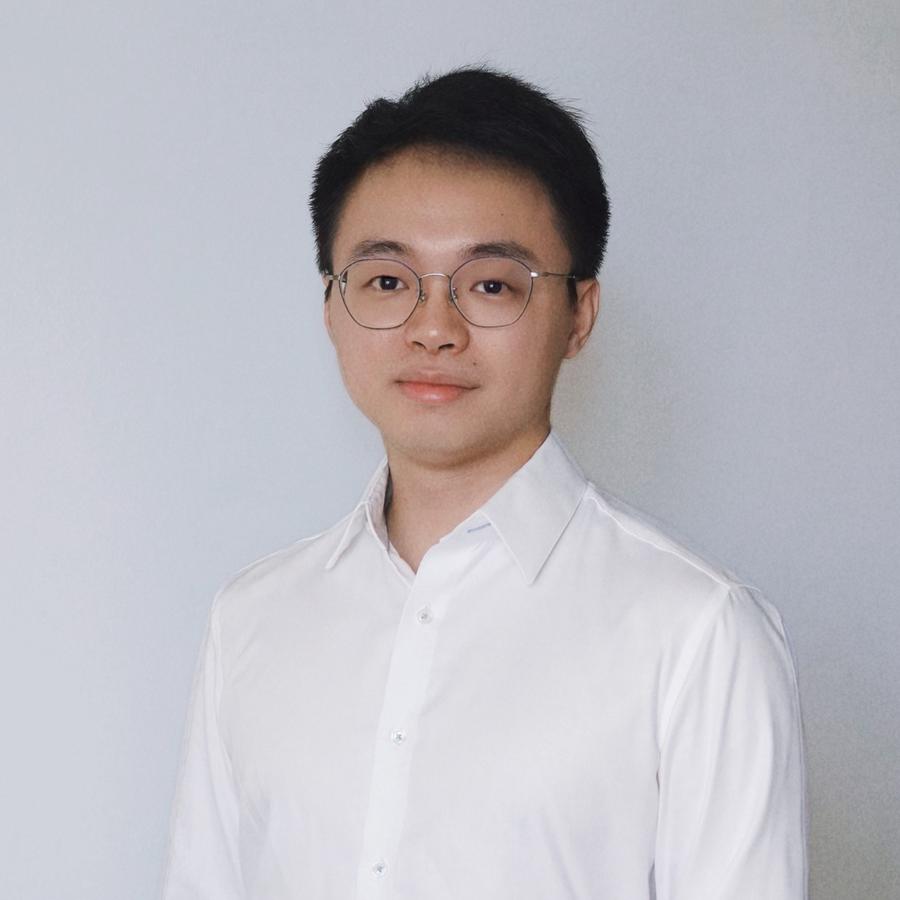
 Weiming Zhuang
· 2 previous affiliations
- Sony AISince 2022
- Researcher · Since 2022
- Nanyang Technological University2019–2022
- PhD student · 2019–2022
Research Overview
Weiming Zhuang focuses on federated learning, computer vision, and the development of multimodal foundation models. His early trajectory addressed the statistical heterogeneity and system scalability of privacy-preserving distributed learning across diverse edge devices. More recently, his work centers on adapting large-scale vision and language foundation models for resource-constrained environments and complex visual grounding tasks.
Research Trajectory
Zhuang’s early research concentrated on the practical challenges of deploying federated learning (FL) in privacy-sensitive computer vision applications. In 2020, he investigated the application of distributed training to person re-identification (ReID) with Performance Optimization of Federated Person Re-identification via Benchmark Analysis. This work highlighted how statistical heterogeneity in real-world data impedes model convergence, proposing knowledge distillation and dynamic weight adjustments to mitigate these effects. This research contributed to the broader area of Hierarchical Model Aggregation for Multi-Tier Networks and advanced the research direction of Public Data Dependency in Federated Distillation. He later expanded on this foundation with a comprehensive journal analysis in Optimizing Performance of Federated Person Re-identification: Benchmarking and Analysis (2023).
Recognizing that decentralized data is often unlabeled, Zhuang developed frameworks for unsupervised and self-supervised federated learning. He introduced FedU in Collaborative Unsupervised Visual Representation Learning from Decentralized Data (2021), a system that leverages contrastive learning across multiple parties while preserving data privacy. He further explored the fundamental building blocks of this architecture in Divergence-aware Federated Self-Supervised Learning (2022), addressing the non-independent and identically distributed (non-IID) nature of decentralized images.
Alongside algorithmic improvements, Zhuang has consistently worked on the systems and platform infrastructure required to make federated learning accessible and efficient. He developed EasyFL: A Low-Code Federated Learning Platform for Dummies (2022) to lower the barrier to entry for prototyping FL applications. As edge devices increasingly faced resource constraints from simultaneous training tasks, he proposed the MuFL system in Smart Multi-tenant Federated Learning (2023) to coordinate and consolidate multi-tenant training activities. During this period, he also collaborated on techniques for privacy-preserving continuous learning, participating in the development of the TARGET framework in TARGET: Federated Class-Continual Learning via Exemplar-Free Distillation (2023), which aligns with the research area of Sequential Initialization and Merging for Continual Learning.
As the AI landscape shifted toward large-scale models, Zhuang’s focus expanded to the intersection of federated learning and foundation models. He mapped this emerging paradigm in When Foundation Model Meets Federated Learning: Motivations, Challenges, and Future Directions (2023), exploring the area of Federated Low-Rank Adaptation of Foundation Models. To address the challenges of training across diverse environments, he introduced FedWon in FedWon: Triumphing Multi-domain Federated Learning Without Normalization (2024). By replacing batch normalization with scaled weight standardization, FedWon enabled high-performing global models across cross-silo and cross-device settings, advancing the direction of Federated Learning for Cross-Domain Heterogeneity. He also continued to build robust evaluation infrastructure, introducing COALA: A Practical and Vision-Centric Federated Learning Platform (2024) to benchmark complex computer vision tasks and feature distribution shifts, contributing to the field of Dirichlet Partitioning for Heterogeneous Federated Learning. Additionally, he addressed the computational bottlenecks of model evaluation with Towards Fundamentally Scalable Model Selection: Asymptotically Fast Update and Selection (2024), proposing an isolated embedding framework to rapidly match models to tasks.
In 2025, Zhuang’s research trajectory demonstrates a strong emphasis on vision foundation models and multimodal architectures. He led the development of Argus: A Compact and Versatile Foundation Model for Vision, a highly efficient 100-million-parameter model that utilizes a two-stage training strategy and specialized adapters to achieve performance competitive with significantly larger models across diverse vision tasks. He also systematically investigated fine-tuning strategies for multimodal large language models in ExpVG: Investigating the Design Space of Visual Grounding in Multimodal Large Language Model, demonstrating that normalized integer coordinates and one-hot supervision substantially improve visual grounding capabilities.
Concurrently, he has continued to push the boundaries of federated learning for complex, resource-constrained scenarios. With collaborators, he developed FEDEXCHANGE: Bridging the Domain Gap in Federated Object Detection for Free (2025), a framework that swaps model components on the server side to improve object detection across diverse environments without increasing edge computation. He also co-authored Closer to Reality: Practical Semi-Supervised Federated Learning for Foundation Model Adaptation (2025), introducing the FedMox framework to adapt large foundation models to private edge devices using a sparse Mixture-of-Experts architecture. Finally, he addressed the challenge of consolidating insights from massive model repositories in UNIFORM: Unifying Knowledge from Large-scale and Diverse Pre-trained Models (2025), proposing a novel voting mechanism to distill knowledge from over 100 heterogeneous teacher models into a single efficient student model.
Current Directions
Recent work investigates the design, adaptation, and deployment of compact foundation models for computer vision and multimodal tasks. The most recent papers in the evidence address the challenge of achieving state-of-the-art performance in resource-constrained environments, utilizing techniques such as sparse Mixture-of-Experts architectures and specialized adapters for frozen Vision Transformers. Additionally, current research explores systematic fine-tuning strategies for visual grounding in multimodal large language models and novel knowledge distillation frameworks capable of unifying representations from massive, heterogeneous model repositories. A continuing theme is the integration of these large-scale models with federated learning, specifically focusing on semi-supervised adaptation and bridging domain gaps across decentralized edge devices without incurring additional computational overhead.
Profile updated
Loading new papers…
Other researchers whose papers cluster into the same research directions — a proxy for overlapping technical interests and shared intellectual neighborhoods.
See something wrong? Report a mistake