

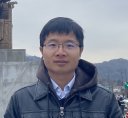
 Weijie J Su
· 1 previous affiliation
- University of PennsylvaniaSince 2016
- Associate Professor · Since 2022
- Assistant Professor · 2016–2022
Research Overview
Weijie J Su focuses on high-dimensional statistics, optimization dynamics, and the theoretical foundations of differential privacy. His trajectory spans from analyzing the convergence of accelerated gradient methods and the mechanics of benign overfitting to establishing functional frameworks for privacy accounting. Currently, his work addresses the alignment of large language models with human preferences and the robust watermarking of AI-generated content.
Research Trajectory
Su's early research investigated high-dimensional linear regression and optimization algorithms. He analyzed the Sorted L-One Penalized Estimation (SLOPE) procedure, proving in SLOPE is Adaptive to Unknown Sparsity and Asymptotically Minimax that it achieves optimal minimax rates by automatically adjusting to unknown sparsity levels. He later expanded on this by developing an asymptotically exact characterization of the SLOPE solution under Gaussian random designs using approximate message passing in Algorithmic Analysis and Statistical Estimation of SLOPE via Approximate Message Passing. Concurrently, he advanced the area of Lyapunov Stability Analysis for Optimization Dynamics. By establishing a connection between Nesterov's accelerated gradient method and a second-order ordinary differential equation, he provided new insights into oscillatory behavior and convergence in A Differential Equation for Modeling Nesterov's Accelerated Gradient Method: Theory and Insights. He continued this continuous-time modeling approach in Understanding the acceleration phenomenon via high-resolution differential equations, introducing high-resolution ODEs that accurately distinguish between different accelerated methods and permit a general Lyapunov framework for convergence analysis.
A major pillar of his trajectory involves the theoretical foundations of privacy, specifically the research direction of Differential Privacy as a Hypothesis Testing Problem. In Gaussian Differential Privacy, he and his collaborators introduced $f$-Differential Privacy ($f$-DP), a functional approach that allows for perfectly lossless composition of private algorithms. This work established a Central Limit Theorem for Privacy, demonstrating that cumulative privacy loss converges to a single-parameter distribution, which significantly tightened bounds for algorithms like Noisy SGD. This framework also advanced the broader area of Translating Differential Privacy Budgets into Operational Risk. He later applied these $f$-DP accounting methods to decentralized settings, quantifying privacy leakage between user pairs under random-walk communication in Mitigating Privacy-Utility Trade-off in Decentralized Federated Learning via f-Differential Privacy.
In the realm of deep learning theory and overparameterized models, Su has investigated how neural networks generalize and fail. He explored the phenomenon of "Minority Collapse" in imbalanced training datasets using a simplified mathematical surrogate in Exploring deep neural networks via layer-peeled model: Minority collapse in imbalanced training. He also contributed to the research direction of The Mechanics of Benign Overfitting in High Dimensions. In Benign Overfitting and Noisy Features, he investigated how machine learning models with more parameters than data points can still generalize well, proposing that inherent or added noise acts as an implicit regularizer that enables optimal learning rates. Additionally, he developed methods for uncertainty quantification in online learning algorithms like Stochastic Gradient Descent, introducing a computationally efficient approach for confidence intervals in HiGrad: Uncertainty Quantification for Online Learning and Stochastic Approximation.
More recently, Su's research has addressed the alignment and provenance of generative AI models. He has focused on the area of Learning from Non-Transitive Human Preferences and resolving theoretical tensions in Reinforcement Learning from Human Feedback (RLHF). In On the Algorithmic Bias of Aligning Large Language Models with RLHF: Preference Collapse and Matching Regularization, he introduced a regularization technique to mitigate "preference collapse" and ensure more equitable LLM behavior. He further explored the paradox between RLHF and social choice theory in Theoretical Tensions in RLHF: Reconciling Empirical Success with Inconsistencies in Social Choice Theory, proposing a modified "Copeland RLHF" to make alignment more robust to diverse human opinions.
In parallel, he has investigated the robust detection of AI-generated content. He introduced a statistically optimal framework for estimating the proportion of watermarked AI text in mixed documents in Optimal Estimation of Watermark Proportions in Hybrid AI-Human Texts, and analyzed the resilience of these watermarks against human edits in Robust detection of watermarks for large language models under human edits. He also extended watermarking techniques to synthetic tabular data, embedding robust signals in the frequency domain in Robust Spectral Watermark for Synthetic Tabular Data. Finally, outside of deep learning, he has explored mechanism design for academic peer review, proposing the "Isotonic Mechanism" to improve score accuracy by incorporating authors' own assessments of their submissions in You Are the Best Reviewer of Your Own Papers: The Isotonic Mechanism.
Current Directions
Recent work investigates the alignment and provenance of generative AI models. A primary focus is the refinement of Reinforcement Learning from Human Feedback (RLHF) to better accommodate diverse and non-transitive human preferences, addressing theoretical inconsistencies between empirical alignment techniques and social choice theory. This includes developing regularization methods to prevent preference collapse and ensure equitable model behavior. Concurrently, the most recent papers in the evidence address the robust watermarking of AI-generated content. This research spans the theoretical limits of detecting AI contributions in hybrid human-AI texts, the resilience of large language model watermarks against human edits, and the development of spectral watermarking techniques for synthetic tabular data to ensure data provenance.
Profile updated
Loading new papers…
Other researchers whose papers cluster into the same research directions — a proxy for overlapping technical interests and shared intellectual neighborhoods.
See something wrong? Report a mistake