

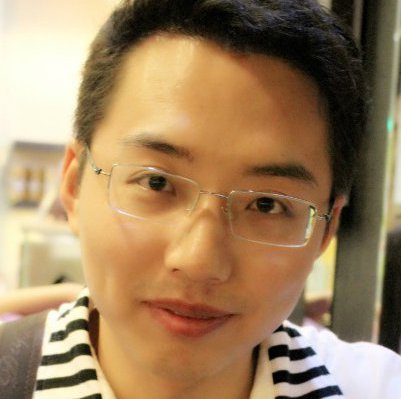
 Wei Shen
· 3 previous affiliations
- Shanghai Jiao Tong UniversitySince 2020
- Full Professor · Since 2024
- Current
- Associate Professor · 2020–2024
- Johns Hopkins University2018–2020
- Assistant Research Professor · 2018–2020
- Shanghai University2012–2018
- Associate Professor · 2017–2018
- Assistant Professor · 2012–2017
6 other authors named Wei Shen: Wei Shen (Nankai University · 26 papers), Wei Shen (Baichuan (China) · 13 papers), Wei Shen (Baidu (China) · 10 papers), Wei Shen (Wuhan University · 8 papers), Wei Shen (University of Virginia · 5 papers), and 1 more
Research Overview
Wei Shen focuses on computer vision, deep learning, and medical image analysis, with particular emphasis on image segmentation and 3D vision. His early work explored structural representations like contour and skeleton extraction, eventually expanding into differentiable decision trees and robust medical imaging techniques. His current research investigates parameter-efficient fine-tuning for vision-language foundation models and advanced 3D reconstruction methods.
Research Trajectory
Wei Shen’s early research concentrated on extracting structural representations from images, particularly focusing on object contours and skeletons. In 2011, he investigated morphological operations with Skeleton growing and pruning with bending potential ratio. As deep learning began to transform computer vision, he adapted convolutional neural networks to these foundational tasks. He introduced a customized training strategy for contour detection in DeepContour: A deep convolutional feature learned by positive-sharing loss for contour detection (2015), which partitioned contour data into subclasses to improve accuracy. Building on this, he addressed the challenge of scale variance in natural images with Object Skeleton Extraction in Natural Images by Fusing Scale-Associated Deep Side Outputs (2016). This work utilized a fully convolutional network with multiple scale-associated side outputs, contributing significantly to the broader area of Symmetry Detection in the Wild.
Expanding his methodological scope, he explored the integration of traditional machine learning structures with deep neural networks. In Label Distribution Learning Forests (2017), he developed a novel algorithm based on differentiable decision trees capable of modeling general forms of label distributions. This advancement pushed forward the research direction of Differentiable Decision Trees, enabling end-to-end representation learning within tree-based frameworks.
Concurrently, his expertise in segmentation and deep learning was increasingly applied to the domain of medical image analysis. Over several years, he contributed extensively to specialized clinical vision problems, driving progress in areas such as Hierarchical Coarse to Fine Segmentation for Volumetric Medical Imaging and Deep Learning for Spatially Sparse Target Segmentation. His work in this domain frequently addressed the complexities of anatomical variability and imaging artifacts, aligning with the research directions of Segmentation of Morphologically Diverse Pathological Structures and Delineating Ambiguous Boundaries in Low-Contrast Images. A key challenge in medical imaging is the reliance on subjective or conflicting expert annotations; he tackled this in Label Filling via Mixed Supervision for Medical Image Segmentation from Noisy Annotations (2024), proposing a framework that identifies trustworthy pixels and models rater-specific biases to improve segmentation accuracy.
Beyond medical imaging, his recent work addresses domain adaptation and the efficient tuning of large-scale models. In scene text detection, he developed a pre-training paradigm to overcome the domain gap between synthetic and real-world data in Bridging Synthetic and Real Worlds for Pre-Training Scene Text Detectors (2024). As foundation models became central to computer vision, he focused on parameter-efficient fine-tuning (PEFT) strategies to adapt these massive architectures to specific downstream tasks without prohibitive computational costs. With collaborators, he introduced a cross-block orchestration mechanism for the Segment Anything Model (SAM) in Parameter Efficient Fine-Tuning via Cross Block Orchestration for Segment Anything Model (2024). He further refined SAM adaptation in SAM-PARSER: Fine-Tuning SAM Efficiently by Parameter Space Reconstruction (2024), which reconstructs parameter spaces to handle diverse scenario characteristics with nearly zero trainable parameters.
His recent trajectory also includes advanced 3D reconstruction techniques for dynamic environments. In Efficient Deformable Tissue Reconstruction via Orthogonal Neural Plane (2024), he conceptualized surgical procedures as 4D volumes and utilized neural radiance fields (NeRF) factorized into orthogonal planes to achieve fast, high-quality reconstruction of deformable tissues in vivo.
Continuing these investigations into interactive 3D vision and multimodal grounding, Shen co-developed WorldAct: Activating Monolithic 3D Worlds into Interactive-Ready Object-Centric Scenes (2026), introducing a framework that converts static generated 3D environments into editable, interaction-ready scenes via agent-guided decomposition, object mesh reconstruction, and 3D inpainting. In multimodal reasoning, Shen also guided the development of See to Believe: Aligning Multimodal Chain-of-Thought Reasoning with Visual Evidence (2026), proposing Reasoning with Visual Anchors to explicitly align intermediate chain-of-thought reasoning steps with corresponding image regions for referring and reasoning segmentation.
Current Directions
Recent work investigates the efficient adaptation of large-scale foundation models and the refinement of multi-modal architectures. A major focus is advancing parameter-efficient fine-tuning (PEFT) techniques, as seen in Maintaining Structural Integrity in Parameter Spaces for Parameter Efficient Fine-tuning and Unleashing the Power of Task-Specific Directions in Parameter Efficient Fine-tuning. These efforts seek to optimize model adaptation by identifying critical task-specific directions early in training and preserving structural integrity within parameter spaces, allowing for high performance under strict parameter budgets.
Additionally, the most recent papers in the evidence address the alignment and application of vision-language models. This includes leveraging hierarchical geometries for multi-modal large language models in HyperET: Efficient Training in Hyperbolic Space for Multi-modal Large Language Models, and transforming image-level classifiers into pixel-level segmenters in OPMapper: Enhancing Open-Vocabulary Semantic Segmentation with Multi-Guidance Information. Alongside these foundation model advancements, ongoing research continues to tackle practical clinical challenges, such as developing methods for sparse annotation regimes, demonstrated by Development of a new method M2LC for few-slice-annotated MRI image segmentation and validation of its performance on multiple datasets.
Profile updated
Loading new papers…
Other researchers whose papers cluster into the same research directions — a proxy for overlapping technical interests and shared intellectual neighborhoods.
See something wrong? Report a mistake