

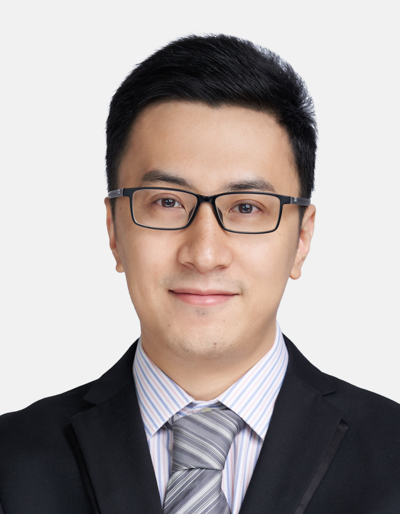
 Wei Jing
· 5 previous affiliations
- NetEase (China)Since 2023
- Researcher · Since 2023
- Alibaba Group (China)2021–2023
- Researcher · 2021–2023
- Researcher · 2017–2021
- Carnegie Mellon University2013–2017
- PhD student · 2013–2017
- Nanyang Technological University2006–2010
- Undergrad student · 2006–2010
Research Overview
Wei Jing focuses on the intersection of multi-agent reinforcement learning, robust federated learning, and multi-modal perception for autonomous systems. Jing’s work addresses the challenges of coordinating complex agent behaviors in dynamic environments, particularly within urban driving scenarios, while ensuring system reliability against adversarial disturbances and hardware failures. This research trajectory has evolved from foundational investigations into signal processing and remote sensing toward the development of unified frameworks for end-to-end autonomous driving and decentralized decision-making.
Research Trajectory
The early stages of Jing’s research, as evidenced by taxonomy data from 2018, centered on Remote Physiological Sensing via Color Space Signal Isolation. This work explored the use of standard RGB cameras for Non-Contact Physiological Sensing via Remote Photoplethysmography (rPPG), a technique that extracts vital signs by detecting subtle rhythmic changes in facial skin color. A significant component of this phase involved addressing systemic biases in optical sensing, specifically focusing on Melanin-Induced Optical Attenuation in Physiological Sensing. By investigating how light interacts with varying levels of melanin, this research sought to improve the accuracy of Mitigating Motion and Lighting Artifacts in Remote Photoplethysmography for all populations. This period also included contributions to Unobtrusive and Remote Vital Sign Estimation and methodological inquiries into Temporal Reliability and Scan Duration in Functional Neuroimaging, emphasizing the need for stable individual "fingerprints" in neuroimaging data.
By 2021, Jing’s focus shifted toward the theoretical and practical aspects of decentralized machine learning. This transition is marked by work in Federated Reinforcement Learning (FRL), where the objective is to enable multiple agents to collaboratively learn decision-making policies without sharing raw data trajectories. Jing’s contributions in this area emphasize fault tolerance, providing theoretical guarantees for convergence even when a significant portion of participating agents experience system failures or adversarial attacks.
Since 2023, Jing has concentrated on the complexities of autonomous urban driving, specifically through the lenses of Multi-Agent Reinforcement Learning (MARL) and imitation learning. This work addresses the limitations of standard MARL, which often fails to capture the specific needs of a team in rapidly changing environments. Jing has proposed methods for virtual traffic coordination and context-conditioned imitation learning to mitigate issues like covariate shift in behavior cloning. Most recently, in 2024, this trajectory has culminated in the development of multi-modal fusion frameworks that integrate camera and LiDAR data to optimize prediction and planning tasks simultaneously, moving beyond simple perception to a more unified approach to autonomous navigation.
Current Directions
Jing’s current research is characterized by three primary pillars: multi-agent coordination, robust imitation learning, and multi-modal sensor fusion.
In the domain of multi-agent systems, Jing investigates how to move beyond individual agent contributions to a model where agents respond directly to the collective needs of a team. This is particularly relevant in dense traffic simulations where autonomous vehicles must interact with a fluctuating number of surrounding agents. By developing virtual coordinators, Jing’s work facilitates more effective cooperation in high-stakes environments.
In imitation learning, Jing addresses the "covariate shift" problem—where small errors in a learned policy lead to entirely different states that the model was not trained to handle. By utilizing context-conditioned approaches, Jing’s research maps context states directly to ego-vehicle states, leveraging spatial and temporal relations to create more robust driving policies that mimic human-like decision-making in complex urban settings.
The most recent focus involves the integration of heterogeneous sensor data. Jing’s work on multi-modality fusion seeks to combine the semantic richness of camera imagery with the precise geometric information of LiDAR. This research aims to build unified neural networks that do not treat perception, prediction, and planning as isolated modules but rather as an integrated pipeline that benefits from end-to-end optimization.
Representative Work
Jing has contributed to several key papers that define these research directions, particularly in the context of autonomous driving and robust learning.
In the area of decentralized learning, Jing participated in the development of a Fault-Tolerant Federated Reinforcement Learning with Theoretical Guarantee. This work addresses a critical gap in FRL by providing the first framework that guarantees convergence while remaining resilient to adversarial attackers or random system failures among nearly half of the participating agents. This research is foundational for deploying reinforcement learning in real-world distributed systems where agent reliability cannot be assumed.
Focusing on multi-agent cooperation, Jing served as a primary contributor to TraCo: Learning Virtual Traffic Coordinator for Cooperation with Multi-Agent Reinforcement Learning. The paper introduces a virtual coordinator that expresses the specific contributions required from each agent to satisfy team objectives. This approach is demonstrated to be particularly effective in autonomous driving simulations, where the "team" of surrounding vehicles is constantly changing, requiring agents to adapt their behavior to the immediate needs of the traffic flow.
In the field of imitation learning, Jing’s work on CCIL: Context-conditioned imitation learning for urban driving addresses the challenges of behavior cloning in urban environments. By proposing a context-conditioned policy, the research mitigates the covariate shift issue that often plagues standard imitation learning. The method emphasizes the importance of spatial and temporal relations, allowing the ego-vehicle to better understand and react to the complex dynamics of human-driven traffic.
Jing also contributed to research on Adversarial Driving Policy Learning by Misunderstanding the Traffic Flow. This work explores how adversarial training can improve the robustness of driving policies in dense traffic. By building a coordinated traffic flow where agents communicate Social Value Orientations (SVOs), the framework identifies vulnerabilities in driving policies and enhances their transferability to unseen, high-density environments.
Most recently, Jing played a significant role in the development of FusionAD: Multi-modality Fusion for Prediction and Planning Tasks of Autonomous Driving. This unified framework represents a shift toward holistic autonomous systems by fusing camera and LiDAR data through a transformer-based network. Unlike previous methods that focused primarily on perception, FusionAD jointly optimizes prediction and planning, demonstrating that multi-modal fusion significantly enhances the accuracy and robustness of autonomous navigation in complex scenarios.
Profile updated
Loading new papers…
Other researchers whose papers cluster into the same research directions — a proxy for overlapping technical interests and shared intellectual neighborhoods.
See something wrong? Report a mistake