

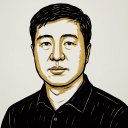
 Mingyue Zhang
· 1 previous affiliation
- Southwest UniversitySince 2023
- Lecturer · Since 2023
Research Overview
Mingyue Zhang focuses on the intersection of self-adaptive systems, reinforcement learning, and formal methods for security and safety. Zhang’s research addresses the fundamental challenge of maintaining system performance and reliability in dynamic, uncertain, and potentially adversarial environments. This work spans several domains, including multi-agent systems, Internet of Things (IoT) safety, and the integration of large language models (LLMs) into autonomous adaptation frameworks. By combining machine learning with rigorous analytical tools like game theory and control barrier functions, Zhang seeks to develop systems that can autonomously detect anomalies, recover from failures, and guarantee safety during complex tasks.
Research Trajectory
Zhang’s early research, beginning around 2021, established a foundation in the security and adaptability of software-intensive systems. This period was characterized by the application of game theory and meta-reinforcement learning to address the limitations of traditional adaptation policies. In A Game-Theoretical Self-Adaptation Framework for Securing Software-Intensive Systems, Zhang explored how rigorous game-theoretical modeling could be used to design defense mechanisms against adversarial attacks, treating the interaction between a system and an attacker as a strategic game. Simultaneously, Zhang addressed the "multiple model problem" in self-learning adaptive systems. In A Meta Reinforcement Learning-based Approach for Self-Adaptive System, Zhang proposed using meta-reinforcement learning to enable systems to adapt to incomplete information and varying environment-system dynamics, moving beyond the assumption that a single model can capture all possible environmental states.
In 2022, Zhang’s focus expanded toward the resilience of distributed systems and the efficiency of knowledge reuse. A significant contribution during this period was the development of mechanisms to protect distributed deep reinforcement learning (DDRL) from Byzantine failures. In Resilient Mechanism Against Byzantine Failure for Distributed Deep Reinforcement Learning, Zhang formalized the DDRL process as a multi-armed bandit model to optimize sampling policies and mitigate the influence of malicious or failing workers. During this time, Zhang also participated in research regarding the safety of cyber-physical spaces, contributing to the development of transactional models for IoT environments to prevent physical harm resulting from software errors, as seen in IoTranx: Transactions for Safer Smart Spaces.
By 2023 and 2024, Zhang’s work began to integrate more advanced machine learning paradigms and address the emerging role of generative AI. Zhang took a senior leadership role in research applying supervised contrastive learning to software engineering, specifically for fault localization in SupConFL: Fault Localization with Supervised Contrastive Learning. This period also marked an investigation into how the reasoning capabilities of large language models could be harnessed for self-adaptation. This research explores how Multi-hop Reasoning via Differentiable Matrix Operations and similar logical frameworks within LLMs might replace or augment traditional symbolic reasoning in autonomous agents.
Current Directions
Zhang’s current research is centered on two primary pillars: the deployment of LLMs in self-adaptive systems and the formal verification of neural controllers in multi-agent environments. As systems move toward using LLMs for high-level decision-making, Zhang is investigating the "cost explosion" associated with these models. This involves exploring strategies such as Selective Pruning for Expensive Query Operators to ensure that the computational overhead of LLM-based adaptation does not compromise system responsiveness.
The most recent work in 2025 shifts toward safety-critical multi-agent path finding (MAPF). Zhang is developing methods to provide theoretical safety guarantees for learning-based controllers, which are often criticized for their "black-box" nature. By integrating decentralized control barrier functions (DCBFs) directly into the training process of neural networks, Zhang aims to ensure collision-free trajectories even in complex and uncertain environments. This trajectory represents a move from general adaptability toward "verified safety," where the system's ability to learn is strictly bounded by formal safety constraints.
Representative Work
In A Game-Theoretical Self-Adaptation Framework for Securing Software-Intensive Systems, Zhang (as first author) introduces a framework that periodically monitors component-based systems for anomalous behaviors. The core contribution is the use of a learning-based method to detect attacks and a game-theoretical model to select the most effective defense strategy. This work is significant for its attempt to bring mathematical rigor to the often-heuristic field of software self-defense.
In A Meta Reinforcement Learning-based Approach for Self-Adaptive System, Zhang (as first author) addresses the challenge of incomplete information in self-learning adaptive systems (SLAS). The paper argues that traditional RL approaches fail when the assumptions made about environment-system dynamics are incorrect. By employing meta-RL, the proposed approach allows the system to maintain a set of potential models and adapt its policy rapidly as the true nature of the environment is revealed through interaction.
In Resilient Mechanism Against Byzantine Failure for Distributed Deep Reinforcement Learning, Zhang (as first author) tackles the vulnerability of distributed learning systems to Byzantine workers—nodes that may provide misleading or malicious updates. The research transforms the resilient mechanism design into a sampling policy optimization problem, using a multi-armed bandit framework to identify and prioritize reliable workers, thereby ensuring the convergence of the learning process despite the presence of failures.
In SupConFL: Fault Localization with Supervised Contrastive Learning, Zhang (as senior author) applies supervised contrastive learning to the problem of identifying the location of software bugs. This work demonstrates a shift toward using deep representation learning to improve the precision of automated software engineering tasks, moving beyond traditional spectrum-based fault localization methods.
In Exploring the Potential of Large Language Models in Self-adaptive Systems, Zhang (as second author) provides a comprehensive review of how LLMs can enhance knowledge acquisition and reasoning within the MAPE-K (Monitor-Analyze-Plan-Execute plus Knowledge) loop of self-adaptive systems. The paper identifies key research directions for integrating autonomous agents and software engineering principles to create more flexible adaptation mechanisms.
In Learning Verified Safe Neural Network Controllers for Multi-Agent Path Finding, Zhang (as first author) proposes the Verified Safe Multi-Agent Neural Control (VSMANC) approach. This work is notable for its unified training of Decentralized Control Barrier Functions (DCBF) and neural controllers. By using a unified loss function, the approach ensures that agents concurrently learn to reach their goals while strictly adhering to safety constraints, providing a bridge between deep learning and formal control theory.
Profile updated
Loading new papers…
Other researchers whose papers cluster into the same research directions — a proxy for overlapping technical interests and shared intellectual neighborhoods.
See something wrong? Report a mistake